

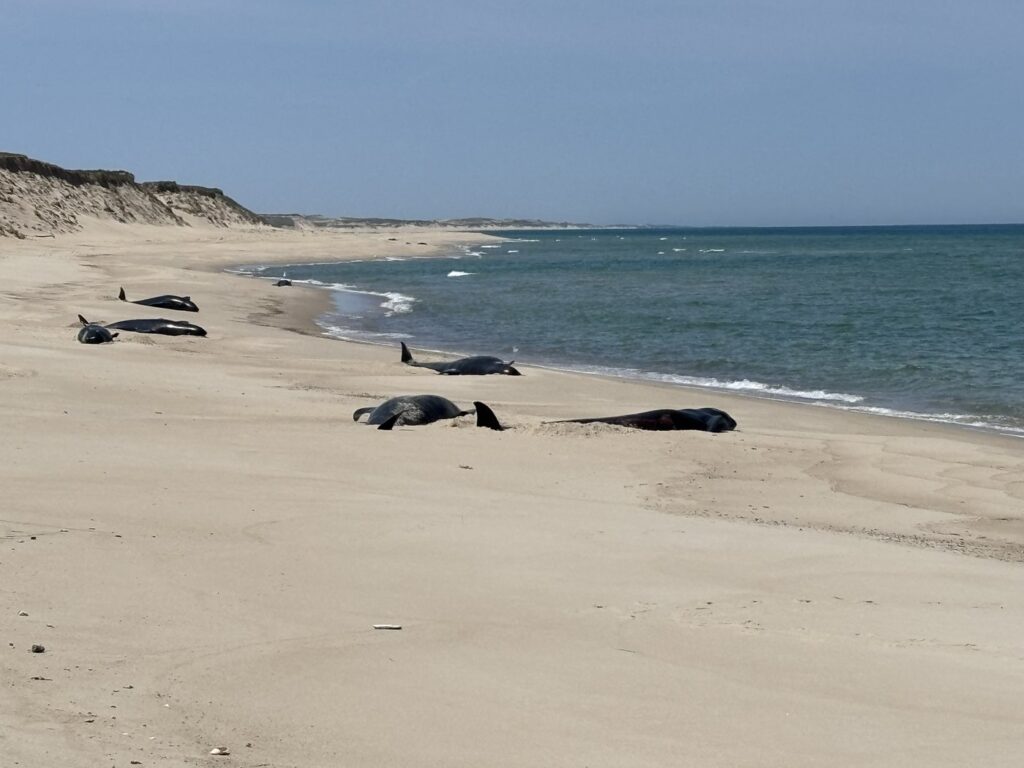
HALIFAX – A tragic incident has unfolded on the north shore of Nova Scotia's remote Sable Island, where a marine animal rescue group has confirmed the stranding of 16 pilot whales. Sadly, none of the animals survived the beaching, which raises concerns about the welfare of marine life in the region.
The Marine Animal Response Society announced the discovery of the stranded whales via a post on Facebook, noting that the event was first recorded during a routine survey conducted on June 10. Following the discovery, Parks Canada officials were alerted to the situation to assess the stranding and investigate potential rescue operations.
Upon arrival at the scene, Parks Canada staff found that some of the small cetaceans had already succumbed to their predicament. The remote location of Sable Island, combined with the limited resources available on-site, quickly made it apparent that a rescue attempt was not feasible. The harsh realities of the island's geography and the logistical challenges associated with marine rescue operations complicate such situations.
According to Tonya Wimmer, the founder of the Marine Animal Response Society, while mass strandings of pilot whales have been documented globally for many centuries, the underlying causes remain largely unknown. This ongoing mystery surrounding the reasons for such strandings has spurred scientific inquiry and raised awareness about the health of marine ecosystems.
The documentation process carried out by Parks Canada personnel included detailed observations of each whale and the collection of biological samples for further research. Such efforts are critical in understanding the circumstances that led to the stranding and in finding potential solutions to prevent similar occurrences in the future.
The mass stranding of pilot whales serves as a reminder of the vulnerabilities faced by marine mammals. While researchers continue to study the phenomenon, the occurrence highlights the need for vigilant monitoring of ocean environments and the health of marine species. The incident has sparked discussions within the scientific community about the balance between marine life and environmental factors, urging further exploration into the conservation of these remarkable creatures.
The Sable Island incident reflects broader themes in marine biology and ecology, drawing attention to both the natural challenges that species face and the impact of human activity on their habitats. As investigations proceed, stakeholders hope that more conclusive findings will emerge to help reduce the likelihood of future strandings and enhance the protection of marine wildlife.
This report underscores a significant yet often overlooked aspect of wildlife conservation, aiming to raise public awareness and engagement in marine protection efforts. By shining a light on such occurrences, organizations seek to foster a deeper understanding of the intricate balance that sustains marine ecosystems and the creatures that inhabit them.








