

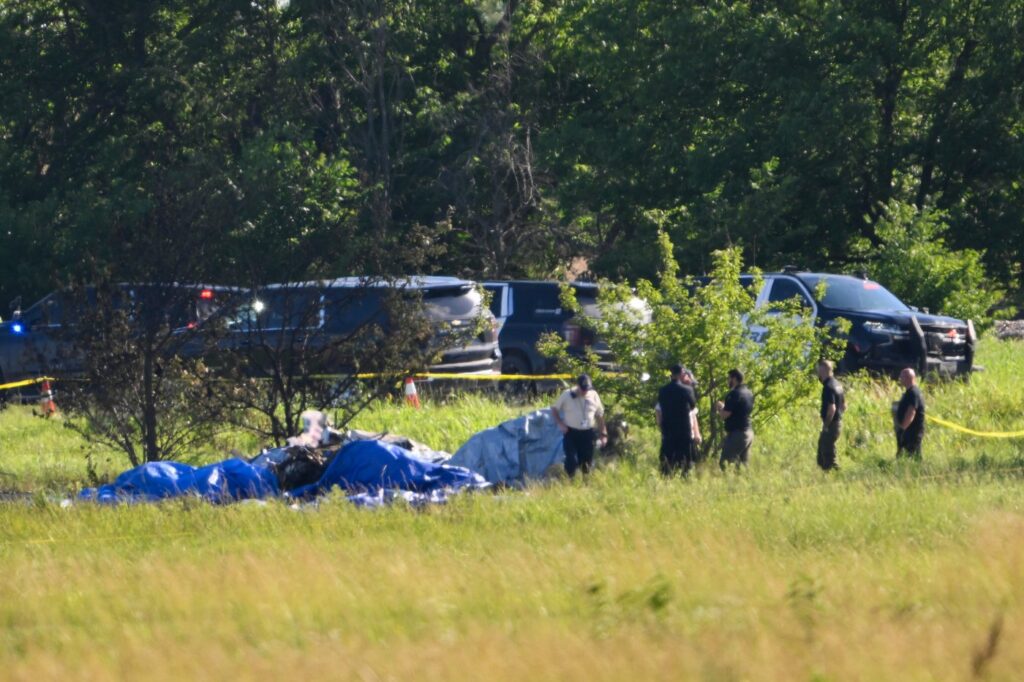
BUTLER, Mo. (AP) — A preliminary report from federal safety investigators revealed that there were no significant safety failures that contributed to the tragic plane crash during a skydiving outing in Missouri on June 14, 2026. The crash resulted in the deaths of all 12 individuals on board, including several experienced skydivers.
The National Transportation Safety Board (NTSB) released their preliminary findings based on a thorough examination of the wreckage. The report indicated no evidence of mechanical malfunctions or engine failures leading up to the crash, which occurred shortly after takeoff from Butler Memorial Airport at 11:25 a.m. on a clear day. Post-accident inspections of fuel also indicated that the fuel truck's supply was free of any sediment or debris. Additionally, an analysis of the operations software of the skydiving business confirmed that the aircraft had complied with weight and balance limits for the flight.
Notably, the aircraft lacked a crashworthy voice or data recorder, which is standard on commercial flights, as it was not a regulatory requirement. Investigators noted they had retrieved damaged GoPro cameras from the wreckage, which may provide additional context regarding the moments before the crash.
The investigation, still ongoing, is expected to take a year or more to finalize. Preliminary accounts of the accident describe the airplane making a gradual left turn during its ascent, with both wings tilting to nearly a vertical position before the aircraft crashed nose-first into a field and caught fire.
The significant blaze caused extensive damage to critical structural components of the aircraft, including the cockpit, cabin, and fuel system. Disturbingly, some family members of the deceased were present at the airport to observe the skydiving activity when they witnessed the crash unfold. Among those who perished was the technology director of the United States Parachute Association (USPA), Jen Sharp, highlighting the tragedy's personal impact within the skydiving community.
Dennis Jacobs, the acting airport manager and Bates County Emergency Management Agency director, stated that he observed the aircraft's apparent power loss, leading him to believe the pilot attempted to land on a nearby highway prior to the crash.
The Pacific Aerospace 750XL, the aircraft involved in the accident, is a model frequently used for skydiving as well as other operations like aerial surveying and cargo transport. It has a capacity of over 4,000 pounds (1,800 kilograms) and can operate from short runways. FAA records indicate that the plane was built in 2010 and had successfully completed nine flights in the days leading up to the incident, including two flights the Sunday morning before the crash.
The pilot possessed a commercial pilot certificate and boasted over 4,100 flight hours. This season marked his second consecutive year working with Skydive Kansas City. Investigators characterized the pilot as safety-conscious and prudent in decision-making, noting no prior concerns regarding his flying capabilities.
The crash has raised longstanding issues regarding the safety and regulation of skydiving operations. Often, poor maintenance is a contributing factor in skydiving accidents, and previous NTSB investigations have highlighted the need for stronger oversight within the industry. Though the Federal Aviation Administration (FAA) has yet to act on the NTSB's recommendations, it has established a committee to evaluate and propose enhancements to skydiving safety practices, considering insights from the NTSB.
The USPA defended Skydive Kansas City, asserting that the company complies with safety standards mandated by the world’s largest skydiving organization and adheres to all FAA maintenance regulations. The skydiving sector maintains a relatively strong safety record, having reported nearly 3.5 million jumps in the previous year with 16 civilian fatalities, predominantly attributed to human error.








