

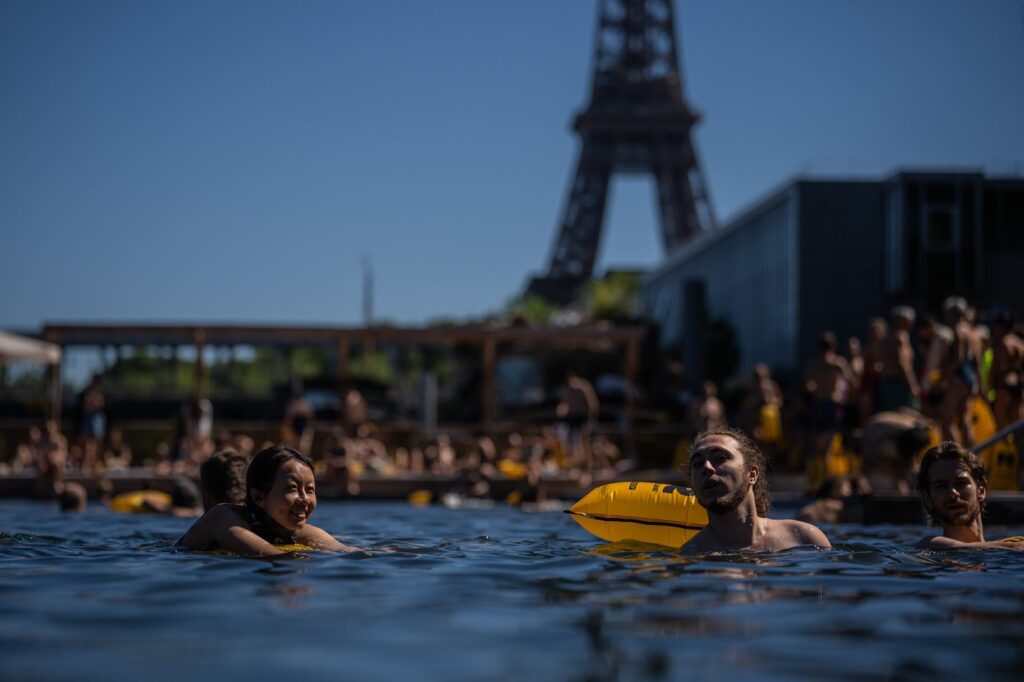
The Seine River in Paris is becoming a new summer tradition as the city has opened three supervised swimming sites for the second consecutive year. These free swimming areas, located near iconic landmarks such as City Hall, the Eiffel Tower, and in eastern Paris, will be accessible throughout the summer months, contingent upon weather conditions and water quality. Authorities are committed to the safety of swimmers and conduct daily testing of the water to ensure it meets health standards.
Visitors have described the experience of swimming in the Seine as unforgettable. Stewart Talbot, a tourist from Melbourne, Australia, expressed his delight, stating, "It's amazing to be swimming in the Seine while looking at the Eiffel Tower. Maybe it’s not as good as the sea in Australia, but it’s better than our rivers." Many Parisians are also embracing this unique opportunity, adding it to their summer bucket list. Hermine Jegou, a 19-year-old local, highlighted the inclusive atmosphere, saying, "It’s great because it’s such a mix of people. I love that everyone can get into the water—grandmothers, children—it’s just really nice."
Joanne Jegou, her 21-year-old sister, echoed her sentiments, mentioning that the experience was "cool, especially being out in the sun and cooling off." The Seine, which serves as a venue for some swimming and triathlon events during the upcoming Paris 2024 Olympics, has undergone significant upgrades, including a multibillion-euro cleanup initiative, improving sewer systems, rainwater storage infrastructure, and various other measures to reduce pollution. These improvements have made swimming in the Seine feasible after it had been banned for nearly a century due to poor water quality.
Despite the optimism, last summer saw several swimming days canceled because of heavy rain, which led to increased pollution levels upstream. At the Grenelle site, near the Eiffel Tower, officials anticipate large crowds seeking relief from the summer heat. Clémence Donazzan, the deputy manager at the Grenelle site, noted that the maximum capacity is 200 swimmers at any given time. A real-time monitoring system is in place to manage the number of swimmers entering the water, ensuring that everyone can access the facility, albeit with a possible short wait.
In recent years, public swimming has been restricted primarily to man-made canals in northeastern Paris during the summer months. The initiative to open swimming facilities in the Seine represents a significant shift in Paris’s approach to urban waterways, aiming to enhance community engagement and tourism while revitalizing the river as a recreational resource.








