

CAIRO (AP) Egyptian authorities announced the discovery of a well-preserved Byzantine-era residential city in the Dakhla Oasis and an archaeological site in Marina el-Alamein, located near Alexandria. These findings are part of a broader effort by the Egyptian government to enhance its vital tourism sector, which has been significantly impacted by political turmoil and the coronavirus pandemic in recent years.
The Tourism and Antiquities Ministry reported that the recent discoveries reveal intricate details about daily life, urban development, and economic activities in the Dakhla Oasis during the fourth century, a period when Egypt was under Byzantine rule. Archaeological findings include a network of north-south thoroughfares intersected by east-west streets, creating open squares and public spaces. A basilica church dating back to the mid-fourth century dominates the settlement, along with two watchtowers that provided security.
The Dakhla Oasis is situated in Egypt's western province of New Valley and is under consideration for inclusion in UNESCO's World Heritage List due to its historical significance. Among the discoveries are several fortified structures, large houses with reception halls, and many residences with vaulted roofs. Notably, the house of Tisous, identified as a church deacon’s residence from the second half of the fourth century, is believed to have functioned as a house church before the basilica's construction.
The excavation team also unearthed bread ovens, kitchens, and stone grinding tools used for food production. Well-preserved bronze coins featuring portraits of Byzantine emperors, Latin inscriptions, and Christian symbols were discovered, along with gold coins that traced back to the reign of Roman Emperor Constantius II, who ruled from 337 to 361 AD. Additionally, about 200 pottery fragments, known as octraca, with inscriptions detailing commercial transactions and correspondence were found.
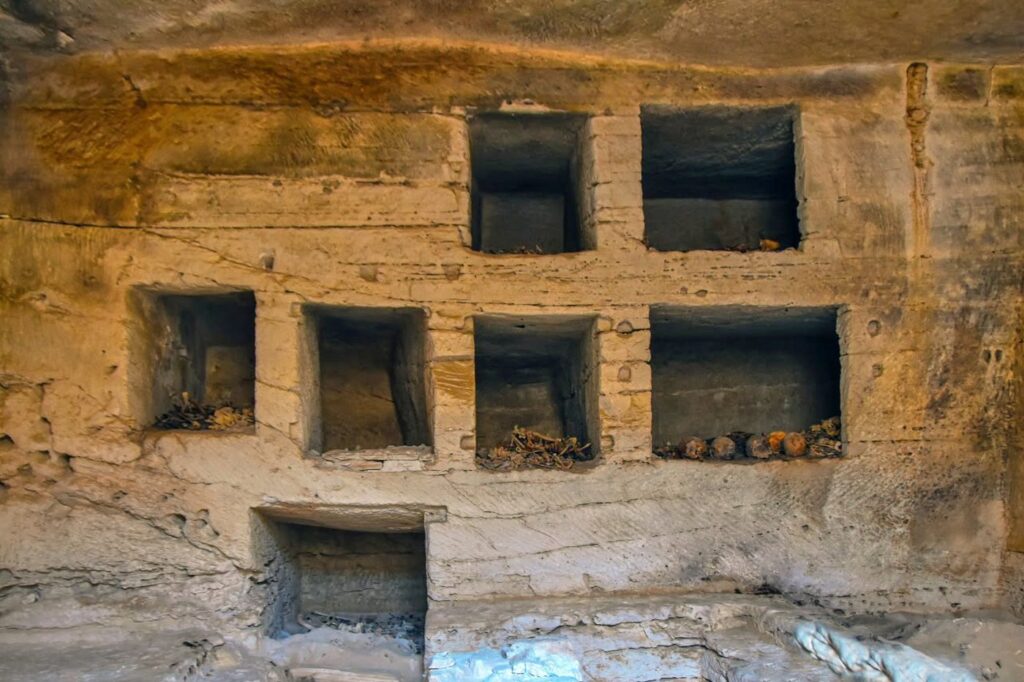
In a separate endeavor at the Marina el-Alamein archaeological site, approximately 100 kilometers west of Alexandria, archaeologists identified 18 ancient tombs, increasing the total discovered in the area to 48. This site, believed to be the ancient Greco-Roman port city of Leukaspis, boasts rock-cut tombs and surface limestone-built tombs dating back to significant periods of antiquity.
The findings at Marina el-Alamein included pottery vessels, amphorae, lamps, plates, altars, and limestone basins. The archaeological mission, led by Eman Abdel-Khaliq, uncovered a 2.5-meter-long granite sarcophagus containing skeletal remains that are under study. Adjacent to the sarcophagus, the remains of a plaster sphinx statue were also discovered. Significant was the find of four gold pieces placed inside the mouths of some deceased individuals, a practice known as "the golden tongue," linked to ancient funerary customs.
As Egypt’s tourism sector begins to recover—recording 19 million tourists in the last year, a 21% increase from 2024, and 6.1 million tourists in the first four months of 2026 compared to 5.7 million the previous year—the unveiling of these archaeological sites is expected to further bolster interest in Egypt’s rich historical landscape. Tourism, alongside the strategic Suez Canal, remains a crucial source of foreign currency for the cash-strapped nation.








