

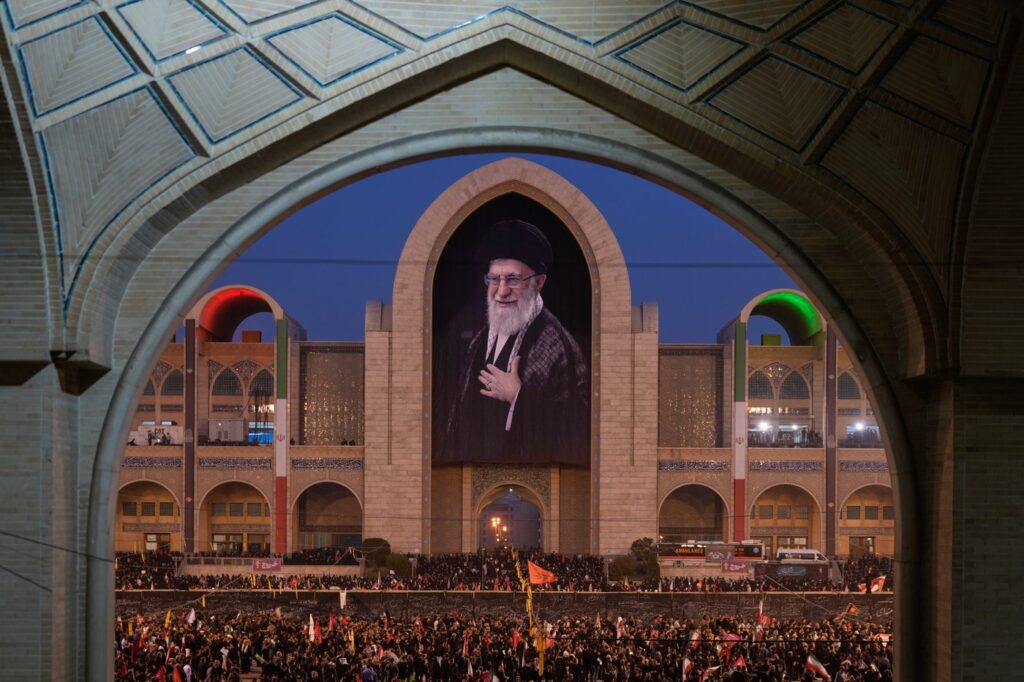
TEHRAN, Iran (AP) — A significant event unfolded during the funeral ceremonies for Iran's late Supreme Leader Ayatollah Ali Khamenei, where a prominent performer, Mohammad Rasouli, publicly called for the death of former U.S. President Donald Trump. This occurred in front of a massive crowd in Tehran, where hundreds of thousands gathered to pay their respects. The remarks made during the funeral reflect the tensions between Iran and the United States, especially amidst ongoing negotiations regarding a permanent resolution to conflicts affecting global energy supplies.
Rasouli's statements incited strong reactions from the crowd, which echoed chants of "Death to America!" and "Death to Israel!" His direct confrontation referred to Trump as "the most bastard man in the world," leading attendees to cheer in agreement. This moment marked one of the most explicit calls for violence against a sitting U.S. president from a high-profile figure during the funeral proceedings, characterized by posters and graffiti advocating for Trump's and Israeli Prime Minister Benjamin Netanyahu's deaths.
The funeral, which saw a more extensive attendance than the previous day, also featured prominent religious leaders, including 97-year-old Ayatollah Jafar Sobhani, who led prayers for Khamenei and his family. Mourners clad in black carried banners and flags honoring Khamenei while expressing their calls for violence against Trump, coinciding with the president's own speech in Washington to commemorate the 250th anniversary of the United States.
During his speech, Trump made claims of military success against nations like Iran and Venezuela, asserting that the U.S. had decisively defeated their military capabilities. The backdrop of Rasouli's comments and the funeral draws attention to the historical context surrounding Trump's actions, notably the 2020 drone strike that resulted in the death of Iranian General Qassem Soleimani, sparking heightened antagonism between Washington and Tehran.
Despite allegations from within the U.S. regarding Iranian threats against Trump, Iranian officials have consistently denied any intentions to assassinate him. However, hard-line propaganda has long suggested that Trump is a target within Iranian rhetoric. Meanwhile, Trump's previous statements have included promises to "destroy Iran's very civilization" as a response to threats and geopolitical posturing.
The proceedings surrounding Khamenei's funeral have notably disrupted ongoing discussions between Iran and the United States, especially as the country navigates its political landscape following Khamenei's passing at the age of 86 due to an airstrike during the resurgence of conflicts in the region. His son, Ayatollah Mojtaba Khamenei, has emerged as a potential successor, which may influence Iran's strategies in leveraging its strategic location in the Strait of Hormuz during future negotiations with the U.S.
The funeral was delayed due to the active war, putting diplomatic talks on hold until the cessation of hostilities. The event serves as a poignant reminder of the fraught and volatile U.S.-Iran relations, with Khamenei's legacy now resting on the shoulders of his successors amid these ongoing tensions.








