

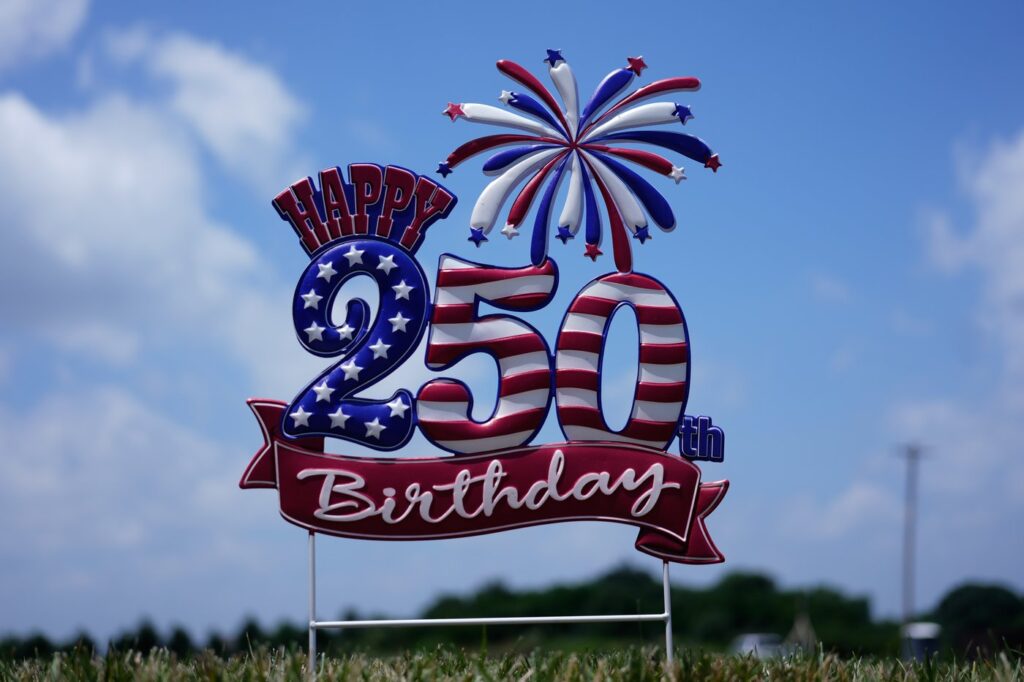
The United States is preparing for its 250th birthday, a milestone that aims to unite Americans through community service and patriotic initiatives. Major nonprofit organizations and corporations like Walmart and Coca-Cola are launching nationwide campaigns, encouraging volunteerism and promoting limited-edition merchandise to mark the occasion.
However, the response from the private sector has been mixed, reflecting a divided national sentiment. Recent surveys indicate that fewer Americans feel their country is exceptional compared to a decade ago, evidencing a broad decline in patriotic feelings. This shifting perception is exemplified by varied views on the American flag, which are influenced by factors such as politics, age, and race.
The celebration's complexity is enhanced by the existence of two rival events organized by different commissions. Freedom 250, initiated by former President Donald Trump and led by his allies, is set to provide alternative programming to the official America250 organization, which was established by Congress in 2016. Trump, at a rally for Freedom 250, proclaimed, “The American dream is alive again," despite some musical performers withdrawing due to concerns about the event’s politicized nature.
America250’s centerpiece event, America Gives, is focused on strengthening volunteer habits by encouraging Americans to partake in service opportunities through partnering nonprofits and logging their hours online. Merle Heatwole, the National Commander of the Salvation Army USA, expressed concerns that political affiliations have complicated participation in the nonpartisan initiative. Nevertheless, he noted that thousands of churches across the country supported community service efforts like “Good Neighbor Day” in May.
The America Gives platform had logged over 38 million volunteered hours leading into the holiday weekend, although it is unclear how many hours are needed to set a new record. According to AmeriCorps’ analysis, Americans recorded a substantial 4.99 billion service hours in the preceding year, illustrating the potential for civic engagement surrounding the milestone anniversary.
Despite these efforts, many nonprofits feel disconnected from the sesquicentennial celebrations. Jayne Cravens, a nonprofit consultant, highlighted a lack of infrastructure to create meaningful service experiences, particularly in light of reductions to AmeriCorps, the federal agency for national service, instituted during Trump’s administration.
Younger generations appear to be responding to calls for civic engagement outside the frameworks of the 250th celebrations. Audra Watson, who leads a youth civic program at the nonprofit C&S, has noticed that while the anniversary generates some excitement among a select group of history enthusiasts, many young people are focusing their energy on local issues rather than political affiliations.
The marketing landscape surrounding the 250th anniversary is muddled by two competing logos — America250’s red, white, and blue ribbon design and Freedom 250’s traditional circular logo featuring 13 stars. Experts believe this discrepancy can confuse potential participants and hamper cohesive branding efforts for events and merchandise.
Walmart, as a founding sponsor of America250, is engaged in collecting oral histories nationwide through a mobile recording studio, which will be archived by the Library of Congress. Coca-Cola's campaigns, such as “Paint the Nation,” feature large public art projects created with local artists, aiming to reflect community pride and culture across various states.
Public sentiment toward the commemorative merchandise varies widely. Aaron Hilton, a 36-year-old from Suffolk, Virginia, expressed apathy towards the celebratory items, attributing his lack of enthusiasm to the Trump administration. Conversely, Darrell Brown, 60, from Alexander, Arkansas, has embraced the merchandise and decorations, emphasizing a desire for non-political celebration of the nation’s anniversary.
Historically, large-scale commemorations often rely on grassroots programming for successful engagement, as seen during the 1976 bicentennial celebration. M.J. Rymsza-Pawlowska, a cultural historian, reflected on the impact of community initiatives during that time, citing federal funding that supported local civic engagement efforts. She noted that this anniversary could also serve as a catalyst for renewed community-driven programming, although the ultimate legacy remains uncertain.








