

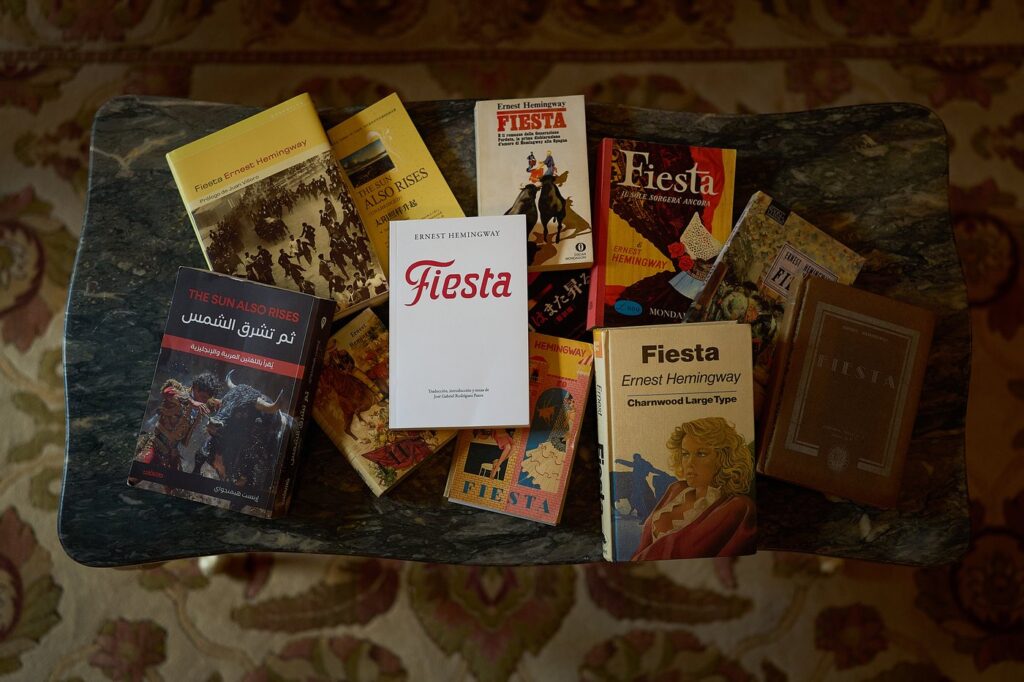
PAMPLONA, Spain (AP) – Bill Hillmann, an avid bull runner from Chicago, has survived three goring incidents while participating in the famous San Fermin festival in Spain. This year, he is particularly excited to attend as it marks the 100th anniversary of the publication of Ernest Hemingway's influential novel, "The Sun Also Rises," which brought global attention to Pamplona and its iconic bull-running tradition.
Published in 1926, Hemingway’s novel has captivated multiple generations with its exploration of the "lost generation" of American expatriates seeking excitement and meaning in post-World War I Europe. The book showcases a vivid portrayal of the bull-running festival, capturing the thrill and danger faced by participants. For Hillmann, the novel was life-changing; he was only 19 when he first encountered it and was drawn to the narrative's thrilling depiction of the festival. His fascination led him to the annual event in Pamplona, and he has since participated in numerous bull runs across Spain.
Hillmann's passion for the festival is indicative of a larger trend: Americans comprise the largest group of foreign participants in the San Fermin festival. In 2022, 16% of bull runners were American, quadrupling the number of runners from neighboring France, according to Pamplona’s City Hall. Bruce Anderson, a Dallas-based tour operator, has facilitated the journey for thousands of Americans to the festival, with this year’s group totaling 1,400 individuals, two-thirds of whom are from the U.S. Anderson attributes this surge in American interest to Hemingway’s literary legacy, which has made the festival an aspirational destination for fans of the author.
In Pamplona, Hemingway’s influence is omnipresent. Various hotels and bars boast busts and memorabilia commemorating the writer, and a prominent banner outside the bull ring honors his literary contributions, including a quote that encapsulates the festival's explosive energy. The Gran Hotel La Perla, where Hemingway frequently stayed, still holds furniture from his visits in the 1950s, and the view from his suite overlooks the bustling route of the bull runs.
Nonetheless, Hemingway’s legacy in Pamplona is complex. While he has drawn international attention and tourism to the city, his glorification of bullfighting has sparked criticism from animal rights advocates. Some locals express regret over how his promotion of the festival has contributed to issues of overtourism and excessive behavior among younger visitors. The local population, which numbers about 200,000, swells to over a million during the festival, prompting concerns over the cultural impact of such immense tourism.
Literature professor Gabriel Insausti notes that Hemingway has almost become a commercialized symbol of the San Fermin festival, with many aware of his name but unaware of his works. Hillmann himself emphasizes the dangers inherent in the festival, highlighting the increase in inexperienced runners that contribute to accidents and injuries, despite the last recorded fatality occurring in 2009.
Hillmann recounts his harrowing experiences with gorings, including severe injuries in 2014 and 2017, which have not deterred him from participating. He believes that there is artistry in the chaos of the bull run, despite common perceptions of reckless behavior among participants. The themes explored in Hemingway's works, such as identity and loss, remain relevant, as noted by his granddaughter Mariel Hemingway. Mariel reflects on her grandfather's enduring impact and the profound themes his literature covers, suggesting that his exploration of the human condition remains timeless.
As the San Fermin festival continues to blend Spanish traditions with global interest driven by Hemingway’s legacy, the relationship between the cultural event and its literary champion showcases the complexities of cultural heritage, tourism, and the changing social landscape.








