

OTTAWA — While the federal government is yet to finalize plans concerning its order for a full fleet of fifth-generation F-35 fighter jets, it is already shifting its focus towards future initiatives.
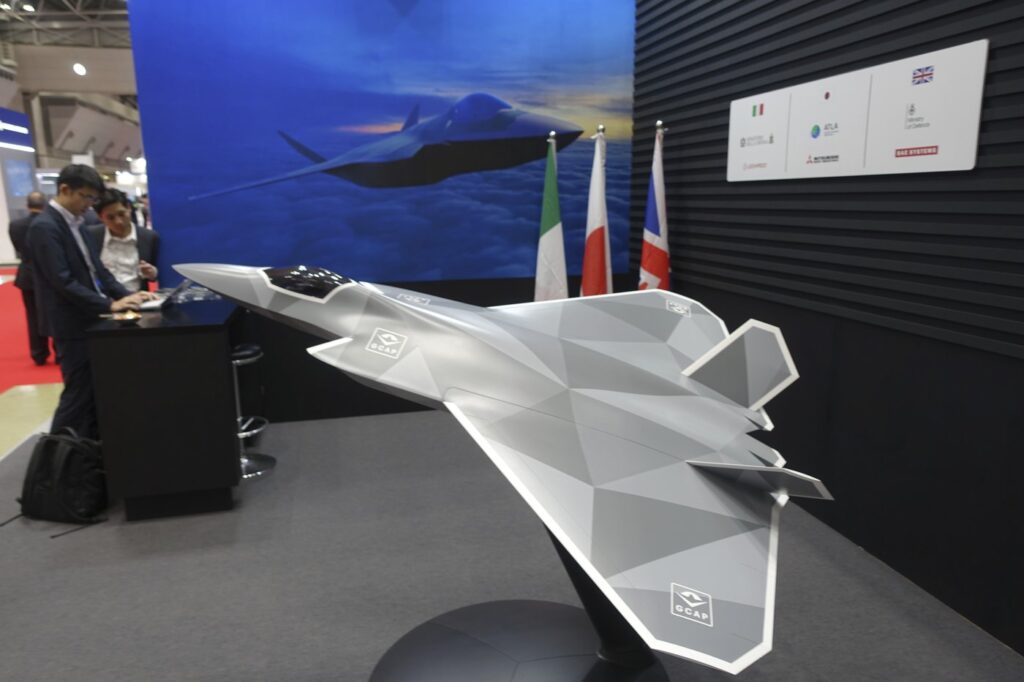
It is widely anticipated that Canada will announce its participation on Tuesday in a sixth-generation fighter jet program spearheaded by the United Kingdom, Japan, and Italy. However, the country will be joining not as a participant but as an observer, which would allow it access to internal information pertaining to the program.
Defence Minister David McGuinty, who is currently attending a major international air show in the U.K., has expressed the government's interest in the Global Combat Air Program, established to succeed Japan’s F-2 jets and the Eurofighter Typhoons used by the U.K. and Italy.
At this stage, the program is still in its infancy, and it remains uncertain whether Canada has a viable route for meaningful participation, particularly in a way that would engage its domestic industry. Philippe Lagassé, a professor at the Norman Paterson School of International Affairs, pointed out that the program is still very conceptual and that significant details are yet to be worked out. He mentioned that some critics may argue for abandoning traditional fighter jets altogether, acknowledging that such projects often come with a great deal of uncertainty and potential challenges.
David Perry, president of the Canadian Global Affairs Institute, highlighted the numerous unanswered questions regarding Canada's involvement and the possibility of an entry fee. However, achieving observer status could provide clarity and help shape the federal government’s strategy on future participation in the program. Perry emphasized the importance of evaluating the program before committing to deeper involvement, suggesting that an initial exploration makes sense as the situation develops.
On the U.S. front, Boeing is developing the F-47, a next-generation twin-engine fighter to replace the U.S. Air Force's F-22 Raptor, with estimated costs reaching around US$300 million per aircraft — significantly more expensive than the F-35s. Daniel Norton, a senior management systems analyst at the RAND Corporation, raised concerns over the potential reluctance of the U.S. to export such technology and the cost barriers it may pose to smaller air forces, such as the Royal Canadian Air Force (RCAF).
Norton also noted that the Global Combat Air Program could be a more cost-effective option and might provide a better opportunity for Canadian firms to engage in both development and production efforts. Furthermore, having the option to participate could serve as leverage in negotiations with other contractors.
Canada's plan to procure a fleet of 88 fifth-generation F-35 fighter jets has been under federal review for over a year, initiated by Prime Minister Mark Carney back in March 2025 in response to the escalating trade tensions initiated by then U.S. President Donald Trump. Richard Shimooka, a senior fellow at the Macdonald-Laurier Institute, indicated that the Global Combat Air Program has experienced internal disagreements and its future trajectory remains uncertain. Notably, the U.K. has been hesitant for almost a year regarding financing commitments, whereas Japan has been advocating for a more accelerated timetable.
Shimooka also highlighted that Canada has an alternative option in potentially joining the U.S. Navy's sixth-generation project, known as F/A-XX. He suggested that shifts in the political landscape between Ottawa and Washington could open pathways for such collaboration in the future, emphasizing that Canadian industries are effectively aligned with U.S. firms.
This report by The Canadian Press was first published on July 21, 2026.








