

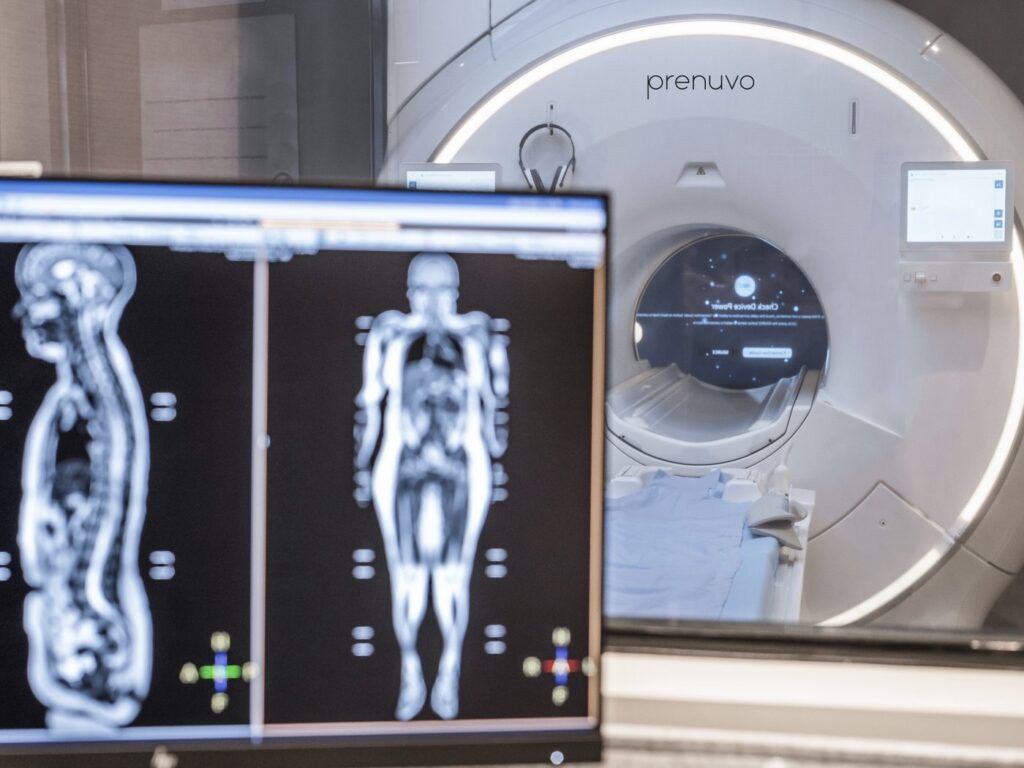
Full-body MRI advertisements have proliferated across various platforms, from radio and online videos to public transport. These marketing campaigns promote full-body MRIs as a preventative health measure designed to identify potential health issues at an early stage. However, it's important to note that no medical association currently endorses the routine use of full-body MRIs for screening purposes.
In a recent discussion, Caryn Ceolin engages with Dr. Matt Davenport, who serves as the service chief and vice chair in the department of radiology at the University of Michigan. Their conversation explores the fundamental aspects of full-body MRIs, including their intended purpose, potential benefits and risks, and whether they should be a consideration for individuals seeking preventive healthcare measures.
Dr. Davenport explains that a full-body MRI is a non-invasive imaging technique that utilizes strong magnets and radio waves to create detailed images of the body's internal structures. Proponents argue that this type of scan can help detect tumors, organ abnormalities, and other health concerns before symptoms arise. However, critics highlight significant drawbacks, including false positives, overdiagnosis, and the associated anxiety of unexpected findings that may lead to unnecessary medical procedures.
One of the primary concerns surrounding full-body MRIs is the issue of overdiagnosis. As advancements in imaging technology improve detection capabilities, there is a growing risk of identifying conditions that may never cause harm to the patient over their lifetime. This phenomenon can lead to overtreatment, exposing individuals to the risks and side effects of additional medical interventions that might not have been necessary in the first place.
Additionally, Dr. Davenport emphasizes the important role of individual risk factors in determining the appropriateness of any medical screening. A full-body MRI might provide some peace of mind for individuals with a family history of certain diseases or those experiencing unexplained symptoms; however, for the general population, the test may offer limited value. Routine screenings, such as mammograms and colonoscopies, are based on well-established guidelines that consider specific patient risk profiles, making them more recognizable as standard preventive measures.
The discussion further sheds light on the financial implications of full-body MRIs, which often are not covered by health insurance plans. The out-of-pocket costs can be substantial, and patients may find themselves undergoing unnecessary procedures without clear clinical benefits, contributing to both anxiety and financial strain.
In summary, while full-body MRIs are marketed extensively as a tool for preventative care, medical professionals like Dr. Davenport illuminate the complexities involved in their usage. The nuanced debate over their efficacy highlights the importance of individualized medical advice and the need for patients to consult healthcare professionals rather than relying solely on commercial advertisements.
For those interested in hearing more about this topic, the full conversation between Caryn Ceolin and Dr. Matt Davenport can be accessed through the available podcast links on platforms like Apple Podcasts and Spotify.








