

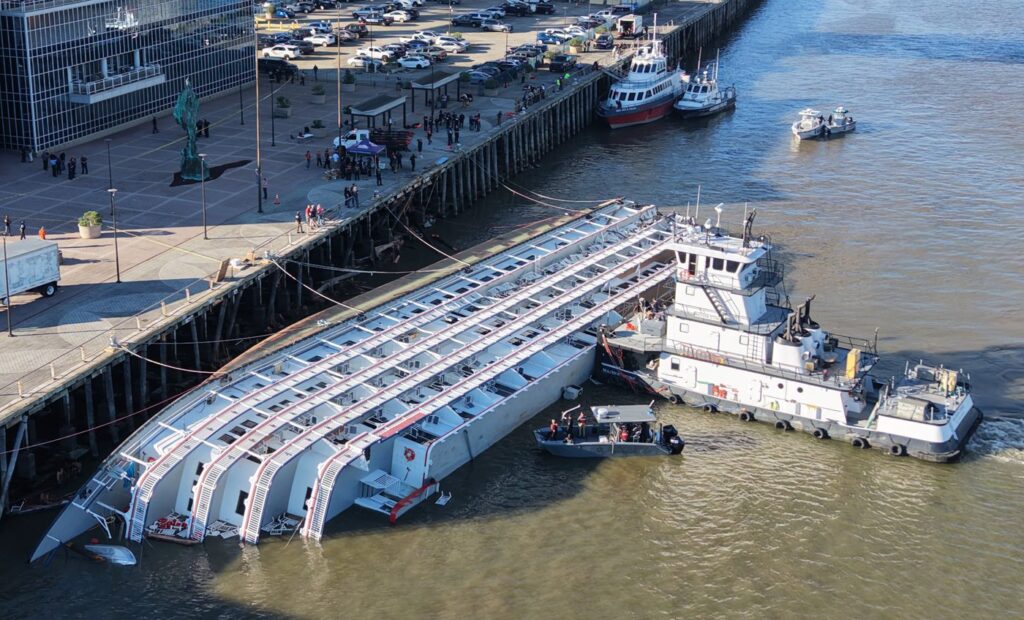
A failure in the steering system of the tanker Atlantic Asphalt resulted in a catastrophic incident in New Orleans, as the vessel's rudder was stuck in a position that led to a collision with the American Heritage cruise ship. This information was released by U.S. government safety officials on Sunday, marking the first official report on the circumstances surrounding the crash that occurred on Friday.
According to the National Transportation Safety Board (NTSB), the precise cause of the steering failure remains undetermined at this time. NTSB accident investigator Bart Barnum mentioned that the malfunction could stem from a variety of issues, highlighting the ongoing investigation into the incident.
The Atlantic Asphalt tanker, measuring approximately 520 feet (160 meters) in length and carrying a crew of 19, collided with the smaller American Heritage cruise ship, which is about 300 feet (91 meters) long and had 140 passengers along with 50 crew members on board at the time of the incident. The collision resulted in 32 individuals being transported to the hospital, including two police officers who were thrown into the Mississippi River as the tanker rolled upon impact. Fortunately, none of the injuries sustained were reported to be critical; however, six individuals remained hospitalized as of Sunday, according to a statement from the city of New Orleans.
The steering issue caused the tanker’s rudder to remain positioned to the starboard side, directing it toward the east bank of the river. Just two minutes after the rudder became immobilized, the tanker struck the cruise ship. Barnum indicated that the ship's data recorder captured audio consistent with the ship’s whistle sounding, along with warnings and emergency assistance requests broadcasted over the marine radio. The recordings included commands to deploy emergency anchors and other directives aimed at handling the crisis.
NTSB Member John DeLeeuw encouraged anyone with photographs or videos of the crash to submit their materials to the agency to aid in the investigation, which is anticipated to yield a preliminary report within 30 days. He commended the prompt and effective response from federal, state, local, and private vessels that participated in the immediate rescue efforts following the collision.
In a rapid sequence of events, the cruise ship capsized within 22 minutes after the impact. Following the crash, the Board of Commissioners of the Port of New Orleans filed a federal lawsuit against the tanker, claiming it caused at least $1 million in damages to the terminal. Subsequently, a judge issued a warrant on Friday, granting federal officials temporary control over the ship.








