

OTTAWA – An aviation management expert has indicated that Canada is less likely than the United States to implement a nationwide ground stop for flights, as seen in the U.S. on Friday afternoon. John Gradek, a faculty lecturer in supply networks and aviation management at McGill University, believes the Canadian aviation system serves as a model that the U.S. should emulate.
Gradek stated, “They should look north – they should look to Canada.” He emphasized the need to remove financial control of the air traffic control system from the hands of politicians. He criticized the fragility of the U.S. system that was brought down due to the clipping of a wire on a router, highlighting that this incident impacted the entire U.S. aviation system and signaled a significant issue.
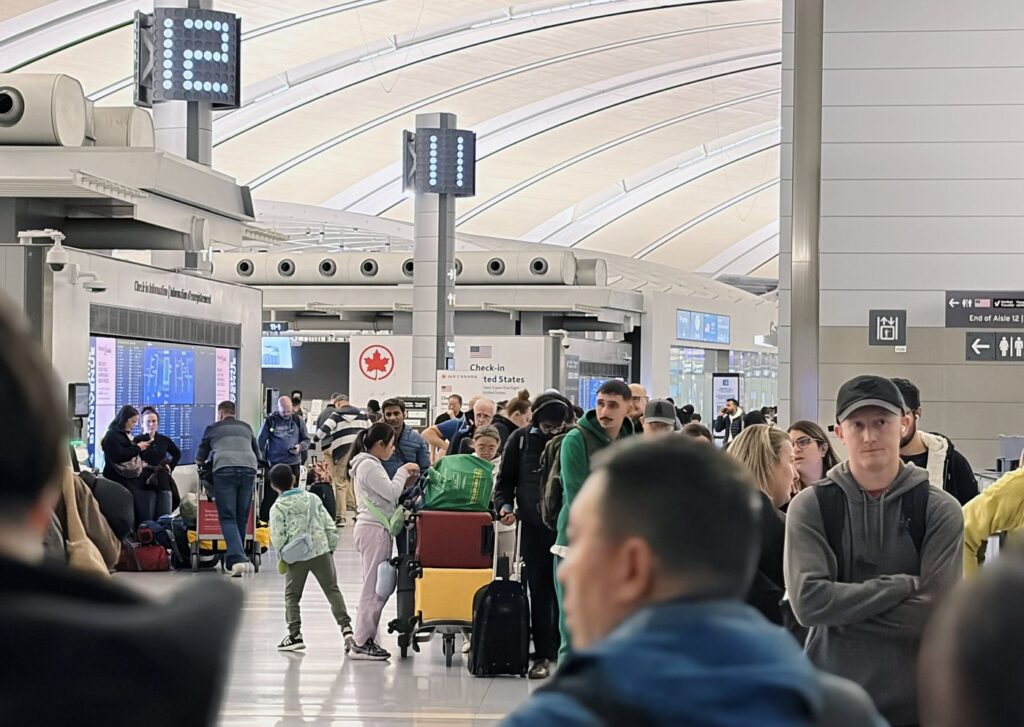
The U.S. Federal Aviation Administration (FAA) issued a ground stop order on Friday, attributing it to communication failures at nearly two dozen air traffic control centers. This disruption necessitated the suspension of flights between Canadian airports and the U.S., with Air Canada announcing the cancellation of remaining flights for the day.
The U.S. ground stop was lifted late Friday, allowing flights to resume; however, airlines cautioned that restoring normal operations could take several days. The FAA later identified a radar site in Amarillo, Texas, and a communications site in El Dorado, Arkansas, as possible trouble sources, noting that an excess data overflow led to intermittent disruptions in communications and radar feeds.
U.S. Transportation Secretary Sean Duffy explained after a contractor replaced old copper wiring with new fiber optics at the Arkansas site, a subsequent problem in Texas triggered the ground stop. Duffy reiterated the need for billions of dollars in updates to the aging air traffic control infrastructure, stressing the bipartisan neglect of funding over the past two to three decades.
Gradek contested the FAA’s funding model as the root of the problem, noting that it results in the use of outdated equipment that cannot handle significant data surges. In contrast, he highlighted that in Canada, NAV Canada operates independently of the government, funding its operations through airline ticket sales. This system insulates the non-profit organization from political influence regarding resource allocation.
Gradek claimed, “We’re the envy of the world in Canada in terms of how we have our air-traffic control systems in place, and the management of those systems by NAV Canada.” He pointed out that he had never witnessed such instability in an air traffic control system whereby one wire could lead to a total system failure.
Responding to the U.S. outage, NAV Canada confirmed that its systems remained unaffected and that air traffic services within Canadian airspace continued to operate normally. The organization cited a significant investment of $3.5 billion in air traffic management and infrastructure improvements.
Spokesperson Maryam Amini indicated that the infrastructure includes multiple levels of redundancy, including backup systems and established contingency procedures, which are regularly trained on to ensure the safety of operations.
This situation underscores a stark contrast between the air traffic control systems of the two countries, illustrating the potential strengths of Canada's approach in promoting resilience and operational efficiency.








