

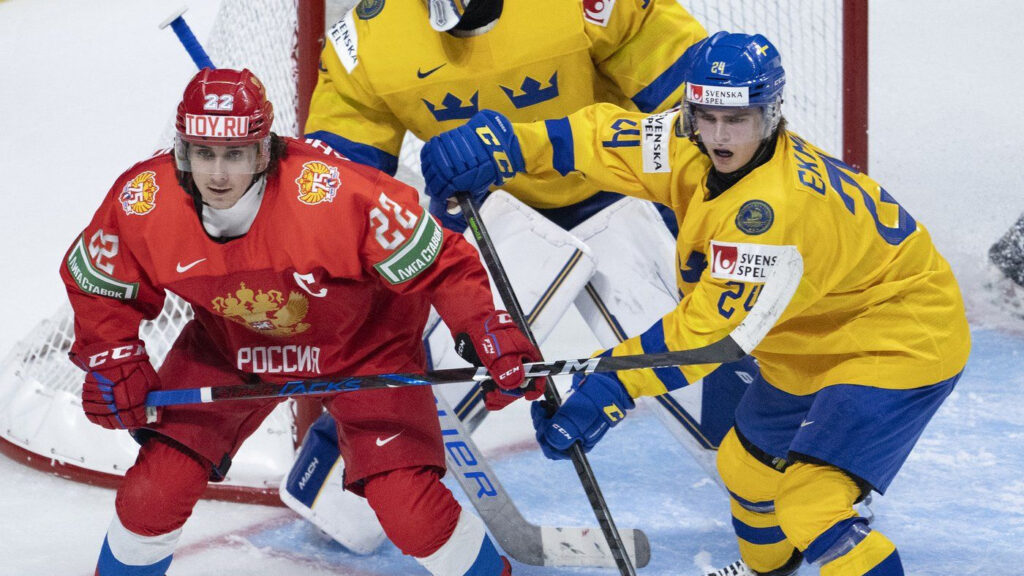
The International Ice Hockey Federation (IIHF) announced that Russia will not participate in the upcoming World Junior Hockey Championship scheduled to begin on December 26, 2023, in Alberta, Canada. This decision stems from government restrictions enforced by the Canadian federal government, despite a ruling from the Court of Arbitration for Sport (CAS) that mandated Russia's reinstatement in international hockey.
According to the IIHF, these restrictions have made it impossible for Russia to participate in the tournament, which will take place in Edmonton and Red Deer. The CAS ruling, issued on October 30, 2023, required the IIHF to reinstate Russia for the world junior championship and four other tournaments, including the women's world championship set for November 2027 in Quebec City. However, the Canadian government quickly opposed this ruling, asserting that Russian and Belarusian athletes would not be welcome in Alberta, irrespective of CAS's decision.
Prime Minister Mark Carney voiced this stance during a Commonwealth meeting in Antigua on November 3, stating that as long as Russia and Belarus continued to support the ongoing war in Ukraine, their athletes would not compete in Canada. Carney emphasized, "So if you're asking specifically about the world juniors, the Russians will not be there."
The pushback against the CAS ruling was swift, with Finland's hockey federation declaring on November 2 that its national teams would refuse to play against Russia in international tournaments until peace was established in Ukraine. Following Finland's lead, other countries, including Sweden, Czechia, and Latvia, echoed similar sentiments in the following days. The Swedish Hockey Federation, the defending champion of the world juniors, reaffirmed their position, stating they would not engage in matches against Russia amidst the current geopolitical climate.
Despite the CAS's defense of its ruling—claiming that the IIHF had failed to present sufficient evidence justifying the ongoing ban on Russian teams—Ottawa remained firm in its position. The Canadian government clarified that even Russian players holding valid visas would be prohibited from participating in the world juniors.
This standoff left the tournament's future uncertain, particularly regarding Norway's hockey federation, which mentioned it could be removed from the competition in favor of a Russian team. However, this has not been officially confirmed by the IIHF. Meanwhile, Russian officials reacted strongly, with the Russian ambassador to Canada, Oleg Stepanov, accusing Canada of politicizing sports and infringing upon athletes' rights.
Vladislav Tretiak, president of the Russian Hockey Federation, threatened to pursue compensation from Canada and suggested the possibility of relocating or canceling the Alberta world juniors if Russia was excluded from the event. Tretiak also called for an investigation by the IIHF's ethics council into national federations that organized boycotts against Russia.
As the political tensions continue to dominate the discussion surrounding international sports, the absence of Russian athletes in the World Junior Hockey Championship has ignited debates about the intersection of sports and international relations. With allies and rival nations taking firm stands against Russia's involvement, the landscape of international hockey remains fraught with challenges and uncertainty.








