

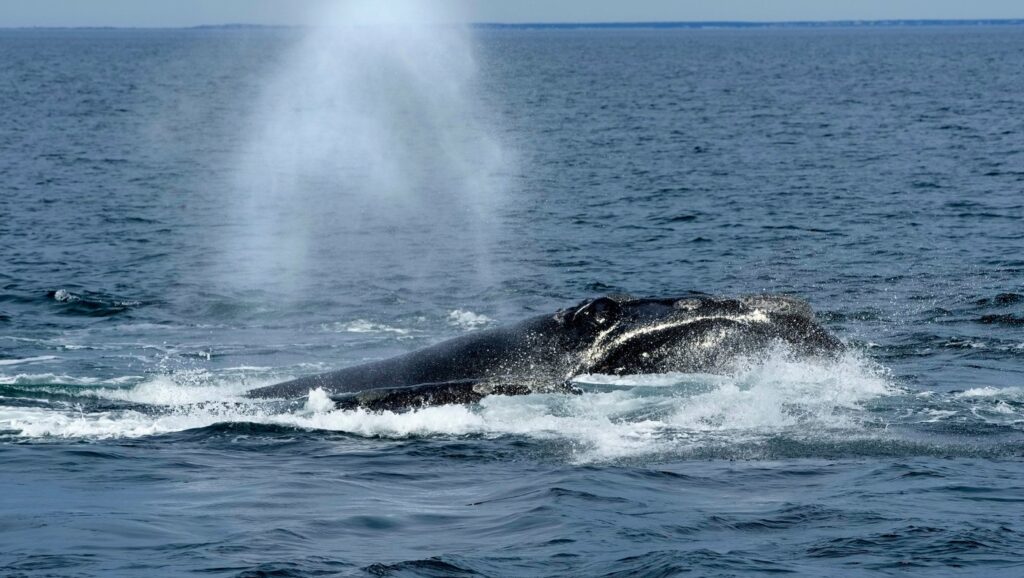
The most recent calving season for North Atlantic right whales has shown promising results, marking one of the strongest seasons on record. This provides a glimmer of hope for a critically endangered species that has faced numerous challenges over the decades. According to reports, during the 2025-2026 calving season, 24 calves were born, the highest number since 2009. However, despite this encouraging baby boom, a preliminary estimate reveals that the overall population of North Atlantic right whales decreased by 2% in 2025, bringing the total to an estimated 382 individuals.
Lindsey Jones, a scientist managing the North Atlantic right whale catalogue at the New England Aquarium, cautions that the increase in births could be a temporary respite. "We just need to help ensure that those calves can survive to maturity and contribute to further population growth," Jones commented from Boston. This highlights the ongoing threats that these whales face, largely stemming from human activities, with vessel strikes and entanglements in fishing gear posing the most significant risks.
As the North Atlantic Right Whale Consortium convenes in Halifax for its annual meeting, discussions will likely center on the urgent need for enhanced protections for these majestic mammals. Jones pointed out that current speed limits for ships entering designated slow-down zones off the east coast of the United States only apply to vessels 65 feet or longer, suggesting that similar regulations should be extended to smaller boats. Furthermore, she emphasized the importance of advancing ropeless fishing gear technology, which is designed to prevent whale entanglements.
Amid these calls for increased protection, the Trump administration has implemented a regulatory pause on new protections for North Atlantic right whales until 2028. In a concerning development, the U.S. House of Representatives recently passed a bill that could extend this pause until 2035, pending Senate approval. If enacted, experts assert that this legislation could hinder the recovery efforts of this already vulnerable species. In May, an internal memo from Fisheries and Oceans Canada indicated that the continuation of these measures might have dire consequences for the right whale population.
Native to the western North Atlantic, right whales are often spotted along the East Coast, stretching from Florida to Newfoundland and Labrador. Certain groups congregate in the Gulf of St. Lawrence during the summer months. Heather Pettis, the chair of the North Atlantic Right Whale Consortium, conveyed that recent estimates signify the population is still on a downward trajectory. "Recovery for this species depends on sustained, protective actions in both the U.S. and Canada," she asserted.
The consortium has noted two right whale fatalities this year alone. A four-year-old male was discovered dead off North Carolina, entangled in Canadian snow crab gear, while the cause of death for a three-year-old female found off Virginia remains undetermined. In addition, eight human-caused injuries were reported, including one from a vessel strike and seven linked to fishing gear. Such injuries are particularly concerning as they may prevent whales from reaching reproductive maturity. Notably, three females, now about nine or ten years old, gave birth to calves for the first time this year.
Jones explained that North Atlantic right whales, being long-lived, require a significant amount of time to reach maturity. Human impacts exacerbate the issue, prolonging the time it takes for these whales to produce their first calf and increasing the intervals between births. Typically, these whales should give birth every three to four years, but there have been extended gaps of five to seven years or more. Some individuals have been observed giving birth only once per decade, which raises alarms given the small size of their population.
Bilateral efforts are underway in Canada and the United States to mitigate the effects of vessel traffic and fishing gear on right whales. In Canada, Transport Canada has enacted speed restrictions and a vessel exclusion zone in the Shediac Valley during the summer months to minimize collision risks. Meanwhile, Fisheries and Oceans Canada enforces seasonal fishing closures to reduce the probability of entanglement. In the U.S., the National Oceanic and Atmospheric Administration imposes seasonal vessel slowdowns, and various states implement additional measures aimed at decreasing entanglement risks.
Historically, the right whale population was believed to have peaked at approximately 21,000 before aggressive hunting practices drastically decreased their numbers, with fewer than 100 remaining by the 1920s. They are named "right whales" because they were considered the optimal target for whalers due to their buoyancy when killed and the high yield of whale oil they produced. Following the prohibition of hunting in 1935, the population slowly grew to 483 by 2010. However, a sharp decline began in 2017, primarily due to entanglements and vessel strikes, with 12 dead in Canadian waters and five in U.S. waters that year. Since 2020, a gradual increase in their numbers has been noted, but the path to recovery remains precarious.








