

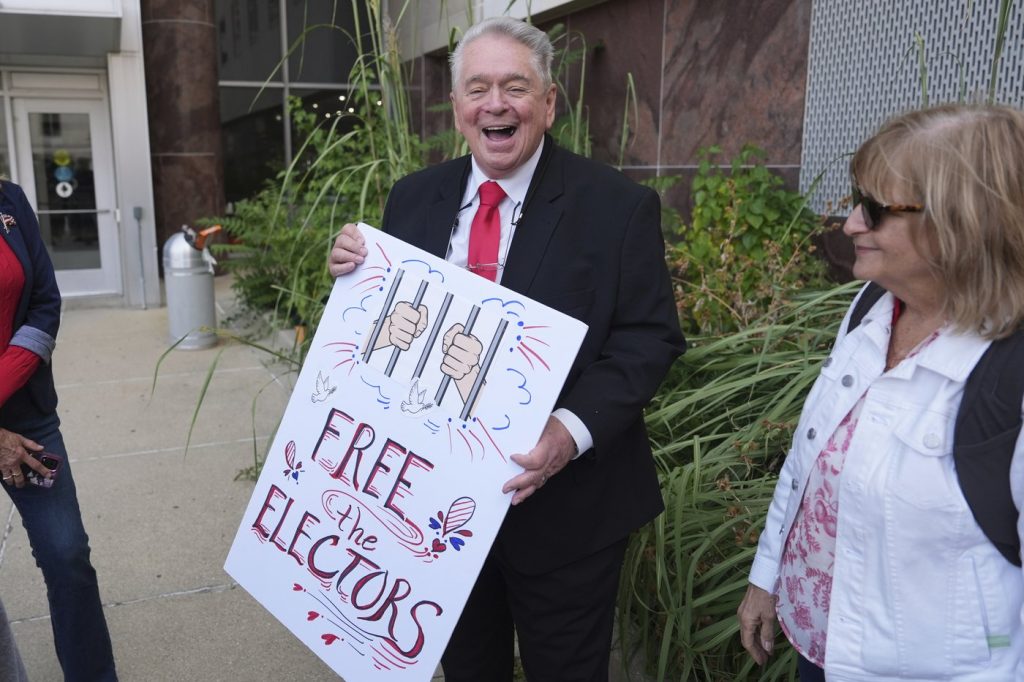
LANSING, Mich. — In the aftermath of the 2020 presidential election, Donald Trump's efforts to overturn the results sparked a series of legal battles involving state and local prosecutors, particularly against individuals known as fake electors. These individuals from swing states, including Michigan, attempted to claim they were the legitimate electors ready to vote for Trump in the Electoral College, believing that this misinformation could lead Congress to reject the actual results recognizing Joe Biden as the winner.
Democratic prosecutors initiated indictments against these fake electors before Trump faced charges from a special prosecutor appointed by President Biden's Department of Justice. This sequence of events illustrated how individuals who participated in Trump's campaign to challenge the election outcome were being held accountable. However, many of these legal cases have encountered challenges, stalling progress significantly. A notable event occurred when a Michigan judge dismissed charges against 15 Republicans accused by Democratic Attorney General Dana Nessel, citing a lack of evidence that these individuals intended to defraud the public.
Judge Kristen Simmons indicated that the defendants genuinely believed there were significant irregularities in the election. This ruling highlighted a trend where cases against fake electors have faced significant setbacks across different states, including Arizona and Nevada. A judge in Arizona returned the case to the grand jury for additional instructions on relevant federal laws, while in Nevada, charges were dismissed due to procedural errors, prompting the attorney general there to refile them.
Nessel expressed concern about the increasing difficulty of pursuing election-related cases in a climate ripe with threats and intimidation targeting judges involved in such politically charged matters. Legal expert Anthony Michael Kreis noted that the unprecedented nature of these cases posed challenges that the justice system had never previously encountered, complicating the prosecution of actions supposedly meant to safeguard democracy.
The framework governing electors dates back to a 19th-century law and the Constitution. Exploiting vague language, Trump and his allies argued for a series of alternative elector slates in states where he lost, which culminated in 2022 legislation designed to clarify the certification process. Many Trump supporters maintain that their actions were merely precautionary, presenting a backup plan should the court challenges result in favorable outcomes for Trump. Marian Sheridan, one of the charged individuals, described herself as an "alternate" elector rather than a fake one, emphasizing the rationale behind their involvement.
Reactions to the dismissal of charges varied, with some defendants considering it a vindication of their actions, while legal experts argue that these cases represent some of the weaker criminal prosecutions following the 2020 election. Complicating matters further are the legal consequences surrounding Trump's involvement in the January 6 riot and subsequent pardons granted to many convicted in those events. Law professor Rick Hasen warned that this combination of legal outcomes could foster adverse consequences for free and fair elections and peaceful transitions of power moving forward.
With ongoing developments across states like Georgia, Wisconsin, and Nevada, the outcome of the local cases remains uncertain, reflecting a tumultuous legal landscape influenced by a charged political atmosphere. As the legal proceedings continue to evolve, the implications for electoral integrity and accountability in the democratic process are significant.








