

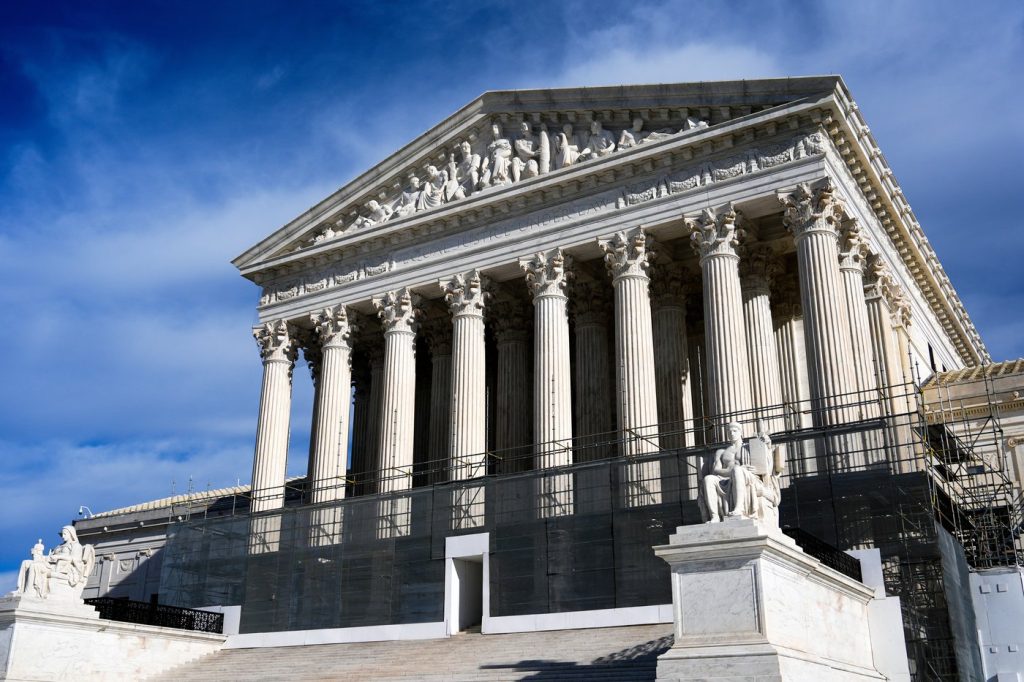
On Tuesday, the U.S. Supreme Court delivered a significant ruling affecting the ability of Americans to sue the U.S. Postal Service (USPS) when faced with issues related to mail delivery. In a split decision of 5-4, the court concluded that individuals cannot sue the USPS, even if they allege that employees have intentionally refused to deliver mail.
The case originated from a claim made by Lebene Konan, a Texas landlord who alleged that her mail was deliberately withheld for a duration of two years. Konan, who identifies as Black, contended that racial prejudice was a contributing factor in the actions of postal employees who reportedly declined to deliver her mail.
Justice Clarence Thomas, representing the majority opinion composed of five conservative justices, stated that the federal law designed to protect the Postal Service from lawsuits regarding undelivered, lost, or missing mail also encompasses “the intentional nondelivery of mail.” This ruling effectively set a precedent that limits the accountability of postal employees in cases of alleged misconduct.
In dissent, Justice Sonia Sotomayor articulated that while the law provides broad protections against lawsuits, it should not extend to circumstances where the decision to withhold mail was influenced by malicious intent. Justice Neil Gorsuch joined Sotomayor and her three liberal colleagues in disagreeing with the majority ruling.
The context of the case is underscored by concerns raised during the Trump administration, where officials warned that ruling in favor of Konan could lead to an overwhelming influx of similar lawsuits against an already financially strained Postal Service. This concern was likely a factor influencing the court's decision.
Konan's plight began when she discovered that the mailbox key for one of her rental properties in Euless, Texas—a location within the Dallas-Fort Worth metropolitan area—was changed without her prior knowledge. This change prevented her from collecting and distributing her tenants’ mail. Upon contacting her local post office, she was informed that she would not receive a new key or standard mail delivery until she was able to prove her ownership of the property. Despite submitting the required proof, the mail delivery issues persisted.
According to court documents, Konan alleged that postal employees marked some of her mail as undeliverable or returned it to the sender. As a consequence, she and her tenants reported missing crucial mail including bills, medications, and car titles. The situation also had financial repercussions for Konan, who claimed to have lost rental income when some tenants vacated their units in response to the ongoing delivery problems.
After lodging numerous complaints with postal officials, Konan decided to initiate legal action under the 1946 Federal Tort Claims Act, a law that allows certain lawsuits against the federal government. The principal issue at stake in the case was the extent of the unique exemption afforded to the Postal Service under this law.
This ruling by the Supreme Court underscores the ongoing debate about the limitations of government accountability and the protections granted to federal entities like the USPS. The case highlights critical issues surrounding mail delivery, individual rights, and the implications of racial discrimination in public services.








