

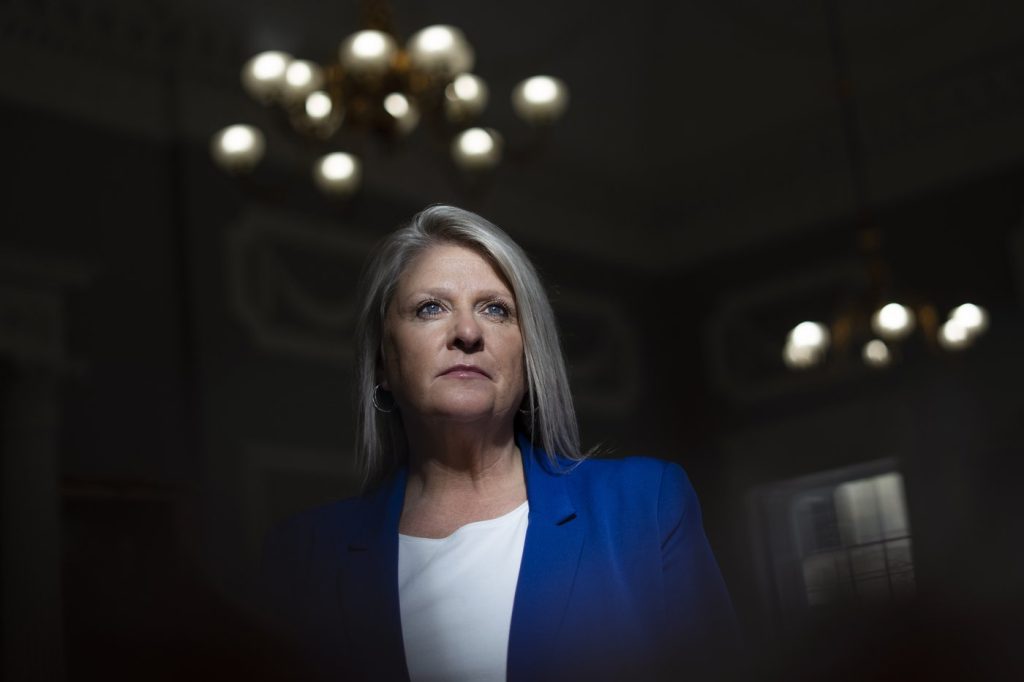
HALIFAX – A recent statement from Kim Masland, the Nova Scotia Minister of Natural Resources, has sparked controversy as she expressed disinterest in permitting the world-renowned golf developer Cabot to construct a course in a provincial park in Cape Breton. Despite her firm stance against the proposed golf course on West Mabou Beach, she indicated that the government is open to discussing other development projects on protected lands.
Masland’s comments, made on Thursday, faced criticism from the Opposition, particularly from NDP Leader Claudia Chender, who accused the minister of presenting conflicting messages. Chender remarked that Masland appears willing to entertain discussions with any corporate interests regarding provincial parks while simultaneously asserting the protected status of these lands. "We saw (Masland) double down on the idea that she’ll have a conversation with anyone, presumably any company or corporate interest about any provincial park, and then say (the land is) protected at the same time," Chender stated to reporters.
Cabot, a Toronto-based company known for developing golf courses internationally, has attempted three times to establish a course on Cape Breton’s West Mabou Beach. Earlier, Premier Tim Houston condemned the firm's proposal, labeling it unreasonable and not in alignment with the best interests of Nova Scotians. Masland reiterated Houston's sentiment on Thursday, indicating that she has no interest in the company’s golf course proposal, even if modifications were made to it.
During her remarks, Masland emphasized that a responsible government should remain open to discussions regarding various development proposals, including those involving protected land. "As a minister, from the very beginning, (I) have been open to conversations with Nova Scotians. And we look at each proposal case by case. Just because you listen to someone, doesn’t mean you agree with them," Masland stated following a cabinet meeting.
When questioned about how land can be considered protected while the government is open to development discussions, Masland firmly replied, "Absolutely. It’s protected, but we can still have conversations. It doesn’t mean that it’s going to change the (protected) designation, but you can still have a conversation." This assertion raised eyebrows, as the definition of a protected area, according to a Nova Scotia environment and climate change website, is “a clearly defined geographical space, recognized, dedicated and managed, through legal or other effective means, to achieve the long-term conservation of nature.”
Chender criticized Masland for her contradictory stance, noting the minister's rejection of golf development on West Mabou Beach while keeping pathways open for other development projects in protected areas. In light of the minister’s ambiguous declaration, the NDP leader is advocating for legislative changes to reinforce the rules surrounding Nova Scotia's protected lands to ensure they remain conserved. "We need to understand that parks are in fact protected, and we didn’t really get assurance (from Masland) on that," Chender remarked.
Liberal member Derek Mombourquette also expressed concerns, stating that if protected lands are open for discussion regarding development, they are not truly protected. "We protect lands for a reason," he emphasized, criticizing the government for its apparent tendency to reconsider protection in favor of development interests. "This government has shown multiple times that they’re willing to reverse that, which is very problematic," he added.
The Nova Scotia government had previously committed to safeguarding 20 percent of the province's land and water by the year 2030. As of July 2024, reports indicated that 13.6 percent of Nova Scotia was designated as protected land. On November 5, the province announced plans to designate an additional 12.7 square kilometers of land across 16 parks and wilderness areas as protected.
This ongoing debate raises critical questions about the future of protected lands in Nova Scotia and the balance between conservation efforts and potential development opportunities.








