

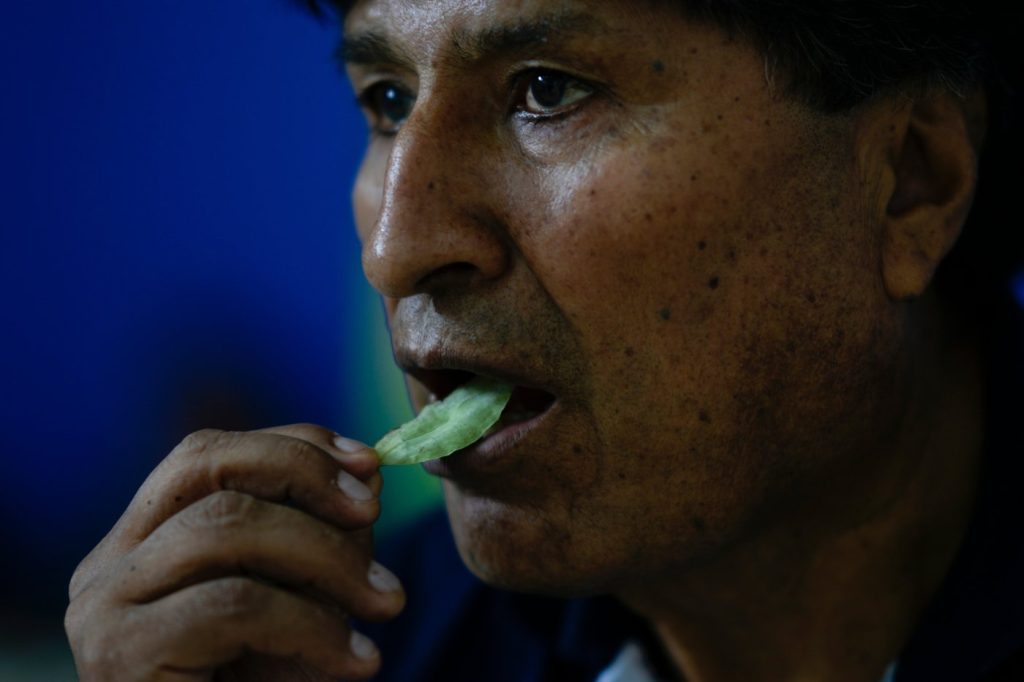
LA PAZ, Bolivia (AP) — The recent monthlong absence from public life of Bolivia’s prominent socialist figure, former President Evo Morales, has generated significant concern among his supporters and speculation across various political factions. This situation unfolded shortly after the January 3 seizure by U.S. authorities of former Venezuelan President Nicolás Maduro, a close ally of Morales. Notably, Morales missed a traditional ceremony welcoming students back from summer break and has not appeared on his long-standing political radio show for four consecutive weeks.
Since early January, Morales has also skipped meetings with his coca-leaf growing union in Bolivia’s remote Chapare region, cutting down on his previously robust social media presence. Although he has been evading an arrest warrant linked to human trafficking charges for over a year, Morales had continued to participate in rallies and interviews until this sudden disappearance, leading to speculation about his well-being and security. His supporters claim he is recovering from dengue fever, a viral disease, while critics argue he may have fled the country.
The political climate has shifted in Bolivia, particularly following the election of centrist President Rodrigo Paz in October 2022, marking a departure from the 20 years of governance by Morales’s Movement Toward Socialism party (MAS). Morales, who was Bolivia's first Indigenous president from 2006 to 2019, had previously been hostile towards U.S. influence in the region and formed alliances with political adversaries of the United States. As President Paz seeks to reverse this trend by encouraging closer ties with Washington, including allowing the return of the Drug Enforcement Agency (DEA) to combat drug trafficking, concerns have arisen regarding how this would impact coca farmers in the Chapare and Morales’s political support base.
The speculations regarding Morales's whereabouts have gained momentum in the context of political shifts occurring across Latin America, where right-wing leaders are increasingly coming into power amid economic difficulties. Such shifts have prompted right-wing politicians in Bolivia to leverage Morales’s absence to question the credibility of Paz's government, accusing it of failing to enforce the arrest warrant against the former president. Political commentators note that Morales possesses a loyal following willing to act if security forces attempt to apprehend him.
Political analysts and rivals of Morales are eager to capitalize on his absence, urging the government to provide clarity about his status. Statements from law enforcement maintain that Morales has not officially left Bolivia, though his close associates remain tight-lipped about his location. Opposition leaders assert that he has effectively gone into hiding, undermining legal security in the nation. Critics of Morales draw parallels to the political turmoil in 2019, recalling how he resigned under military pressure during mass protests against his bid for an unconstitutional third term.
Ultimately, while Morales’s circle maintains that he is recovering, the former president’s re-emergence in the political sphere is crucial for quelling both apprehension among his supporters and doubts cast by his opponents. His continued absence is fostering mistrust in Bolivia's political landscape, igniting debate about stability and security in the country as it navigates recent ideological shifts.








