

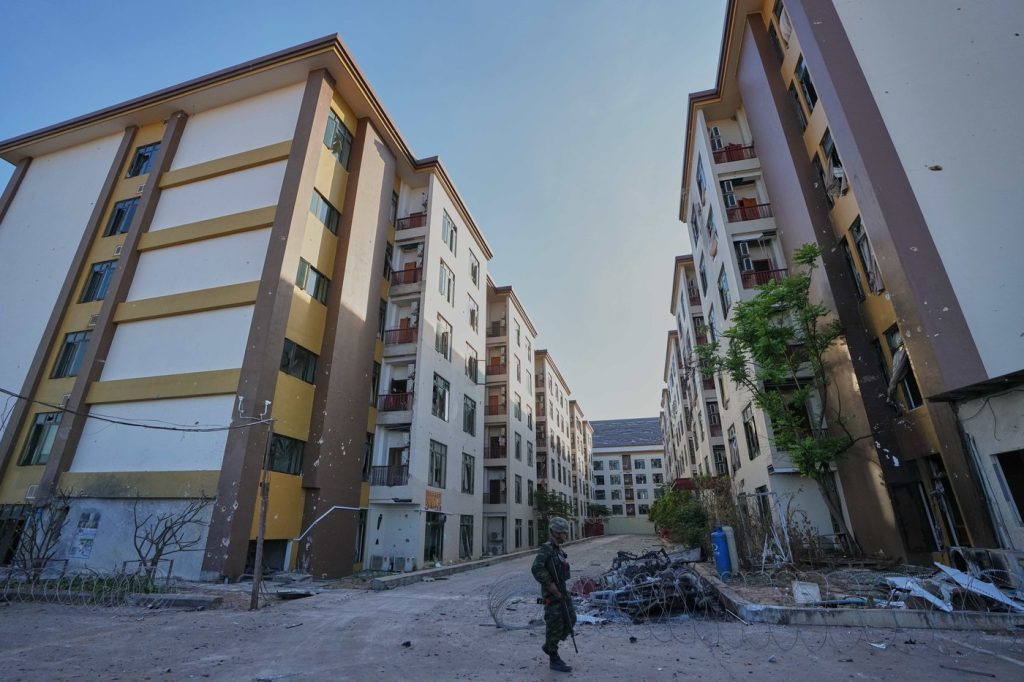
O'Smach, Cambodia (AP) — A compound of abandoned buildings in O'Smach, situated along Cambodia's northern border with Thailand, has recently come to the attention of the Thai military following a series of armed clashes in December 2025. These buildings, which were exposed to shelling during the conflicts, had previously served as one of Cambodia's infamous scam centers, as reported by Thai officials.
During a press tour organized by the Thai military, journalists and international observers were shown a six-story building within the compound. The site is cluttered with discarded documents, equipment, and personal belongings, indicating a hasty evacuation by its former occupants. According to Lt. Gen. Teeranan Nandhakwang, director of the Thai army's intelligence unit, the scam operations observed at the site were notably structured. "They are well-organized. They have good infrastructure and systems, and also the workflow and many, many tactics and techniques to do the scams," he explained.
Scam operations like those at the O'Smach compound are part of a larger trend affecting people worldwide, costing victims billions of dollars and often trapping individuals in slave-like working conditions. The Thai military asserted that the compound was taken under control during the December clashes, as Cambodian forces had utilized it as a military base. A ceasefire agreement reached after the clashes mandated that both sides would de-escalate tensions and maintain their positions prior to the ceasefire, which includes the currently occupied compound located on Cambodian territory.
The compound features numerous rooms outfitted with wooden booths lined with foam for soundproofing. It contains scripts written in multiple languages, lists of names and phone numbers, computer monitors, and empty brackets for hard drives. Notably, there are mock-up sets designed to resemble police stations from at least seven countries, including China, Australia, India, Indonesia, Vietnam, Singapore, and Brazil. One particular room includes a replica of what appears to be a Vietnamese bank branch, complete with service counters and a waiting area.
These set-ups were essential for scam operations targeting individuals by impersonating officials or other authority figures. The scripted approaches were designed to instill fear, threatening arrest or legal repercussions unless victims complied with their instructions. The evidence of such organized crime at the O'Smach compound highlights the ongoing challenges posed by scam operations in the region.
As investigations continue, the focus remains on dismantling the infrastructure of these illicit activities while ensuring that human rights are upheld for those who may have been coerced into participation. The situation in O'Smach serves as a stark reminder of the complexities surrounding crime, conflict, and the efforts of regional military forces to respond to such issues effectively.








