

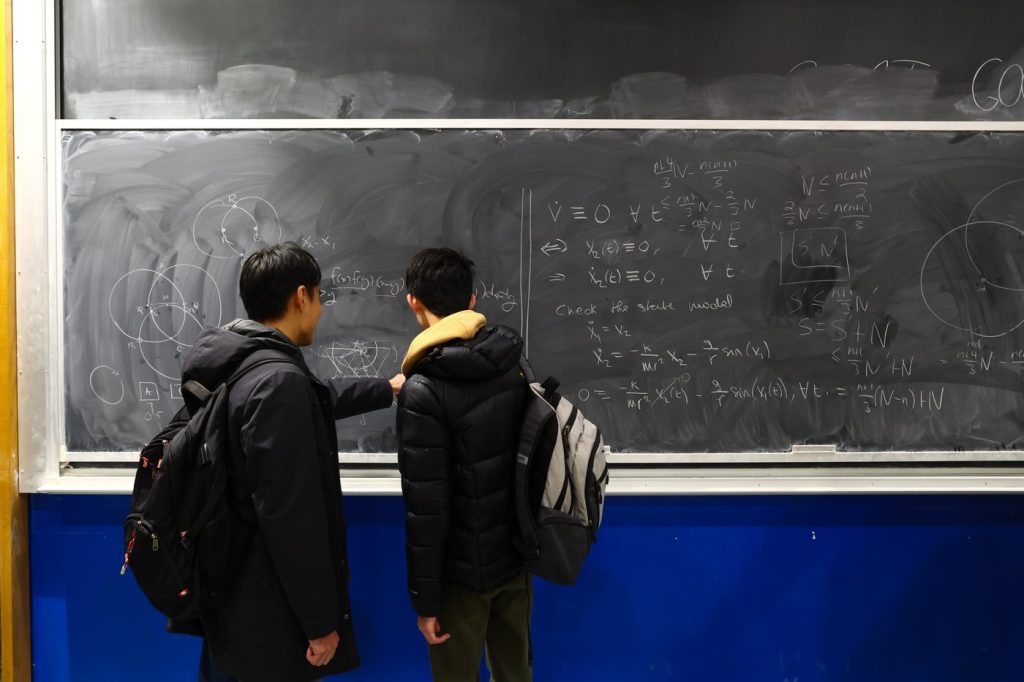
The William Lowell Putnam Mathematical Competition, one of North America's most challenging mathematics contests, took place on December 6, 2025. A significant number of undergraduate students gathered across the continent to tackle this rigorous six-hour examination, which is more of a sporting event than a conventional academic test. Participants, many of whom are expected to score only a few points out of a possible 120, arrive with excitement and determination, ready to confront 12 complex problems.
Gavin Hull, a fourth-year undergraduate student at Memorial University in St. John’s, Newfoundland, was in high spirits upon arriving at the mathematics building. Having participated in the exam three times prior, Hull expressed his mindset, stating, “It’s me and the problems and three hours. Just sit there and grind it out and see what you can do.” His enthusiasm was palpable, reflecting the competitive yet supportive atmosphere fostered by students engaging in advanced mathematics.
This year marked the 86th iteration of the Putnam Competition, which is traditionally held on the first Saturday of December. The event is aimed at assessing intrinsic mathematical ability and creativity, which differs significantly from standard exam questions or textbook problems. Greta Panova, a professor at the University of Southern California and a contributor to this year's problems, emphasized the unique nature of the competition, explaining that participants want to push their limits in a test that challenges their cognitive skills in innovative ways.
Competitors often find themselves in friendly rivalries, particularly between institutions such as the University of Toronto and the University of Waterloo, which are known for producing some of the highest-ranking Canadian participants. Ignacio Uriarte-Tuero, a mathematics professor at the University of Toronto, noted, “It’s very similar to a sports competition. You may feel you have amazing athletes. But if the competition has better athletes, then you’re toast.” This spirit of rivalry cultivates a motivating environment that drives students to excel.
The University of Toronto also shares a “mini rivalry” with McGill University, as highlighted by Sergey Norin, an associate professor at McGill. Past competitions have resulted in playful gloating among rival universities, enhancing the camaraderie and competitiveness of the event. Hull, who has dedicated hundreds of hours to preparation by reviewing past exams and textbooks, aimed to surpass his personal best score of 25 points this year and hoped to place among the top 500 participants.
After the exam, Hull reported achieving success by submitting solutions for five problems, marking a notable improvement over his previous years. The excitement and anticipation surrounding the results are typical, as the official scores are usually revealed a few months following the examination. Last year, nearly 4,000 students participated, with a staggering 61% scoring three points or fewer, demonstrating the exam's difficulty. The highest score reported last year was 90 out of 120, reflecting a trend consistent with past competitions.
Despite acknowledging the challenges of the Putnam, Hull maintained a humorous outlook, likening the experience to a “trauma bond” shared with thousands of fellow contenders. “But it’s fun,” he declared. “I love problem-solving. I like puzzles. And this is kind of the ultimate puzzle.” Such statements encapsulate the spirit of the Putnam Competition, celebrated for its ability to inspire and challenge the brightest mathematical minds of North America.








