

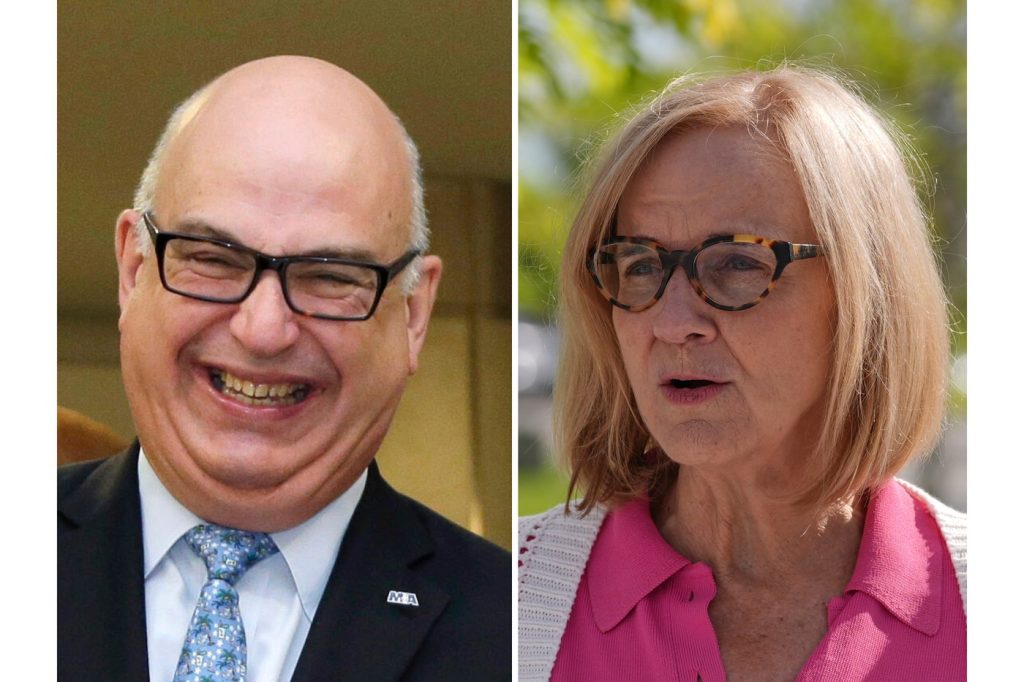
MIAMI (AP) - After nearly three decades without a Democratic mayor, Miami is set for a special runoff election that could potentially change the political landscape of the city. This election is particularly significant as it serves as a gauge of the political climate nearly a year into President Donald Trump’s second term and ahead of the important midterms next year.
While ostensibly a local race, the mayoral contest has attracted significant attention from national figures on both sides. Florida Republicans, including Governor Ron DeSantis and Senator Rick Scott, have publicly supported the conservative candidate, former city manager Emilio Gonzalez. In contrast, national Democrats like former Transportation Secretary Pete Buttigieg have rallied behind Eileen Higgins, the Democratic contender and former county commissioner, who has gained traction after her performance in the recent runoff.
Should Higgins secure an upset on Tuesday, it would invigorate the Democratic Party heading into a critical election year, where they aim to reclaim power in Congress. Miami has become increasingly favorable territory for Republicans, making this election pivotal for the party’s strategy moving forward, especially as Trump prepares to establish his presidential library in the area.
Higgins, who lives in Little Havana, identifies herself as "La Gringa," a term used by Spanish speakers to signify white Americans. Fluent in Spanish, she has focused her campaign on local issues, particularly the rising cost of housing, while also addressing national concerns, including immigration policies under the Trump administration in a city with substantial Hispanic and immigrant populations.
"I have been a Democrat serving in a primarily Republican district, and all I have done is work for the people," she stated in an interview with the Associated Press.
As Florida's second-most populous city, Miami, which has a population of approximately 487,000, stands as a cultural epicenter. The mayor's role carries significant influence, especially considering Miami-Dade County's changing political dynamics. In the previous election, Trump won the county, having previously lost it to Biden in 2020 by a considerable margin. A defeat for Gonzalez would be seen as a setback for the GOP in Florida.
According to Christian Ulvert, Higgins’ campaign manager, voter enthusiasm appears strong, particularly among Democrats. Early mail-in ballot returns indicated that about 44% were cast by registered Democrats, compared to only 30% by registered Republicans as early in-person voting began.
Higgins aims to be the first non-Hispanic mayor in nearly 30 years, confident in obtaining not only Democratic support but also attracting unaffiliated voters and some Republicans, owing to her track record as an elected official. Her proposals for the city include increasing affordable housing and reducing wasteful spending. During a recent forum, she assured attendees that she plans to commit fully to the role of mayor as opposed to pursuing outside employment.
While Latino voters have traditionally supported Democrats, recent trends show Republicans in Florida receiving substantial backing from Cuban, Venezuelan, and Nicaraguan communities. These immigrant groups often reject socialist policies reminiscent of the governments from which they fled. Trump successfully capitalized on these sentiments to shift Miami-Dade County into his column during the last election cycle, a notable change from the 30-point Democratic advantage he experienced in 2016.
In the wake of recent electoral losses elsewhere, some Florida Republicans express concern over shifting Latino support towards Democrats, particularly following strong Democratic performances in governor races across New Jersey and Virginia. Both winning candidates connected with nonwhite voters and garnered significant Hispanic support.
Gonzalez, maintaining a degree of distance from controversial immigration policies, insisted that immigration enforcement is a federal matter. In contrast, Higgins has critiqued local policies that deepen distrust between law enforcement and immigrant communities, signaling her intent to reevaluate Miami's participation in federal initiatives that delegate immigration enforcement to local agencies.
Higgins has garnered support from key Democrats eager to demonstrate the party's ongoing relevance in a state that has leaned increasingly Republican. High-profile endorsements have been issued, including from Buttigieg, who encouraged voters to actively participate in the election.
For many Miami voters, pressing local issues such as income inequality and unaffordable housing are paramount. Gustavo Ascani, a Miami resident, expressed these concerns and highlighted the necessity for local governance to address long-neglected issues. Another local political figure emphasized affordability as a key issue resonating with voters, reflecting broader sentiments in light of economic pressures exacerbated by the federal government’s actions.
With early voting underway and substantial stakes involved, the outcome of this election will not only influence Miami's immediate political scene but may also have broader implications as both parties prepare for the upcoming midterms and beyond.








