

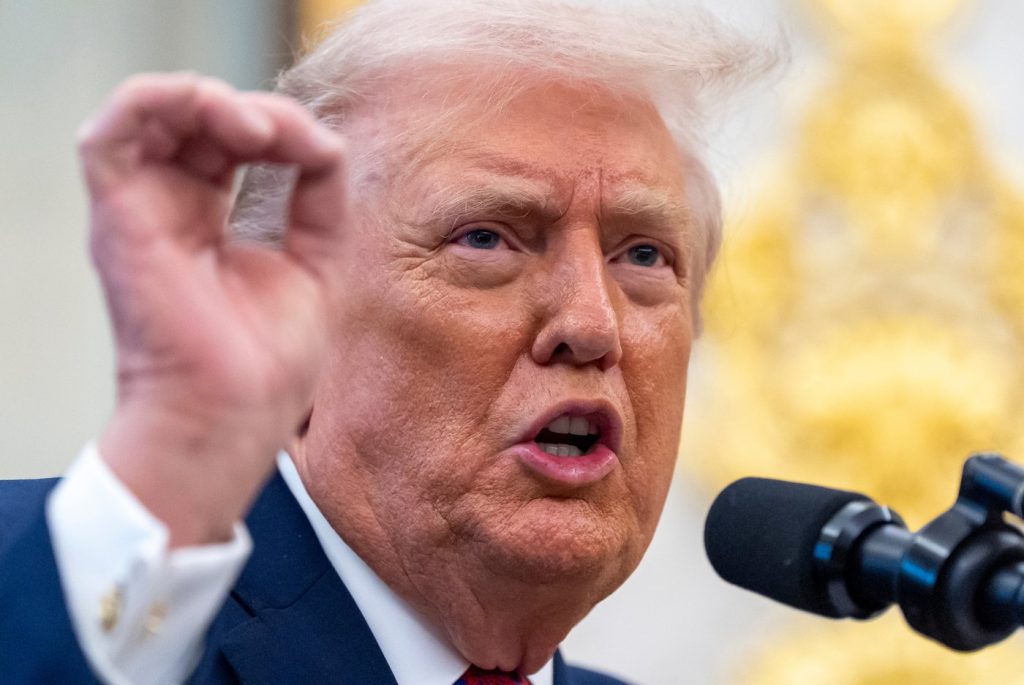
President Donald Trump continues to engage in contentious legal battles and disputes with various media organizations, most recently initiating a lawsuit against the BBC. Filed on Monday, this lawsuit accuses the BBC of defamation and unfair trade practices, with Trump seeking a staggering $10 billion in damages. The core of the complaint centers around an alleged manipulation of Trump's speech from January 6, 2021, wherein the lawsuit claims the BBC "spliced together" different segments to misrepresent his remarks. Trump asserts that this portrayal represents a "brazen attempt" to influence the upcoming 2024 U.S. presidential election.
In a statement last month, the BBC had expressed regret over the edit but firmly denied any allegations of defamation. This legal confrontation is just one of many contentious interactions Trump has had with media entities during his presidency. A notable instance occurred on September 22 when ABC reinstated the “Jimmy Kimmel Live!” show after a brief suspension due to controversial comments made by Kimmel regarding the killing of conservative activist Charlie Kirk. Trump criticized the show's temporary suspension as "great news for America” and remarked on Kimmel's criticism of him, which he equated to a child mourning a pet fish.
Media entities have shown solidarity with Kimmel, including late-night hosts Jon Stewart and Stephen Colbert, who characterized ABC's decision as detrimental to free speech. This incident reflects broader tensions between Trump and the media, as evidenced by his filing of a $15 billion defamation lawsuit against the New York Times. This lawsuit targeted articles published just before the 2024 election, although a federal judge dismissed the original suit for being excessively lengthy and complicated.
On July 18, Trump also filed a $10 billion lawsuit against The Wall Street Journal for publishing details regarding his past connections with financier Jeffrey Epstein. This article described a letter allegedly signed by Trump, raising questions about his ties to Epstein in the wake of ongoing investigations. Additionally, on the same day, CBS announced it would be canceling “The Late Show With Stephen Colbert,” a move attributed to financial reasons but closely timed to Colbert's criticisms of Trump.
Earlier in July, CBS parent company Paramount Global settled a lawsuit with Trump, agreeing to pay $16 million related to the editing of a CBS "60 Minutes" interview with then-Vice President Kamala Harris. Trump had claimed mental anguish due to the editing of the interview, which took place in October 2024, as he was campaigning for president.
In a broader context of his relationship with public media, on May 1, Trump signed an executive order aimed at cutting federal funding to PBS and NPR, accusing them of biased reporting. Subsequently, NPR and several local stations filed a lawsuit against this order, arguing it violated free speech rights. Ongoing disputes over Trump's media interactions also include his removal of the Associated Press (AP) from the White House press pool in February 2024 as a reaction to their refusal to adopt his preferred terminology for the Gulf of Mexico. This decision drew legal challenges and was eventually ruled against in court, affirming the First Amendment rights of the AP.
One more significant legal battle concluded in December 2024, when ABC News agreed to pay $15 million to Trump related to a defamation lawsuit regarding a false claim made about his civil liabilities in a segment hosted by George Stephanopoulos. As part of the settlement, ABC's payment was described as a charitable contribution to Trump’s future presidential library.








