

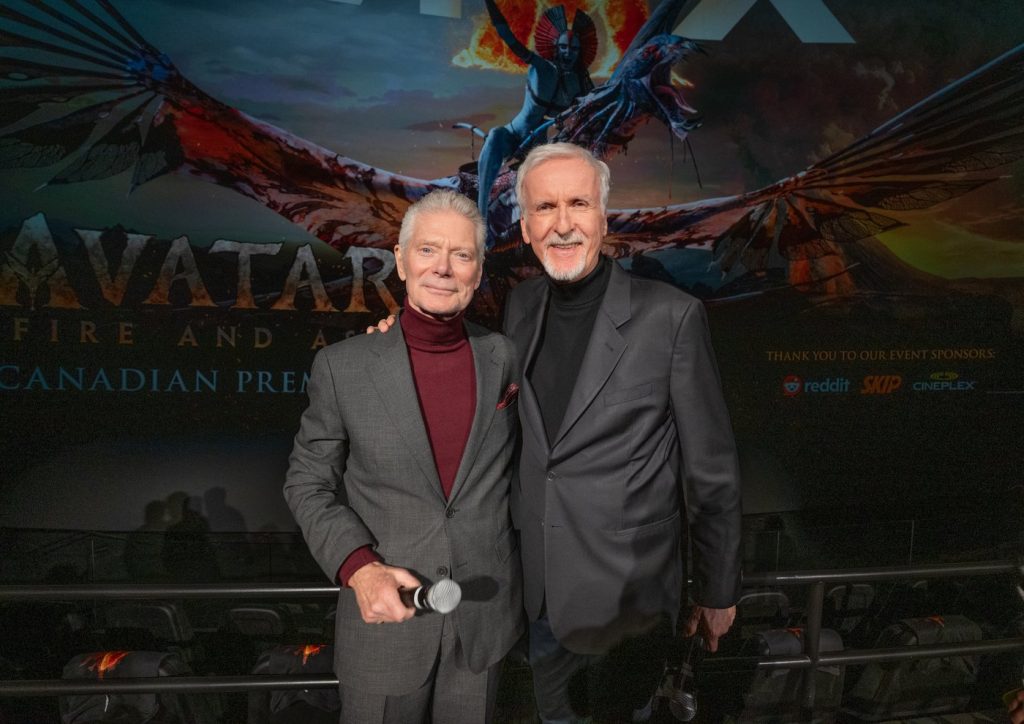
In a recent appearance in Toronto, filmmaker James Cameron expressed strong sentiments regarding Canada's sovereignty, asserting that Canada will never become the 51st state of the United States. He made this statement during a press tour for his latest film, "Avatar: Fire and Ash," which had its Canadian premiere in Toronto on December 17, 2025, ahead of its worldwide release on December 19, 2025. Cameron humorously added, "We'll fight to the last man up here – and the last six-pack."
Cameron, renowned for creating some of the highest-grossing films in history, traced the inspiration for his fictional world of Pandora not to Hollywood, but to his roots in a small Ontario village called Chippewa, located near Niagara Falls. As he reminisced about growing up in a community of about 1,200 people (now approximately 1,300), he fondly recalled spending much of his free time in the nearby woods, collecting and observing nature or indulging in artistic pursuits such as drawing and painting.
The profound influence of his childhood experiences and his understanding of Indigenous cultures played a significant role in shaping "Avatar," which originally released in 2009 and went on to become the highest-grossing film of all time, amassing $2.9 billion globally. The film follows the journey of Jake Sully, portrayed by Sam Worthington, a paraplegic ex-marine who uses a genetically engineered alien body to infiltrate the Na’vi, the indigenous inhabitants of Pandora, on behalf of a mining corporation. Jake’s perspective shifts radically when he falls in love with a Na’vi woman, Neytiri, played by Zoe Saldaña, ultimately leading him to defend her world from human exploitation.
"Fire and Ash" continues the saga of the Sully family as they confront a new, hostile Na’vi tribe, the Mangkwan clan, allied with Jake’s adversary, Colonel Miles Quaritch, played by Stephen Lang. Cameron emphasized that this installment is more emotionally complex than its predecessors, delving into darker themes that challenge characters amidst their conflicts.
Cameron articulated his belief that the "Avatar" films allow audiences to engage with nature and reflect on how human civilization is perceived as destructive from nature's standpoint. He strives to present a balanced narrative that includes both positive human characters advocating for nature and negative portrayals within the Na’vi community, framing the story as a collision of contrasting value systems. Lang added that the film addresses themes of grief amid war, ultimately conveying a message of hope that encourages action rather than passive optimism.
Post the release of the first "Avatar," Cameron became acutely aware of the social issues surrounding Indigenous rights, receiving communications from around the world regarding environmental concerns like deforestation and water pollution. He regards it as a responsibility to engage with Indigenous leaders globally, aiming to learn from their perspectives on environmental stewardship and generational responsibility. Canadian anthropologist Wade Davis has been particularly influential in expanding Cameron's understanding of Indigenous knowledge and its relevance to contemporary environmental challenges.
Despite his aspirations for the "Avatar" films to provoke thoughtful consideration about the environment, Cameron acknowledged a growing pessimism regarding global environmental efforts, especially as regulations in the U.S. have been increasingly rolled back. He pointed out the troubling trends surrounding climate change denial and the retreat from electric vehicle initiatives, expressing concern that the current political climate makes it harder to remain optimistic.
As for the film industry's future, Cameron addressed the importance of box office success. He remarked that it is up to film enthusiasts to support theaters by choosing to see movies in cinemas rather than exclusively consuming content via streaming platforms. According to him, the survival of theaters hinges on this conscious choice by audiences, as diminishing theatrical revenues pose a serious threat to cinema's future. Cameron concluded by reaffirming his role as a storyteller, maintaining confidence that he will always find opportunities to share narratives.








