

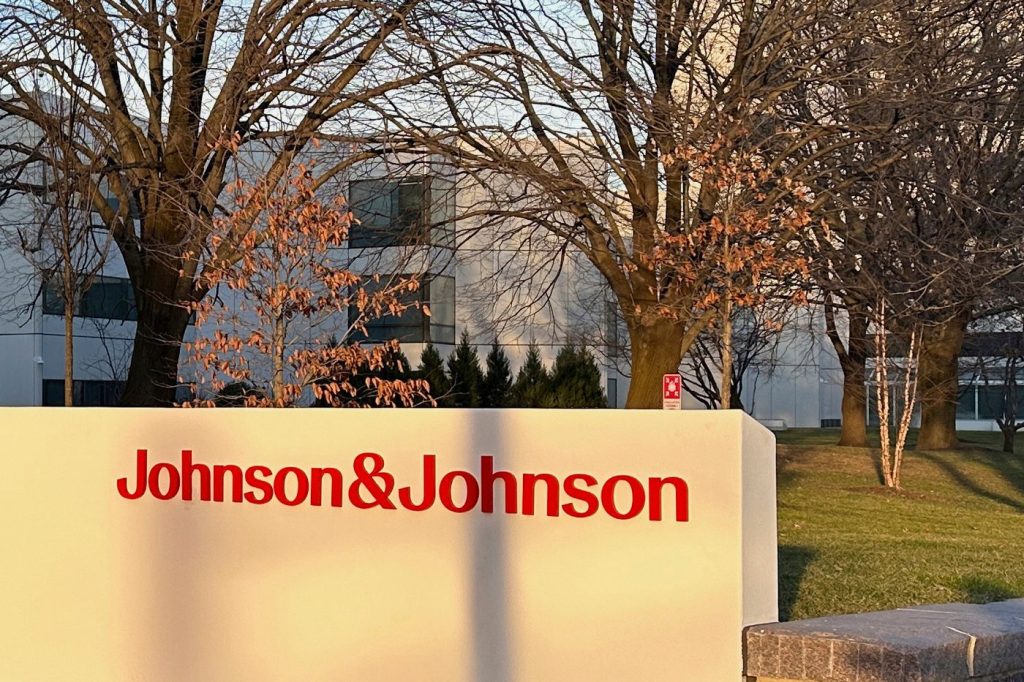
ST. PAUL, Minn. (AP) — A Minnesota jury has awarded $65.5 million to Anna Jean Houghton Carley, a 37-year-old mother of three, who alleged that talcum products manufactured by Johnson & Johnson exposed her to asbestos, ultimately contributing to her development of mesothelioma, a type of cancer that attacks the lining of the lungs. This verdict was delivered on a Friday afternoon after a thorough examination of the facts in a 13-day trial held in Ramsey County District Court.
During the trial, Carley's legal team argued that Johnson & Johnson knowingly sold and marketed talc-based products, despite awareness that these products could be contaminated with asbestos, a known carcinogen. The defense highlighted that Carley and her family were never made aware of the potential dangers associated with using talcum powder on children. It is noteworthy that the controversial product was removed from shelves in the United States in 2020, following mounting scrutiny and legal challenges.
Carley's attorney, Ben Braly, emphasized that the case extended beyond mere financial compensation and was centered on achieving truth and accountability from the pharmaceutical giant. Conversely, Johnson & Johnson's Erik Haas, who serves as the worldwide vice president of litigation, maintained that the company's baby powder is safe, does not contain asbestos, and does not contribute to cancer. He expressed a firm belief that the appellate court would ultimately overturn the jury's decision.
This case adds to a long history of litigation concerning the safety of talc in Johnson & Johnson's Baby Powder and Shower to Shower body powder. There have been numerous claims asserting a connection between the use of these talc-based products and various health risks, primarily ovarian cancer and mesothelioma. In a decisive move, Johnson & Johnson ceased the sale of talc-based powder worldwide in 2023, a significant development that reflects the ongoing challenges the company faces in the courtroom and in public perception.
After the verdict, Haas issued a statement declaring that the lawsuits targeting Johnson & Johnson rely on what he described as "junk science," asserting that extensive studies have consistently proven that Johnson & Johnson's Baby Powder is safe and free from asbestos and carcinogenic properties.
In recent weeks, the legal troubles for Johnson & Johnson have compounded. Earlier in the same month, a Los Angeles jury awarded $40 million to two women who contended that the company's talcum powder resulted in their ovarian cancer diagnoses. Additionally, another California jury had ordered the company to pay $966 million to the family of a woman who passed away from mesothelioma, alleging her cancer was tied to asbestos contamination in baby powder.
The cumulative impact of these legal battles has placed significant strain on Johnson & Johnson's reputation and operations. The verdicts and ongoing claims suggest an uphill battle for the pharmaceutical giant as it seeks to navigate not only the legal ramifications but also public relations challenges associated with its talcum products. In light of the evolving landscape, Johnson & Johnson's future in the consumer health market remains in a state of uncertainty as it grapples with increasing legal scrutiny and public concern over product safety.








