

NEW YORK (AP) – A federal judge has upheld New York's Green Light Law, which allows individuals to obtain driver's licenses without needing to prove their legal status in the country. This decision comes as a rejection of the Trump administration's attempts to block the law, which has been a focal point amid ongoing national discussions surrounding immigration policies.
U.S. District Judge Anne M. Nardacci, situated in Albany, ruled that the challenge brought by the Republican administration, which was part of President Donald Trump's stringent immigration measures, lacked sufficient evidence to prove that the state law conflicted with federal law or that it improperly regulated or discriminated against federal interests. The judge's 23-page opinion emphasized that her responsibility was to determine whether the administration's arguments adequately established that the Green Light Law violated the Supremacy Clause of the U.S. Constitution, which prioritizes federal laws over state laws. Nardacci concluded that the administration had "failed to state such a claim."
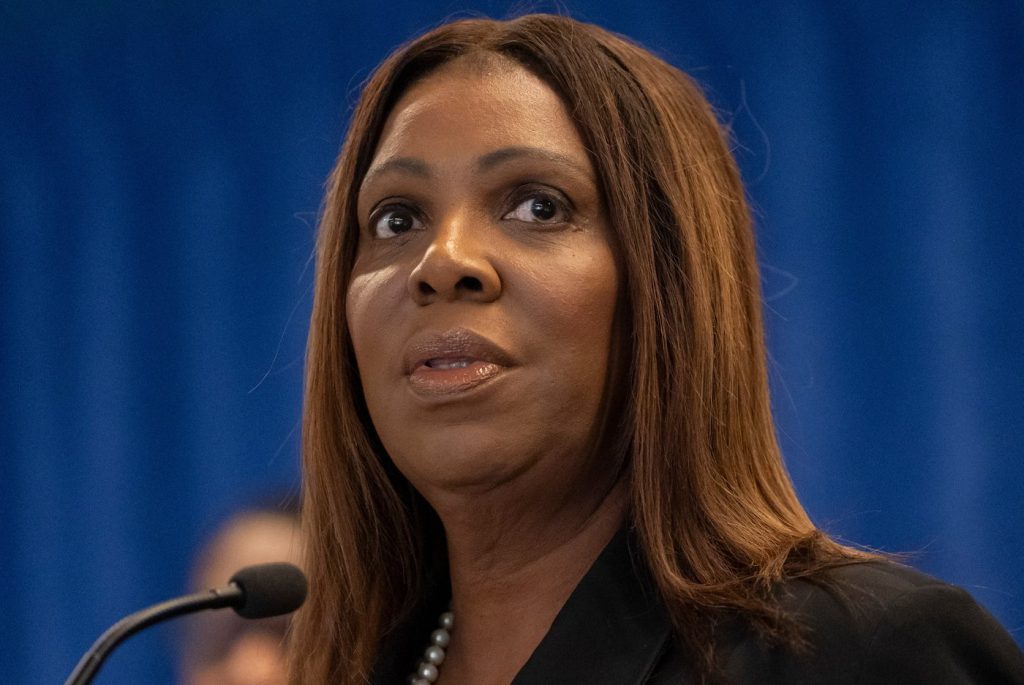
The Justice Department's lawsuit, initiated in February, named several New York officials as defendants, including Governor Kathy Hochul and Attorney General Letitia James. U.S. Attorney General Pam Bondi criticized these officials, asserting that they favored "illegal aliens over American citizens." In response, James affirmed her commitment to protecting the rights of all New Yorkers and maintaining public safety in her statements following the lawsuit announcement.
The Green Light Law was enacted to enhance road safety, addressing concerns that individuals without licenses often drove nonetheless. The law allows individuals without a valid Social Security number to present alternative forms of identification, such as valid passports and driver’s licenses issued from other countries. While applicants must still pass a road test and obtain a permit to qualify for a standard driver's license, the law does not apply to commercial driver’s licenses.
In its lawsuit, the Justice Department argued that the Green Light Law was an "assault on federal immigration laws" and underscored a provision requiring the New York Department of Motor Vehicles to notify individuals about federal information requests concerning their immigration status. The department noted that easier enforcement of federal immigration priorities would be possible if federal authorities had unrestricted access to driving records in New York.
During Trump's first term, the administration sought to exert pressure on New York to amend the law by restricting state residents' enrollment in trusted traveler programs, which would result in longer wait times at airport security. Although former Governor Andrew Cuomo indicated a willingness to allow restricted federal access to driving records, he firmly opposed any action that would enable immigration agents to access lists of those applying for special licenses that catered to immigrants unable to prove legal residency in the U.S. Ultimately, after a brief legal tussle, the administration restored New Yorkers’ access to the trusted traveler program.
Judge Nardacci's ruling aligns with a previous decision by the 2nd U.S. Circuit Court of Appeals, which affirmed that federal immigration authorities could still access necessary information through a lawful court order or judicial warrant, despite arguments made by the Trump administration. This aspect of the ruling emphasized that the information sought was not completely off-limits to federal entities, contradicting the administration's assertions about the necessity for unrestricted access.
As discussions on immigration policy continue to evolve, the approval of New York's Green Light Law stands as a significant development, illustrating the ongoing legal battles between state and federal authorities regarding immigrants' rights and access to essential services, such as driver's licenses.








