

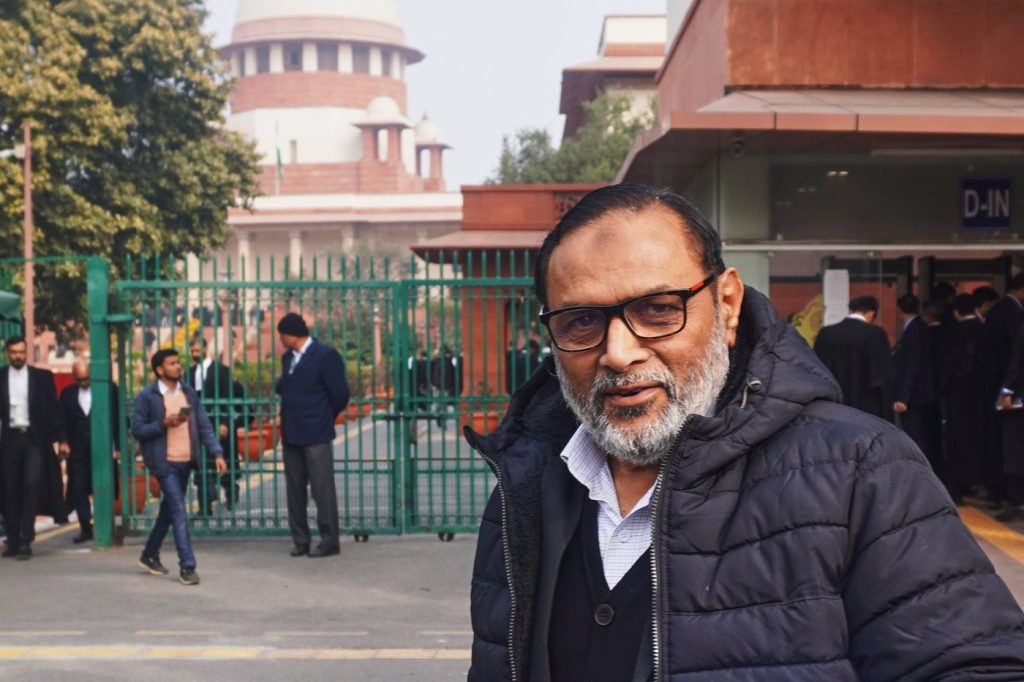
On Monday, India's Supreme Court denied bail to two prominent Muslim student activists, Umar Khalid and Sharjeel Imam, who have been in detention for over five years without trial. The case against them is linked to a conspiracy surrounding one of the deadliest episodes of communal violence in Delhi in February 2020, which resulted in the deaths of 53 individuals, predominantly Muslims. This violence erupted during widespread protests against the controversial 2019 citizenship law that critics argue discriminates against Muslims.
Both Khalid and Imam were arrested under stringent state security provisions and were accused of orchestrating the violence. Despite bail being granted to five other defendants in the same case, the Supreme Court established that Khalid and Imam played a "central role" in the conspiracy, asserting that the delay in their trial was not a valid reason for granting bail.
The court’s ruling underscored that "Umar Khalid and Sharjeel Imam stand on a qualitatively different footing as compared to other accused," highlighting the gravity of the allegations against them. The denial of bail has drawn significant attention, as both activists were pivotal in the nationwide protests against the citizenship law, marking a crucial challenge to Prime Minister Narendra Modi's Hindu nationalist regime. Their prolonged detention has become a symbol of the broader crackdown on dissent witnessed during Modi's tenure, sparking international criticism regarding the application of anti-terror laws against political activists.
Following the riots, a number of activists, including Khalid and Imam, were charged under the Unlawful Activities (Prevention) Act, a law that has historically been used to combat violent insurgencies but has increasingly been employed to stifle political dissent. This legislation allows for long periods of pretrial detention, often extending to years before a trial can commence.
Prosecutors from the Delhi police opposed the bail requests, asserting that the riots were not spontaneous but rather a systematic attempt to damage India’s global standing. They claimed that both Khalid and Imam made inflammatory speeches inciting violence. Conversely, Khalid and Imam’s legal representatives argue that there is insufficient evidence linking them to the riots, steadfastly denying all accusations.
Moreover, numerous other Muslims have faced similar charges related to the riots, often enduring extended periods of detention without trial. Many of these cases have faltered, primarily due to the police's inability to sufficiently connect the detainees to the events of the riots.
Recently, concerns surrounding Khalid's ongoing pretrial detention were echoed by eight U.S. lawmakers who have urged the Indian government to afford him a fair and expedient trial. Human rights organizations globally have also called for the release of both Khalid and Imam, arguing that their ongoing detention represents a significant suppression of dissent and a violation of fundamental legal protections.
Amnesty International highlighted last year that Khalid’s "imprisonment without trial exemplifies derailment of justice" and reflects a broader pattern of repression faced by those exercising their right to free expression. This ongoing situation remains a critical point of discussion regarding civil liberties and the state of democracy in India.








