

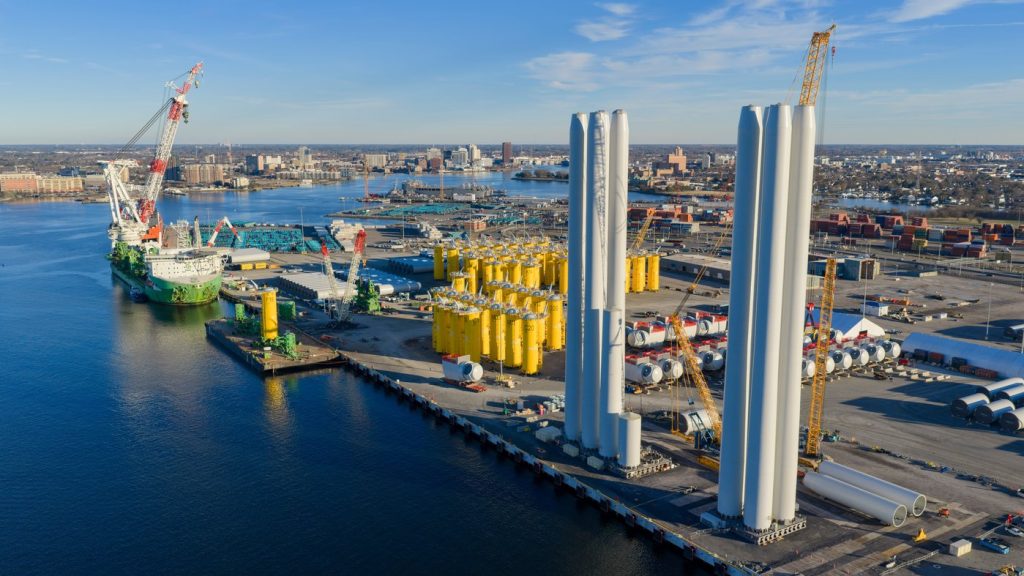
Offshore wind developers and various states are taking legal action against the Trump administration following its recent order to pause work on five large-scale offshore wind projects along the East Coast for at least 90 days. Notably, the Norwegian energy company Equinor, along with the Danish firm Orsted, filed civil suits in the U.S. District Court for the District of Columbia, marking the latest challenge to the federal government's suspension order. Additionally, Connecticut and Rhode Island submitted their request for a preliminary injunction on Monday in the same court.
The administration announced its decision on December 22, indicating that it was suspending leases for the specified offshore wind projects due to purported national security concerns. However, specific details regarding these concerns were not disclosed. President Donald Trump has historically exhibited a negative stance toward renewable energy technologies, particularly offshore wind, favoring fossil fuels such as oil, coal, and natural gas, which contribute to carbon pollution when burned.
Interior Department spokesperson Matt Middleton stated that Trump has instructed the agency to manage public lands and waters for multiple uses, including energy development and national security. Middleton characterized the pause on offshore wind construction as a "decisive step" aimed at protecting national security and ensuring responsible stewardship of ocean resources. He emphasized that the administration would not compromise national security or economic stability for projects deemed impractical for America's future.
Equinor is overseeing the Empire Wind project in New York, while Orsted is managing the Sunrise Wind project. Empire Wind LLC has requested expedited consideration from the court, emphasizing that the project faces a "likely termination" if construction does not resume by January 16. The company argued that the suspension disrupts a carefully orchestrated construction schedule that depends on the availability of specific vessels, resulting in significant financial delays and jeopardizing project financing.
Orsted is also challenging the suspension order, asserting that it has invested billions of dollars in the Sunrise Wind project, relying on permits issued by the federal government. The company noted that its team had been in regular communication with the Coast Guard and other agencies, without any previous mention of national security issues. The administration's suspension affects not only Empire Wind and Sunrise Wind but also the Vineyard Wind project in Massachusetts, the Revolution Wind project in Rhode Island and Connecticut, and the Coastal Virginia Offshore Wind project in Virginia.
Dominion Energy Virginia, responsible for developing the Coastal Virginia Offshore Wind project, was the first to file a lawsuit against the administration's order. The company describes the suspension as "arbitrary and capricious" and unconstitutional. Furthermore, Orsted and its joint venture partner, Skyborn Renewables, are also filing complaints regarding the Revolution Wind project to continue its development.
The lawsuit filed by Connecticut and Rhode Island aims to resume work on Revolution Wind, with Connecticut Attorney General William Tong highlighting the financial burden caused by the project's delay. He stated that every day of the suspension results in inflated energy bills for families in need, asserting that the project had undergone rigorous scrutiny and approval before the suspension took effect.
Avangrid, a joint owner of the Vineyard Wind project, has not publicly disclosed whether it intends to join the legal challenges against the administration. Previously, the Trump administration had halted construction on both Empire Wind and Revolution Wind, citing accelerated permitting processes by the Biden administration. While work resumed briefly on Empire Wind a month after the initial halt, Equinor secured the federal lease for the project in March 2017, early in Trump's first term, with final approval granted in February 2024.
In August, the Bureau of Ocean Energy Management paused work on the Revolution Wind project, citing national security concerns. Subsequently, a federal judge ruled that the project could proceed, recognizing the potential irreparable harm to the developers and the likelihood of success in their legal claims.








