

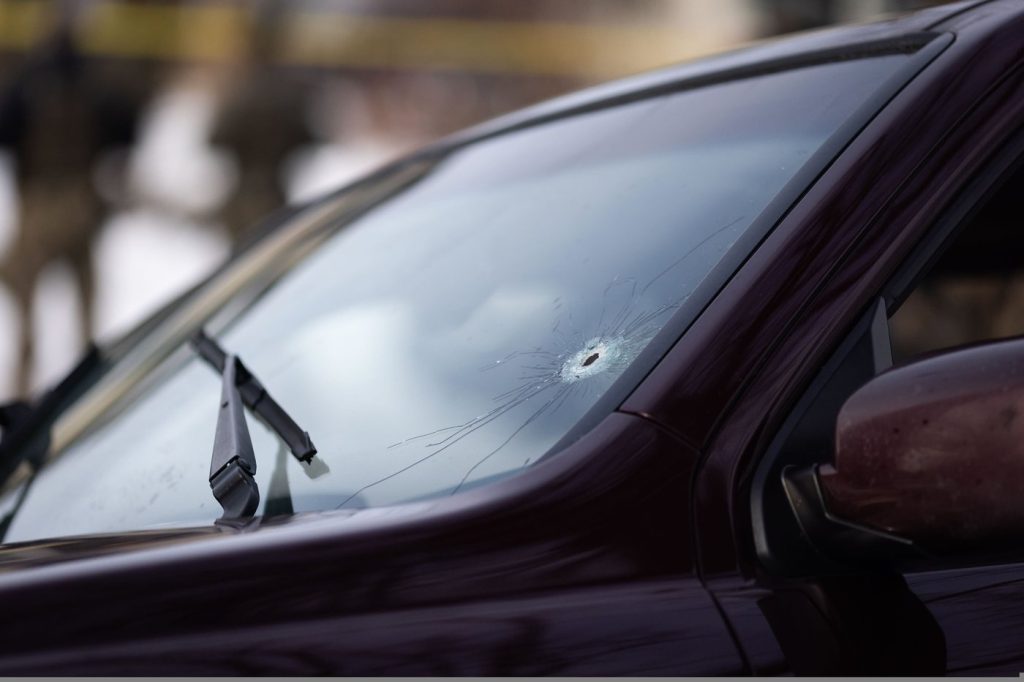
MINNEAPOLIS (AP) - A recent federal immigration enforcement operation in Minneapolis turned tragic when an officer from the U.S. Immigration and Customs Enforcement (ICE) shot and killed 37-year-old Renee Nicole Good during a confrontation involving her vehicle. The incident has sparked significant outrage and raised questions regarding the use of deadly force in such situations.
Cellphone footage of the incident revealed that the confrontation occurred when an ICE officer approached Good's SUV, which was stopped in the road. As the vehicle began to move forward, another ICE officer, stationed in front of the SUV, drew his gun and fired at close range while trying to jump out of the vehicle's path. Federal officials characterized this action as an act of self-defense; however, the mayor of Minneapolis labeled the shooting as "reckless" and unnecessary.
This incident has placed a spotlight on the regulations governing the use of deadly force by law enforcement, particularly in situations involving moving vehicles. It raises questions about the appropriateness of such actions and when officers are justified in using their weapons.
Generally, there is no universal standard for law enforcement training, but most police departments and federal guidelines restrict officers from shooting at a moving vehicle unless the driver poses an imminent threat of deadly force that extends beyond the car itself. Experts point out that shooting at a moving vehicle is one of the riskiest forms of lethal force due to the potential for stray bullets and the risk of causing the driver to lose control, which could endanger bystanders.
Moreover, law enforcement policies suggest that officers are expected to move out of the way of an oncoming vehicle rather than resorting to lethal force. According to Justice Department policy, deadly force can only be utilized when no reasonable alternatives exist, including stepping aside to avoid being struck by the vehicle.
In terms of using deadly force to stop or arrest an individual, most policies stipulate that officers cannot employ lethal measures solely for the purpose of making an arrest or impediment of a fleeing vehicle if that individual does not pose an immediate threat. This raises further concerns about the appropriateness of the ICE officer's actions in Good's case.
Despite operating under similar guidelines to local and state law enforcement regarding the use of lethal force, ICE agents do have additional legal protections when performing their official duties, which complicates accountability in such fatalities. The Department of Homeland Security, which oversees ICE, specifies that officers may resort to deadly force only when they reasonably believe that a person poses an imminent threat of death or serious injury.
In the aftermath of this incident, investigations are underway to evaluate the shooting. Typically, federal agencies conduct internal reviews, and state and local law enforcement authorities may pursue criminal investigations as well. It is crucial to note that federal agents are not granted immunity from prosecution if they act beyond their authority. The FBI is presently leading the investigation into the events that transpired in Minneapolis.
This scenario not only highlights the critical issues surrounding law enforcement protocols but also the subsequent need for extensive discussions about the rules governing the use of lethal force in immigration enforcement and the broader implications for community safety and trust.








