

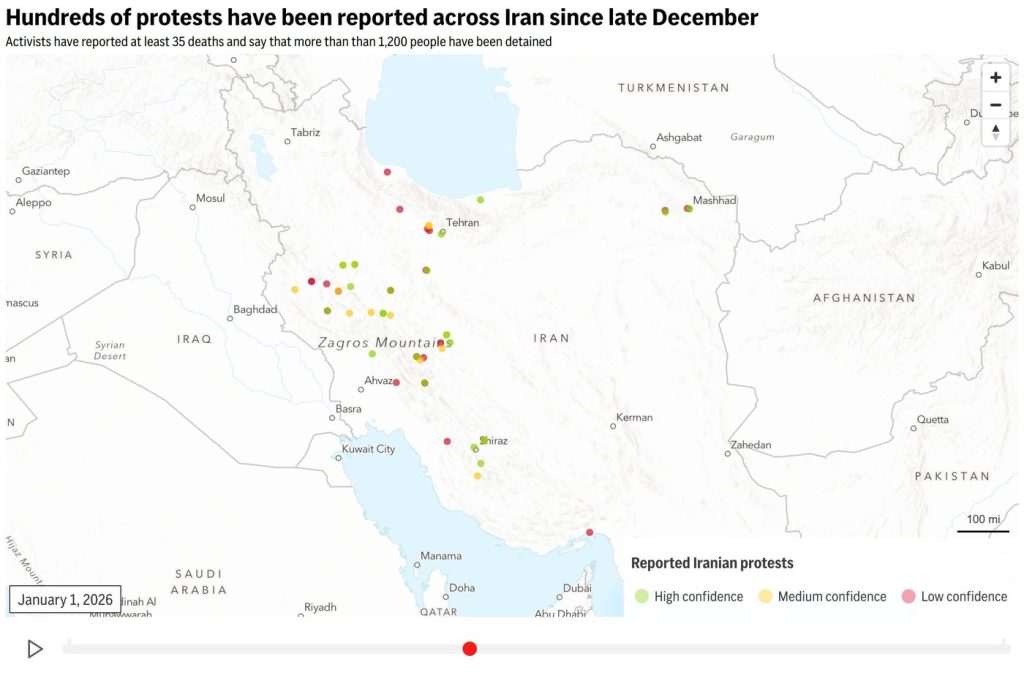
DUBAI, United Arab Emirates (AP) – Protests in Iran, ignited by economic hardships, have reached a nationwide scale, marking a significant escalation in the challenges to the country's theocratic governance. Activists reported Thursday that Wednesday witnessed the most intense demonstrations to date, spreading to rural areas and major urban centers across all provinces, while simultaneously allowing daily life to continue in Tehran and elsewhere.
According to the U.S.-based Human Rights Activists News Agency, the violence surrounding the protests has resulted in at least 38 deaths and more than 2,200 detained individuals. The growing protests place mounting pressure on Iran's civilian government and its Supreme Leader, Ayatollah Ali Khamenei. Notably, authorities have not yet implemented widespread internet shutdowns or deployed a heavy security presence, as was seen during the crackdown on the 2022 Mahsa Amini protests. However, the situation could change if protests intensify further.
Despite the broad nature of the protests, they remain largely leaderless. A statement from Iran's exiled Crown Prince Reza Pahlavi called for public demonstrations, testing whether protesters might respond to calls from abroad. The lack of a viable leadership alternative has repeatedly hampered past protests, as noted by Nate Swanson from the Atlantic Council, who highlighted that many potential transformative leaders have been persecuted, arrested, or exiled by the Iranian security apparatus.
On Wednesday alone, at least 37 protests occurred across Iran, including in cities like Shiraz, Kerman, and Kermanshah. Online videos allegedly showed anti-riot police using water cannons on demonstrators. Although state-run media has largely remained silent about the scale of dissent, reports have emerged regarding security officials being killed or injured during the protests, including a police colonel fatally stabbed near Tehran.
While protests persisted Thursday, with reports of merchants closing their shops in Kurdistan province, it remains unclear why authorities have not executed a more severe crackdown. The U.S. has taken notice, with former President Donald Trump warning Tehran of potential repercussions if they "violently kill peaceful protesters," a statement that spurred a sharp response from Iran’s Foreign Ministry, which characterized such claims as hypocritical.
The Iranian government’s lack of acknowledgment about the protests contrasts with international attention, with the U.S. State Department highlighting online footage of demonstrators vandalizing government-subsidized rice supplies amidst a rising cost of living crisis. This reflects broader unrest over rising prices and economic instability affecting daily life in Iran, where the rial has severely devalued amid ongoing sanctions and economic mismanagement.
Pahlavi’s recent call for public expression via chants from windows and rooftops at specific times has prompted curiosity regarding his potential support within the population, especially given his previous associations with Israel and the complexities surrounding the public’s sentiment toward a possible return of the monarchy. Although some demonstrators have voiced support for the pre-1979 regime, it remains to be seen whether this equates to support for Pahlavi himself or a broader desire for freedom from clerical rule.
The current protests are among the most significant since the uprising triggered by Mahsa Amini's death in police custody in 2022, after which widespread demonstrations ensued against oppressive theocratic policies. Amini's death over alleged hijab violations captured public outrage and inspired ongoing resistance against the government.
In summary, Iran faces a critical juncture as economic woes continue to fuel nationwide protests against its ruling theocracy. With demonstrators demanding substantial change, authorities remain cautious, balancing the need to suppress dissent with the potential ramifications of violent repression.








