

LAS VEGAS (AP) — The CES trade show in Las Vegas showcased a variety of health tech gadgets promising to enhance lifestyles. Innovations included a smart scale capable of scanning feet to monitor heart health and an egg-shaped hormone tracker employing AI to assist women in identifying optimal conception times. However, tech and health professionals are raising concerns over the accuracy of such products and potential privacy threats, particularly as regulatory easing by the federal government continues.
During the CES event, the Food and Drug Administration revealed plans to relax regulations on "low-risk" wellness products, such as heart monitors and wheelchairs. This policy shift aligns with President Donald Trump’s administration approach to reduce barriers for AI development. The administration has already repealed former President Joe Biden’s executive order that set limits on AI, and the Department of Health and Human Services additionally laid out strategies to broaden AI's usage in healthcare.
Exhibitors at CES unveiled various technologies aimed at addressing healthcare gaps, especially in rural areas facing doctor shortages. These innovations are also designed to enhance research on women's health and to facilitate easier living for people with disabilities. AI's role in the healthcare industry, valued over $4.3 trillion, is noted for its ability to analyze medical imaging and optimize doctors’ schedules. However, experts caution that AI can also perpetuate biases and "hallucinate," leading to the dissemination of inaccurate information.
Cindy Cohn, executive director of the Electronic Frontier Foundation, emphasized that AI technology should not be mistaken for a qualified, research-driven medical professional. Privacy protections, such as the Health Insurance Portability and Accountability Act, do not encompass data collected by consumer devices. Cohn warned that companies could exploit consumer data for AI model training or sell it to other businesses, and highlighted the difficulty in understanding how one’s information is handled when using these gadgets.
Despite privacy concerns, product developers claim that their innovations help fill crucial healthcare voids while maintaining consumer privacy. Sylvia Kang, founder and CEO of Mira, explained the motivation behind the creation of the egg-shaped hormone tracker. This device, designed to aid women trying to conceive, involves a urine wand that analyzes hormonal data through a connected app. According to Kang, their hormonal health database remains secure and private, with no sharing of information.
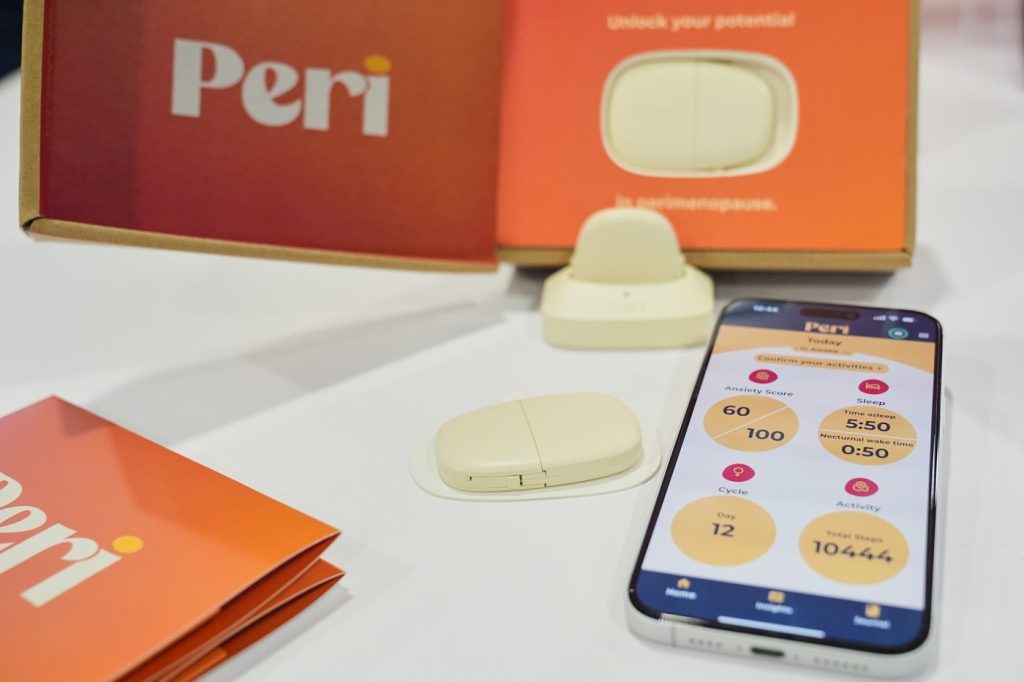
Many exhibits at CES focused on women's health, a domain historically overlooked in research funding and clinical trials. Notably, prior to 1993, women were largely excluded from clinical studies, and issues such as menopause remain poorly understood. Amy Divaraniya, CEO of the women's health startup Oova, pointed out the widespread experience of menopause among women and the scant research addressing it. For instance, a device named Peri aims to provide insights into perimenopause by tracking symptoms such as hot flashes and night sweats, presenting users with data via its app.
Additional products promoted at CES were intended to enhance access to medical information, particularly in underserved areas. The AI chatbot 0xmd, designed as a free medical information resource, allows users to pose medical questions and share pictures of health concerns for better understanding. Founder Allen Au explained that while the chatbot won’t replace doctors, it could serve as a free and effective second opinion tool. OpenAI also announced the introduction of ChatGPT Health, a similar initiative.
Cohn reiterated her skepticism regarding consumer health tech, acknowledging these tools can help prepare individuals to engage with medical professionals effectively. However, she stressed that such technology should not be seen as a replacement for traditional medical consultation, stating that users should remember these programs are merely tools, not infallible sources of medical truth.








