

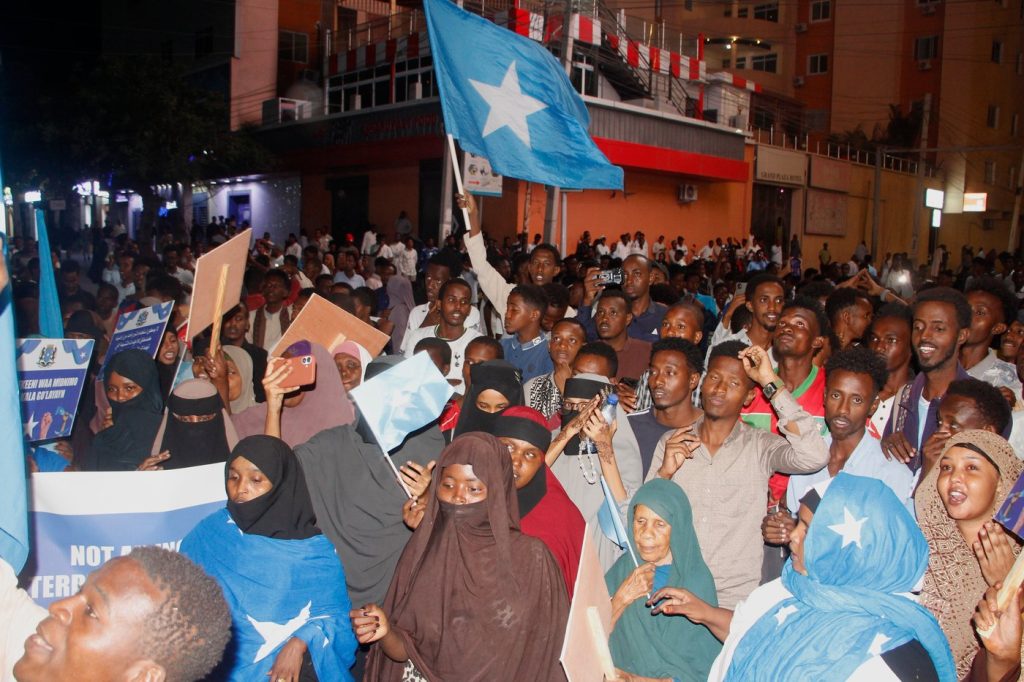
MOGADISHU, Somalia (AP) – Hundreds of demonstrators gathered in the capital of Somalia, Mogadishu, to protest Israel's recent recognition of the self-declared Republic of Somaliland. The protest took place on Thursday night at Taleh Square, with attendees waving Somali flags and chanting patriotic songs, emphasizing national unity amidst the political tension.
The demonstrators condemned Israel’s decision as a violation of Somalia's sovereignty and territorial integrity. They carried placards denouncing what they viewed as foreign interference in Somalia’s internal matters. This protest followed Israel's announcement two weeks prior, officially recognizing Somaliland as an independent nation, and came shortly after Israeli Foreign Minister Gideon Saar’s visit to Hargeisa, the capital of Somaliland. During this visit, Saar indicated that Israel plans to open an embassy in the region and appoint an ambassador.
This gathering was the third protest since the recognition of Somaliland on December 26. One of the demonstrators, Said Gedi, voiced a common sentiment among the protestors: “We are protesting against the division of our country. This is against the sovereignty, independence and territorial integrity of Somalia, and we hope Somalia will stand united.” Another protester, Abdirahman Abdulkadir, emphasized the message of unity shared by the crowd, stating, “Somalia cannot be divided. We are united by one religion, one culture and the same heritage.”
The demonstration coincided with a televised address by Somali President Hassan Sheikh Mohamud, who firmly rejected Israel’s recognition of Somaliland. He reiterated that Somalia is a sovereign and united country that cannot be divided or ceded to outside influences. Mohamud warned that the ongoing dispute could jeopardize Somalia’s political stability, economic recovery, and development if not addressed thoughtfully. He called for dialogue between Somaliland leaders and the federal government in Mogadishu, citing that successful separations often arise from political agreements, referencing the case of South Sudan’s independence in 2011.
President Mohamud highlighted that Israel lacks historical, cultural, or economic connections with Somalia. Somaliland, which was a British protectorate, declared its independence from Somalia in 1991 following the collapse of the central government. Although it has established its own institutions and has enjoyed a degree of stability, Somaliland has not received recognition from any United Nations member state.
More than 20 nations, primarily from the Middle East and Africa, along with the Organization of Islamic Cooperation, have opposed Israel’s recognition of Somaliland. Egyptian Foreign Minister Badr Abdelatty labeled this move a “dangerous precedent that threatens regional and international peace and security.”
In the context of broader geopolitical dynamics, U.S. and Israeli officials had previously mentioned discussions about Israel potentially resettling Palestinian individuals from Gaza into Somaliland as part of a plan promoted during Donald Trump's presidency. However, Somalia’s foreign ministry has stated that such proposals have neither been discussed nor considered. The U.S. has since abandoned that plan and maintains its recognition of Somalia's territorial integrity, which includes the territory of Somaliland.








