

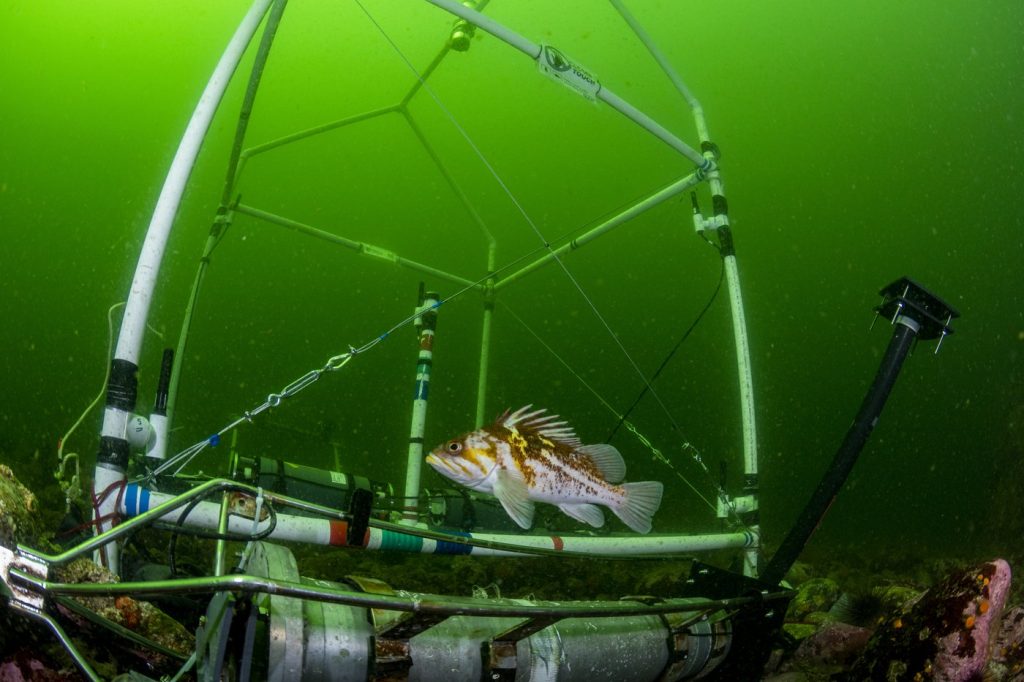
A recent study conducted by researchers from the University of Victoria in British Columbia has revealed that the unique sounds made by various fish species have been successfully identified. Using an underwater microphone, the team recorded sounds from different fish species off the coast of B.C., particularly near Bamfield in Barkley Sound, which is located on the southwest coast of Vancouver Island. They discovered remarkable auditory characteristics for eight specific species, shedding new light on fish communication.
The researchers deployed advanced machine learning models to analyze the distinct sounds generated by the fish, allowing them to accurately differentiate between closely related species. The findings, which were published in the Journal of Fish Biology, include recordings from black, quillback, copper, canary, and vermillion rockfish, alongside lingcod, kelp greenling, and pile perch. Collectively, these species often inhabit the rocky reefs of British Columbia.
PhD candidate Darienne Lancaster, who spearheaded the research, expressed her enthusiasm for the project. She emphasized that some of the fish had never before been documented as producing these specific sounds. The team meticulously listened to the fish’s knocking and grunting noises, correlating them to visual observations to determine their species accurately. This approach revealed that the species produced sounds with varying characteristics, with some grunts resembling croaks or growls. By analyzing elements such as sound length and frequency, the researchers successfully discerned the unique auditory signatures of different fish species.
One of the intriguing insights garnered from the research was the relationship between fish sounds and their behavioral responses. For instance, Lancaster noted that copper rockfish emitted knocking sounds while pursuing prey along the ocean floor, but exhibited a different sound profile when they were being targeted by predators. Furthermore, both copper and quillback rockfish were found to produce an increased number of grunting sounds in response to threats, presumably as a part of their escape behavior.
While the study focused on eight fish species, Lancaster pointed out that there are numerous other species off the B.C. coast, including a staggering 41 varieties of rockfish, that could be examined for their acoustic characteristics. This research could greatly enhance our understanding of fish behavior and contribute to effective conservation and fisheries management. By identifying species based on their sounds, researchers could monitor fish populations without needing to capture them, which would be less invasive and more efficient.
In the future, Lancaster's team plans to develop a “fish sound detector” capable of identifying the presence of various fish species in a specific area by merely using acoustic data. This innovation is expected to aid in tracking changes in fish populations over time. Additionally, they aim to conduct similar research in different regions of B.C. to investigate whether fish exhibit distinct "accents" or "dialects" corresponding to their geographic locations.
Lancaster concluded by underscoring the significance of this research, emphasizing its potential to improve fish management practices along the B.C. coast. The ability to deploy a simple microphone underwater to identify local fish species will provide a valuable, non-invasive method for conducting population assessments, thereby facilitating targeted conservation efforts and establishing marine protected areas for vulnerable fish populations.








