

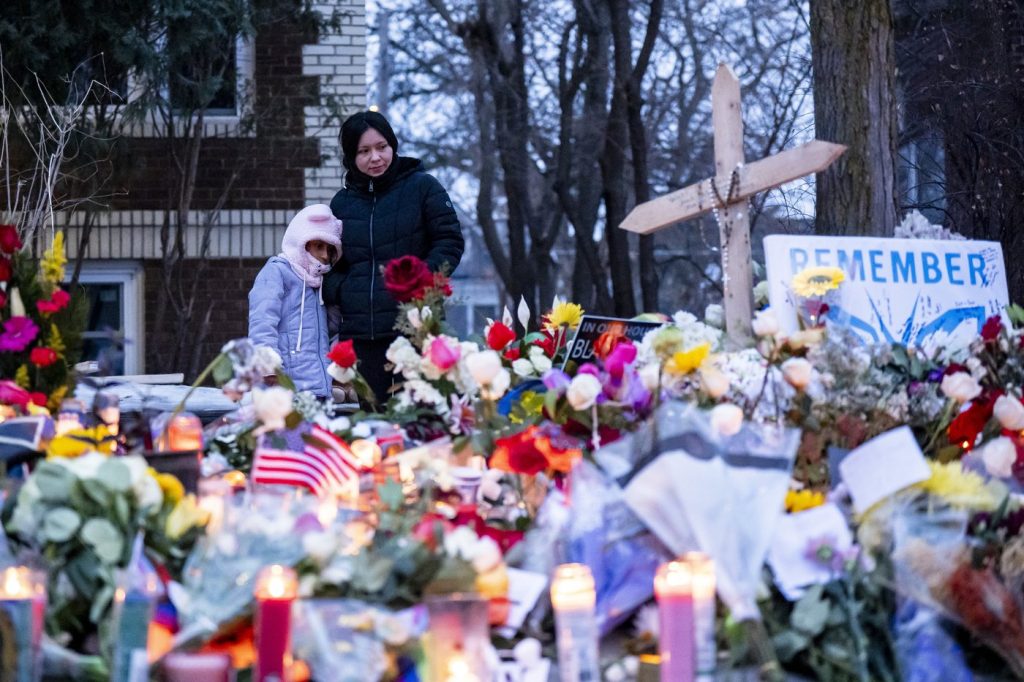
MINNEAPOLIS — Demonstrations and vigils are expected to continue in Minneapolis as the community grapples with the recent fatal shooting of a woman by an Immigration and Customs Enforcement (ICE) officer. The victim, Renee Good, a 37-year-old mother of three, was shot in the head on January 8, 2026, during a period marked by heightened immigration enforcement under the Trump administration in the Twin Cities, including Minneapolis and St. Paul.
As Minnesota becomes a political flashpoint following continued critiques from U.S. President Donald Trump, tensions rise as he targets Governor Tim Walz and makes derogatory remarks towards the state's Somali population. Recently, Trump referred to Somali residents as “garbage” amid a federal investigation into COVID-19 and medical aid fraud linked to organizations serving Somali immigrants.
Community member Saleban Duale, known as Sal, argues that the actions of a few do not reflect the entire community, emphasizing the significant contributions of the Somali population in Minnesota. In response to Good's tragic death, various Somali organizations are organizing a vigil to honor her at the site of the shooting.
The shocking incident involving Good has unsettled the local community, particularly amidst the largest immigration enforcement operation in U.S. history, which saw over 2,000 ICE officers deployed to the area. The increased scrutiny of the Somali population follows Trump's attempts to portray Minnesota as a hub of government fraud, specifically targeting the community in his allegations.
Continuing his criticism, Trump claimed that Somalis “contribute nothing” to the country and expressed his desire to end the temporary protected status for Somalis living in Minnesota. His contentious remarks extend to local politician, Minnesota Democratic Representative Ilhan Omar, who is of Somali descent, further exacerbating community tensions.
The rhetoric surrounding the Somali community intensified after unverified allegations surfaced that daycare centersrun by Somalis in Minneapolis were committing fraud, leading to public distrust. Recently, the Trump administration announced plans to withhold funding for programs aiding disadvantaged families in several Democratic-led states, including Minnesota, citing concerns over fraud.
For many in the Somali community, Duale explains, the ongoing scrutiny and tension have rendered them somewhat desensitized. “We know we are not fraudsters. We know how much we contribute,” he states, reflecting a collective resilience among community members. Duale is part of a group called Somali Neighbours, which creates clothing and accessories to show their support for the community.
Duale also points out that the Somali population is not the only minority group targeted by the Trump administration, referencing the president's previously debunked claims about Haitian immigrants during his campaign. He stressed that this moment represents a significant challenge for all minority communities facing similar adversities.
Meanwhile, another incident involving immigration enforcement has emerged on the West Coast, where federal agents in Oregon reportedly shot and injured two individuals outside a hospital. The Department of Homeland Security identified the passenger as a Venezuelan illegal alien connected to a criminal organization, alleging that he was involved in a recent shooting in the city. The situation escalated when the vehicle's driver attempted to run over the immigration agents during a targeted stop.
This context of heightened immigration enforcement and community unrest underscores the challenging realities faced by marginalized groups amidst a politically charged atmosphere.








