

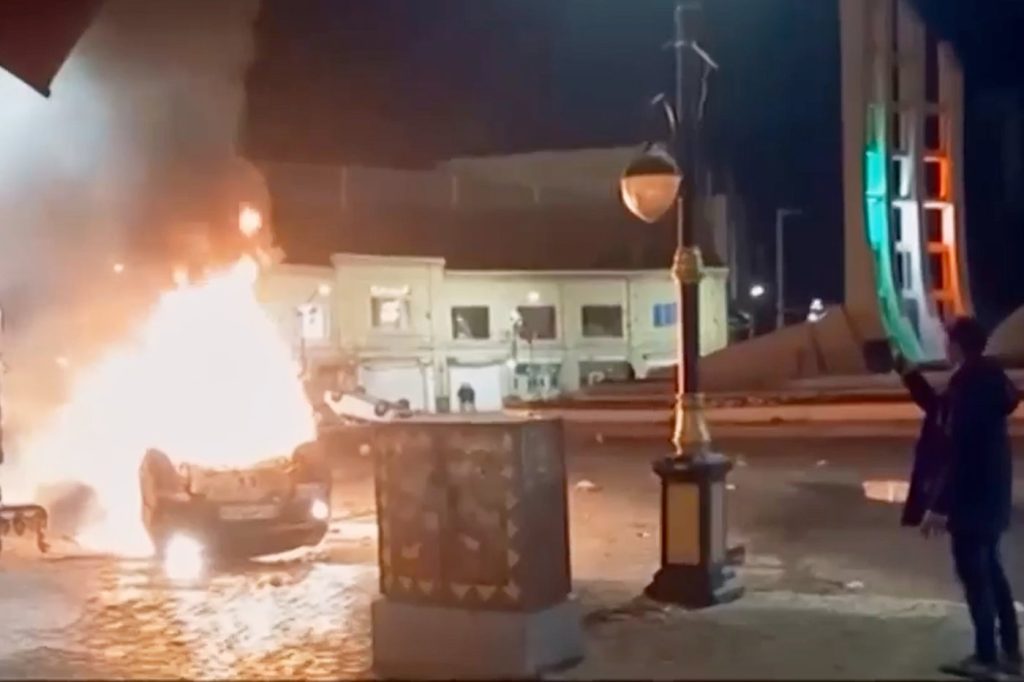
DUBAI, United Arab Emirates (AP) – Protests continue to sweep across Iran as the demonstrations enter their second week, with the Iranian government acknowledging the ongoing unrest amid a tightening crackdown on dissent. With the nation largely cut off from global communications, assessing the protests from outside has become increasingly challenging. According to the U.S.-based Human Rights Activists News Agency, at least 65 people have been killed and over 2,300 detained during the protests.
The Iranian state television is reporting on casualties among security forces while portraying an image of control over the situation in the country. Supreme Leader Ayatollah Ali Khamenei has hinted at a forthcoming clampdown despite warnings from the United States. U.S. Secretary of State Marco Rubio expressed support for the demonstrators on social media, emphasizing that the U.S. stands with the courageous people of Iran. The U.S. State Department further cautioned against underestimating President Trump’s words.
As the work week commenced in Iran, many schools and universities reportedly opted for online classes, although internal governmental websites seemed to remain operational. State TV showcased pro-government demonstrations, frequently playing a martial orchestral piece from the “Epic of Khorramshahr,” which honors Iran’s liberation of the city during the Iran-Iraq war. This piece has also been associated with protests against the death of Mahsa Amini, who was killed in 2022 while in police custody.
Iranian state television claimed that peace prevailed in most cities overnight, but this claim was contradicted by verified online video footage showing protests in northern Tehran’s Saadat Abad area, where thousands were reportedly on the streets chanting against Khamenei. The semiofficial Fars news agency, thought to be linked with Iran’s paramilitary Revolutionary Guard, released footage capturing protests in Isfahan, depicting protesters engaging in violence against perceived government targets.
Reports from the Young Journalists’ Club, affiliated with state media, indicate that the protests have become increasingly violent, with three members of the Basij force reportedly killed in Gachsaran. Additionally, various security officials have also been reported killed in different regions, including Hamadan and Bandar Abbas.
Following the government’s decision to cut off the internet and international telephone lines, Al Jazeera appeared to be one of the few foreign media organizations actively reporting from Iran. Meanwhile, Iran’s exiled Crown Prince Reza Pahlavi called for further protests, urging demonstrators to rally with the former lion-and-sun flag, symbolizing the pre-revolutionary era.
Pahlavi’s connection to Israel has garnered criticism, particularly after the recent 12-day conflict, but some demonstrators have expressed support for the former regime, leaving ambiguous whether this is a direct endorsement for Pahlavi or a nostalgic yearning for the period before the 1979 Islamic Revolution.
The demonstrations, initially sparked by the collapse of the Iranian rial currency, which is currently trading at over 1.4 million to $1, have escalated to broader calls challenging Iran’s theocratic regime. The protests reflect widespread discontent fueled by the Iranian economy's struggles, exacerbated by international sanctions related to its nuclear program.








