

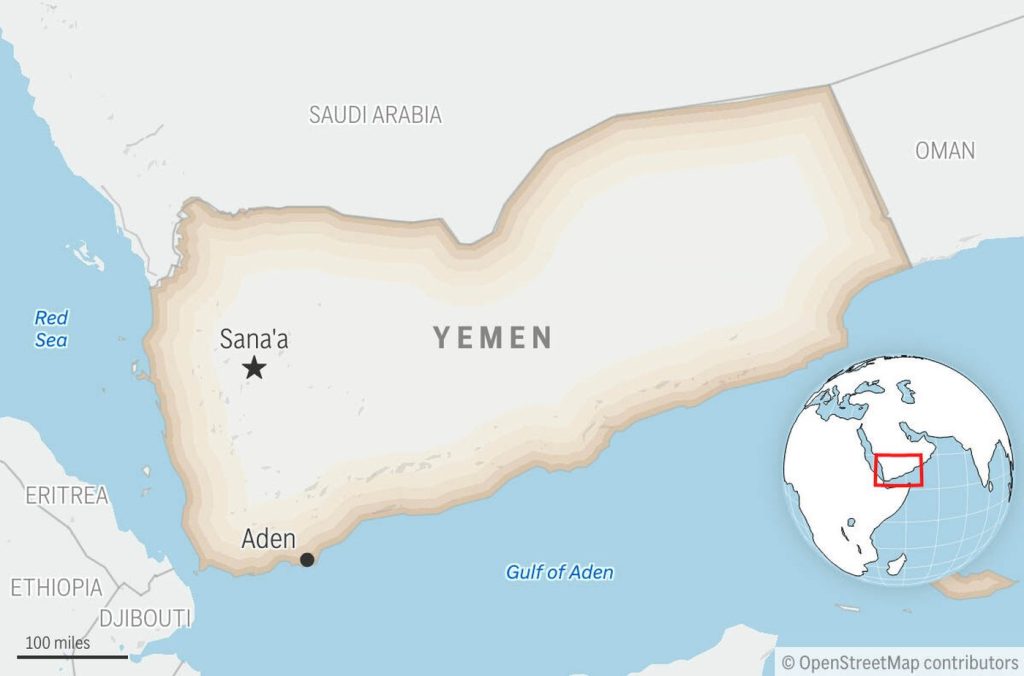
Thousands of Yemenis gathered on Saturday in the southern city of Aden to support the Southern Transitional Council (STC), a separatist group receiving backing from the United Arab Emirates (UAE). This demonstration came just one day after the STC announced its dissolution following clashes with forces from Yemen's internationally recognized government.
The supporters convened in Khor Maksar district, which is home to Aden's international airport. Armed factions loyal to the STC were present to secure the protest area, as reported by an Associated Press journalist in the vicinity. Protesters denounced both Saudi Arabia and the Yemeni government, waving flags symbolizing southern Yemen, which was an independent state from 1967 until 1990. Many attendees also displayed posters featuring Aidarous al-Zubaidi, the leader of the STC, who had recently fled to the UAE.
Organizers of the protest issued a statement rejecting the STC's dissolution and called for the establishment of an independent state in southern Yemen. The country has endured over a decade of civil war, characterized by complex sectarian and tribal conflicts, along with the involvement of various regional powers. Tensions have recently escalated between U.S. allies Saudi Arabia and the UAE, as their long-standing partnership in the Yemen conflict appears to have fractured.
The STC was formed in April 2017 and serves as a coalition for various groups advocating for the restoration of southern Yemen as an independent entity. It has enjoyed military and financial support from the UAE. However, following Al-Zubaidi's flight to the UAE—reportedly after declining to participate in de-escalation discussions in Riyadh—an STC delegation attended talks last week and subsequently announced the organization's dissolution.
On Friday, Abdulrahman Jalal al-Sebaihi, the secretary-general of the STC, announced the cessation of all STC operations and offices, both domestically and internationally, citing internal disputes and growing regional pressures. Nonetheless, Anwar al-Tamimi, a spokesman for the council, contested this declaration, stating that only the full council could make such a decision, underscoring the internal divisions affecting the separatist movement.
Hostilities between Riyadh and Abu Dhabi intensified early last month, when UAE-backed forces seized control of the provinces of Hadramout and Mahra—areas rich in oil—along with the presidential palace in Aden. In response to prolonged Saudi-led efforts aimed at de-escalating the situation, Yemeni government forces backed by Saudi Arabia pushed the separatists out of both Hadramout and the presidential palace in Aden.
This escalation marks yet another chapter in the ongoing civil war in Yemen, which has been tumultuous since 2014 when Houthi rebels, supported by Iran, captured the capital, Sanaa, forcing the internationally recognized government to flee southward before ultimately seeking refuge in Saudi Arabia. A Saudi-led coalition, including the UAE, intervened the following year to restore the Yemeni government, but the conflict has remained at a stalemate in more recent years. A truce was eventually reached between the Houthis and Saudi Arabia, putting an end to Houthi attacks on Saudi territory in exchange for halting Saudi-led airstrikes against Houthi regions.








