

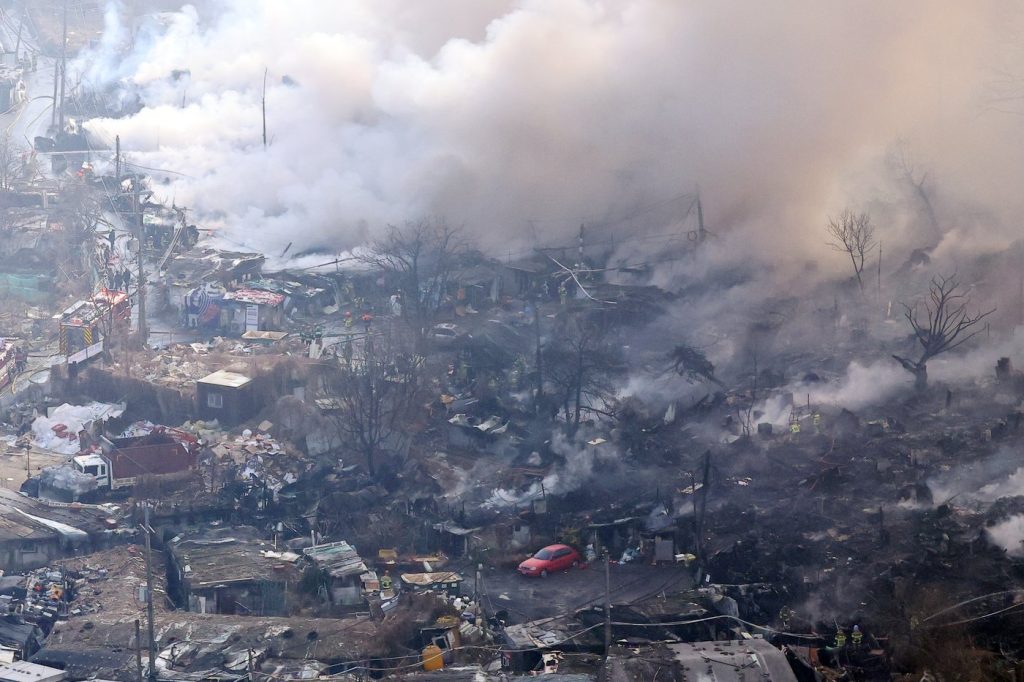
SEOUL, South Korea (AP) A significant fire erupted on Friday in Guryong village, one of the last remaining shanty towns in Seoul, leading to the destruction of makeshift dwellings and forcing dozens of residents to evacuate their homes. Fortunately, no casualties have been reported as of now.
According to fire officials, the blaze was brought under control approximately 6 1/2 hours after it first ignited. Local fire officer Jeong Gwang-hun provided updates during a televised briefing, stating that rescuers were meticulously searching each house within the affected areas to ascertain if there were any potential victims trapped in the ruins.
In total, more than 1,200 personnel, including firefighters and police officers, were mobilized to respond to the emergency. Jeong indicated that the cause of the fire is still under investigation, as officials begin to piece together what led to this unfortunate incident.
Guryong village, which is situated on a hillside in southern Seoul, has faced the challenge of frequent fires over the years. Observers attribute this persistent vulnerability to the tightly packed houses constructed from materials that can easily ignite and lead to rapid fire spread. The village itself stands in stark contrast to some of the city's most affluent neighborhoods, characterized by towering high-rise apartment buildings and luxurious shopping districts, underscoring the glaring income inequalities present in South Korea.
This village was originally established in the 1980s as a settlement for individuals who were forcibly evicted from their homes as part of large-scale redevelopment projects. During this period, hundreds of thousands of residents in Seoul were displaced from slums and low-income areas as military-backed leaders pursued aggressive beautification initiatives in preparation for the 1988 Seoul Olympic Games, aimed at attracting foreign visitors.
The history of Guryong village serves as a poignant reminder of the socio-economic disparities that persist within the capital, highlighting the challenges faced by marginalized communities in the context of rapid urban development. Local authorities and community advocates continue to discuss potential strategies for improving living conditions in these vulnerable areas.
In light of this latest fire, it remains to be seen what steps will be taken to prevent similar occurrences in the future and whether any residents will be able to return to their homes in the village. As the investigation unfolds, the plight of Guryong's residents reflects broader issues related to urban poverty, housing insecurity, and the ongoing struggle for social equity in a rapidly modernizing society.








