

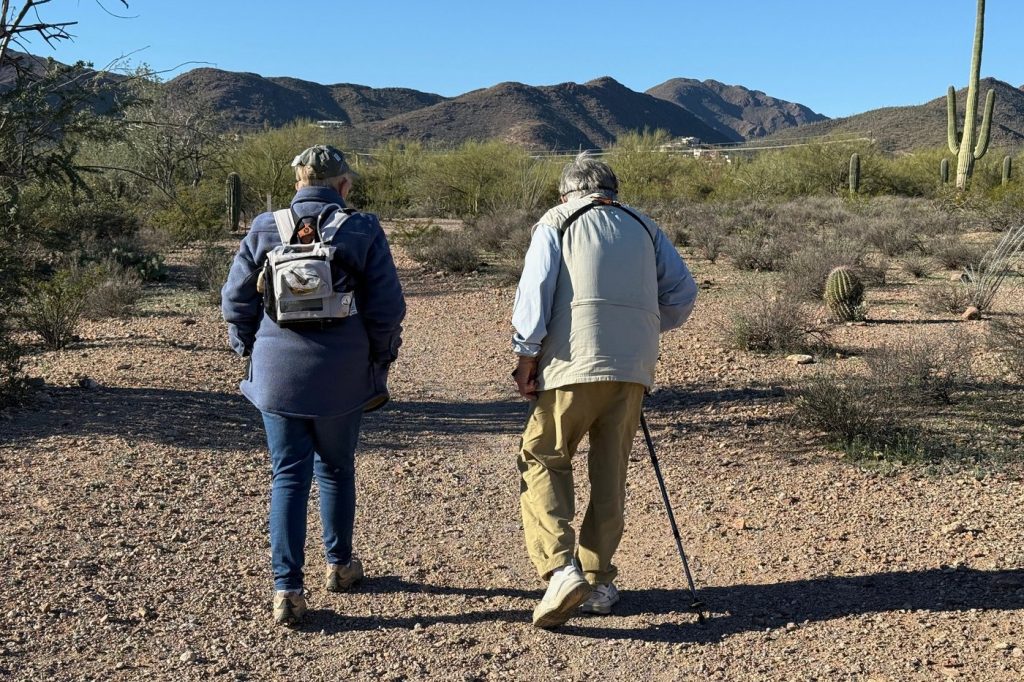
TUCSON, Ariz. (AP) — Marcia OBara, who uses an oxygen pack for her Chronic Obstructive Pulmonary Disease (COPD), leads a diverse group of nature enthusiasts on bird-watching excursions. These excursions, called "Birding for Every BODY," focus on enjoying nature without competitive pressure, allowing participants to move at their own pace along flat trails while fostering a sense of community.
This initiative is part of a growing national movement aimed at making birding and nature experiences accessible to people with physical and other limitations. OBara, a retired nurse, has been leading these accessible outings for three years. She emphasizes that traditional birding outings might not accommodate individuals with disabilities, especially those who feel pressured by competitive birders focusing on maximizing species counts.
During her walks, OBara meticulously ensures that all trails are easy to navigate and that amenities like bathrooms are equipped to accommodate mobility devices such as scooters and wheelchairs. She also ensures adequate drinking water, shade, and seating is available for participants. Throughout the walks, OBara remains attentive to the group's pace, adjusting as necessary to keep everyone comfortable.
Despite the openness of these outings to individuals using wheelchairs or mobility scooters, OBara notes that such participants often hesitate to join, possibly due to concerns about being able to keep up. She warmly encourages them to attend, emphasizing that everyone is welcome.
On a recent outing, OBara pointed out a phainopepla, a slender bird perched on a mesquite tree, as well as quacking mallards swimming in nearby ponds. Participants like Rhea Guertin, a retired snowbird from Rhode Island, appreciate the leisurely experience, expressing that it is refreshing to simply be outdoors and savor the moment without any worries.
The movement to engage individuals with disabilities in birding began in earnest in 2018 when Virginia Rose, a retired Texas teacher who has used a wheelchair since age 14, founded the nonprofit Birdability. Cat Fribley, Birdability's executive director, highlights that their vision is for birding to be welcoming to everyone, regardless of physical or cognitive limitations. Participants may face challenges like mobility issues, visual impairment, chronic illness, or mental health concerns.
Fribley, herself using a mobility scooter, shares that she can enjoy birding on smooth trails in her Iowa City community. She also enjoys birdwatching from her back deck during the winter months. Accessible birding options include vantage points like vehicles, canoes on rivers, or even from home through kitchen windows, allowing more people to connect with nature.
Birdability has collaborated with the National Audubon Society to create a crowdsourced map detailing accessible birding locations nationwide. The organization also provides resources to help able-bodied birders become more inclusive, offering guidance on adaptive devices like binocular harnesses, which alleviate strain on the neck and shoulders.
Jerry Berrier, a 73-year-old blind birder from Massachusetts, echoes the joy that birding brings. Having developed his skills in identifying bird calls during college, Berrier has since created a website to share avian songs and established a podcast called "Any Bird, Any Body" with a friend. He also helped organize a national bird-a-thon for blind bird enthusiasts, which attracted several hundred participants last year and plans to expand internationally in the subsequent year.
Berrier emphasizes the importance of reaching out to local organizations to foster inclusivity for blind birders, noting that disabilities can be isolating experiences. Accessible birding initiatives like those in Tucson and facilitated by organizations such as Birdability create opportunities for connection and enjoyment of nature for individuals of all abilities.








