

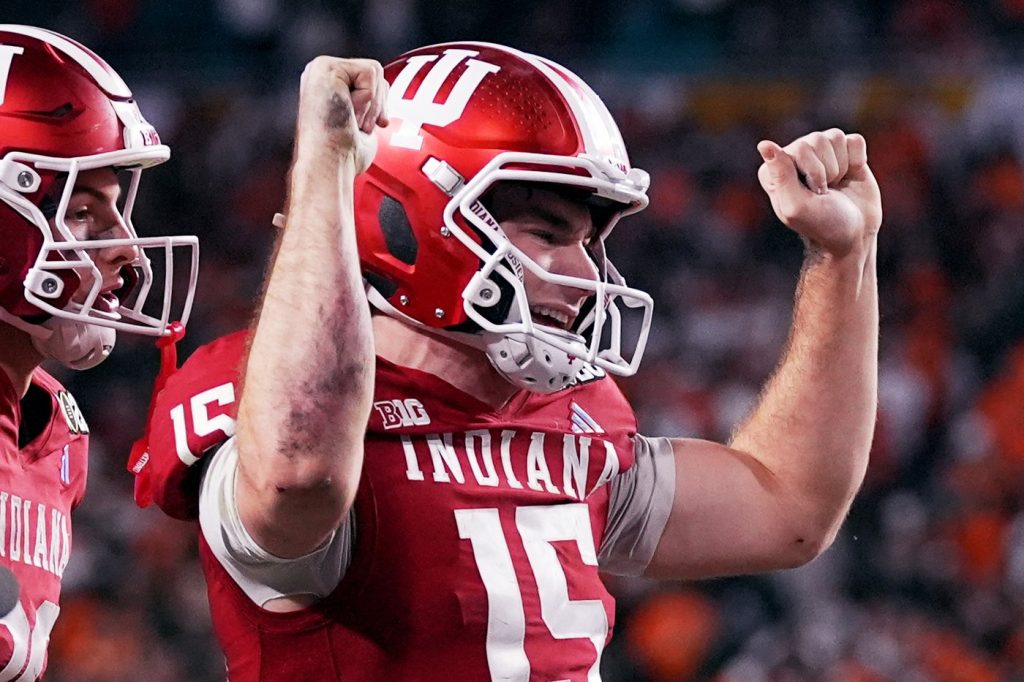
In a thrilling championship clash, Indiana University achieved a monumental feat by defeating the Miami Hurricanes 27-21 on Monday night, capturing the national title in Miami Gardens, Florida. Quarterback Fernando Mendoza, who played a pivotal role throughout the season, showcased his grit, finishing the game with 186 yards passing and a memorable 12-yard touchdown run on fourth-and-4 with just under ten minutes left on the clock.
Mendoza's remarkable performance not only exemplified his skills but also highlighted his determination to lead his team to victory. “I had to go airborne,” Mendoza stated after the game, having endured a brutal Miami defense that sacked him three times. The crucial touchdown he scored gave Indiana a 24-14 lead, a margin that proved essential as Miami mounted a final charge led by running back Mark Fletcher, who rushed for 112 yards and two touchdowns in the second half.
Under the guidance of head coach Curt Cignetti, Indiana’s football program transformed dramatically, finishing the season with an unprecedented 16-0 record. This extraordinary achievement marked the school's first national championship in football, a notable redemption after enduring a staggering 713 losses over 130-plus years prior to Cignetti's arrival two years ago. “We won the national championship at Indiana University. It can be done,” Cignetti declared with pride.
This title win is particularly significant as it mirrors the success of Bob Knight's 1976 basketball team, which also went undefeated. Indiana’s football triumph signifies a shift in a program that had long struggled and rekindles hope among its passionate supporters. Mendoza, a transfer from Cal, emphasized the rarity of such talent, particularly against the backdrop of college football’s evolving landscape, where institutional success is often tied to substantial financial resources.
During the game, Cignetti took calculated risks, particularly in the fourth quarter, which paved the way for Mendoza's stunning touchdown. Following Fletcher's second touchdown that narrowed the deficit to three points, Cignetti opted for two pivotal fourth-down decisions. The first saw Mendoza connect with wide receiver Charlie Becker on a perfectly executed back-shoulder fade for a 19-yard gain. Subsequently, the coach shifted strategies and decided against a field goal attempt, instead opting for a quarterback draw that led to Mendoza’s spectacular airborne touchdown.
Indiana’s resilience was further tested as their opponents, Miami, fought vigorously to reclaim the lead. Despite Fletcher’s contributions, the Hurricanes were unable to overturn the score. As the game drew to a close, Indiana's defense held firm, culminating in a game-winning interception by defensive back Jamari Sharpe, a Miami native who played a vital role in ensuring Indiana's crown would not be usurped.
Reflecting on this unprecedented journey, Cignetti acknowledged the effort and perseverance of his team, admitting he didn't initially think such a remarkable turnaround was possible. His leadership and the players' dedication resulted in a story that transformed Indiana's football legacy and provided a beacon of hope for those who believe that great accomplishments can arise from challenging beginnings.








