

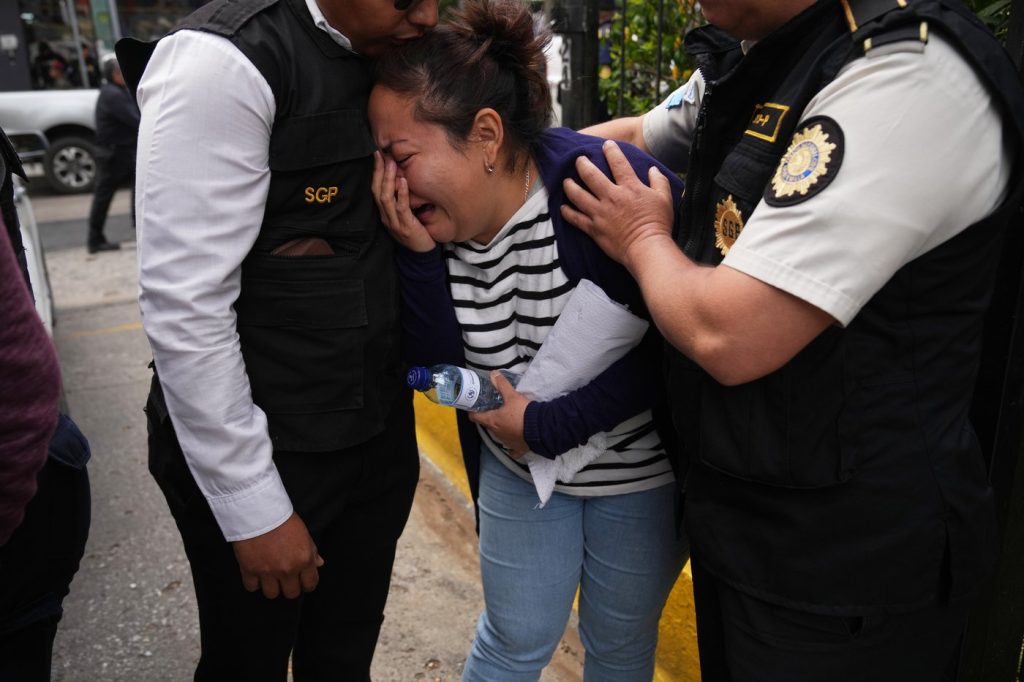
In response to an alarming rise in gang-related violence, Guatemala's President Bernardo Arévalo declared a state of emergency on January 18, 2026. This decision came after a weekend marked by significant unrest, including prison riots and the tragic deaths of several police officers tasked with restoring order. The violence has escalated fears about security in the country, further complicating an already fraught social and political landscape.
Following the declaration, security forces engaged in urgent operations to regain control of multiple prisons known to house notorious gang leaders. One such operation took place at the Renovation maximum-security prison in Escuintla, where officers worked diligently to free guards who were taken hostage during the chaos. These efforts were crucial not only for restoring order but also for ensuring the safety of both prison staff and inmates.
As the security forces maneuvered to reclaim control, they faced violent resistance. Reports indicate that several police officers were killed in confrontations during these operations, highlighting the grave risks law enforcement personnel encounter when dealing with organized crime. Forensic investigators were seen on the scene placing evidence markers, underscoring the violent reality within the prisons and the challenges faced by authorities in curbing gang activities.
On January 19, 2026, a wake was held for the fallen police officers at the Interior Ministry in Guatemala City. President Arévalo, visibly affected by the loss, attended the wake to offer condolences to the families of the slain officers. His presence served as a poignant reminder of the personal toll of the violence that has gripped the nation. The gatherings evoked sorrow and solidarity among the officials and the community as they mourned the lives lost in the battle against gang violence.
Amidst the heightened tensions, soldiers were deployed around key locations, including the Congress building in Guatemala City, as lawmakers began to debate the ratification of the state of emergency. This state of emergency, which allows for increased military presence and heightened security measures, aims to address the spiraling violence and restore order throughout the country. However, it has also sparked discussions among legislators regarding the implications of such measures on civil liberties and overall governance.
During the legislative session, opposition lawmakers voiced concerns over the potential for abuse of power under the state of emergency. The debate reflected a broader discourse on the appropriate response to crime and the balance between ensuring public safety and upholding democratic principles. As this situation unfolds, the legality and effectiveness of the emergency measures put forth by President Arévalo remain at the forefront of political discourse in Guatemala.
As the nation grapples with the realities of gang violence, the focus shifts to the challenges that lie ahead. The increase in military and police presence, coupled with intensive operations in prisons, signifies a radical approach to addressing the gang crisis. However, the outcomes of these measures will likely set the tone for Guatemala’s future and its ongoing struggle with organized crime. With the complexity of the situation, the need for comprehensive and sustainable solutions is more critical than ever.








