

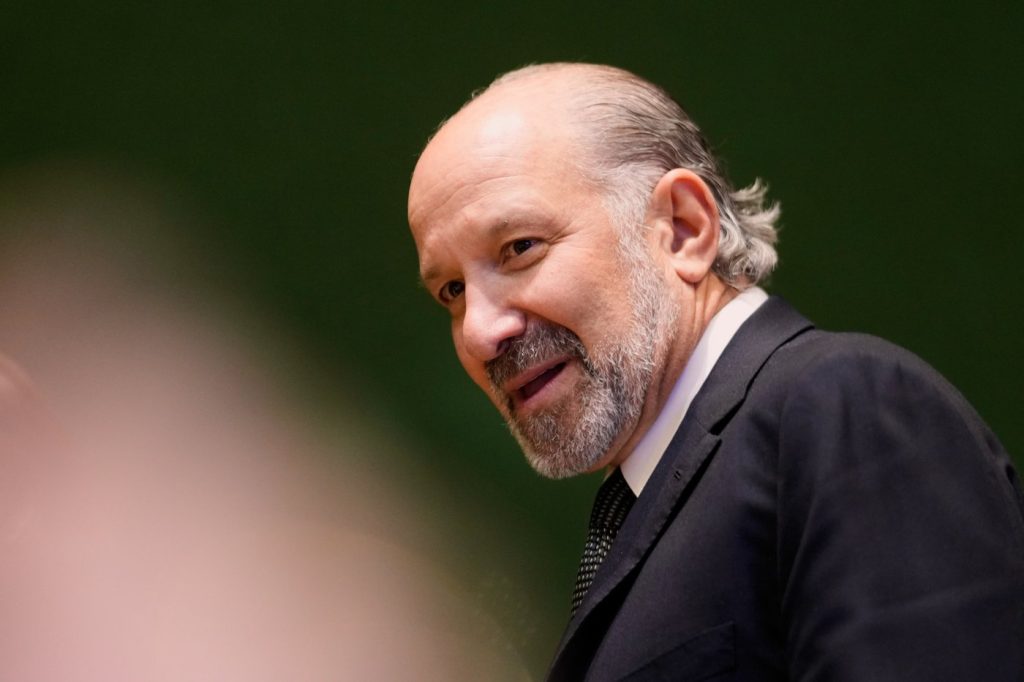
In a recent development from the World Economic Forum (WEF) held in Davos, Switzerland, U.S. Commerce Secretary Howard Lutnick labeled Canadian Prime Minister Mark Carney's speech as "political noise." Lutnick's remarks came against the backdrop of criticism regarding Canada's recent trade agreement with China, which he referred to disparagingly.
During an appearance on Bloomberg TV, Lutnick expressed his views on Canada’s international trade position, claiming that Canada currently holds "the second-best deal in the world." He accused Carney of unwarranted complaints about the challenges faced by Canada in the current geopolitical climate.
In connection with this trade discourse, Lutnick raised concerns that Ottawa's dealings with China might jeopardize ongoing negotiations regarding the Canada-U.S.-Mexico Agreement (CUSMA), which is scheduled for a review within the year. His comments highlight the delicate balance Canada must maintain in its international relations, especially concerning its largest trading partner to the south, the United States.
Prime Minister Carney's address at the WEF summit has garnered international acclaim, as he articulated a vision that the traditional world order is being challenged. He advocated for cooperation among middle powers, urging these nations to unite against pressures exerted by more dominant countries through economic coercion. This perspective resonated widely at the forum, with European leaders echoing Carney's sentiments regarding a significant shift in trade and defense dynamics.
Further evidencing the speech's impact, U.S. Trade Representative Jamieson Greer commented on Fox News, asserting that there is indeed a "new world order." He noted that European officials have begun to recognize and adapt to this changing landscape, aligning their strategies with Carney's warnings about the potential fracturing of established relationships in trade and defense.
The ongoing discussions at the WEF reflect a critical juncture for international relations, particularly among countries grappling with the repercussions of evolving global power structures. Lutnick’s criticisms juxtapose against the background of Carney’s call for unity among middle powers, showcasing the tension between national interests and collaborative diplomacy.
The implications of these dialogues extend beyond individual nations, influencing global trade policies and alliances in the years to come. As negotiations surrounding the CUSMA progress, the interactions between the U.S. and Canada, along with the involvement of major players like China, could define the future of trade in North America.








