

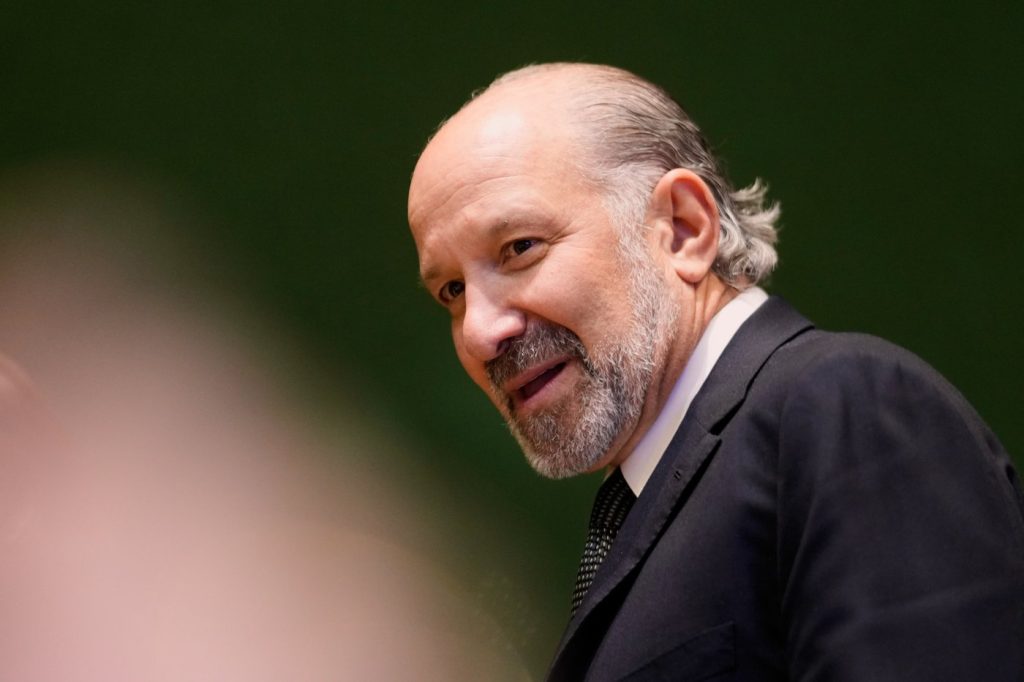
WASHINGTON – U.S. Commerce Secretary Howard Lutnick has labeled Prime Minister Mark Carney's address at the World Economic Forum (WEF) as “political noise” while directing criticism towards Canada's recent trade arrangements with China.
During an appearance on Bloomberg TV, Lutnick expressed his views on Canada's trade deal, describing it as “the second-best deal in the world.” He accused Carney of engaging in complaints contrary to the advantages that the deal ostensibly provides. This statement showcases the ongoing tensions between Canada and the United States regarding trade strategies and agreements.
Lutnick further cautioned that the recent agreement between Ottawa and Beijing could significantly disrupt the ongoing negotiations concerning the Canada-U.S.-Mexico Agreement (CUSMA), which is scheduled for review in the current year. This statement raises concerns about the delicate balance in North American trade relations, particularly as Canada seeks to strengthen ties with China amidst its agreement with the U.S. and Mexico.
In his impactful speech at the WEF summit held in Davos, Switzerland, Carney emphasized the need for middle powers to unify in the face of pressure from larger nations that tend to exert economic coercion. His address has garnered international applause, reflecting a growing acknowledgment of the shifting dynamics of global trade and power dynamics.
Carney's remarks resonated with European leaders, who have actively referenced his speech throughout the duration of the Davos forum. His warnings of a fundamental rupture in enduring trade and defense partnerships continue to reverberate, highlighting the concerns among middle powers about their standing in an increasingly polarized global landscape.
In addition to Lutnick's interventions, U.S. Trade Representative Jamieson Greer has also noted the emergence of a “new world order,” signifying that European officials are beginning to take heed of these developments. This acknowledgment of a transformational shift in global trade dynamics is indicative of the broader implications that Carney's analysis may have on international relations, particularly among nations striving to adapt to changing economic realities.
The discussions unfolding during the WEF summit are emblematic of a pivotal moment in international trade, demonstrating the complexity and multifaceted nature of relationships between major global players and middle powers. As Canada further engages with China, the potential impact on its existing agreements with the United States and Mexico remains a critical area of concern for policymakers.
This development raises essential questions about the future trajectory of not only Canada-U.S.-Mexico trade relations but also the positioning of countries that find themselves caught between competing global powers. The various perspectives on trade agreements discussed at the WEF highlight the need for strategic cooperation among countries as they navigate through a landscape marked by both opportunity and risk.
Overall, the discourse at the World Economic Forum underscores the significance of understanding the evolving global trade environment, characterized by shifting alliances and emerging economic strategies.








