

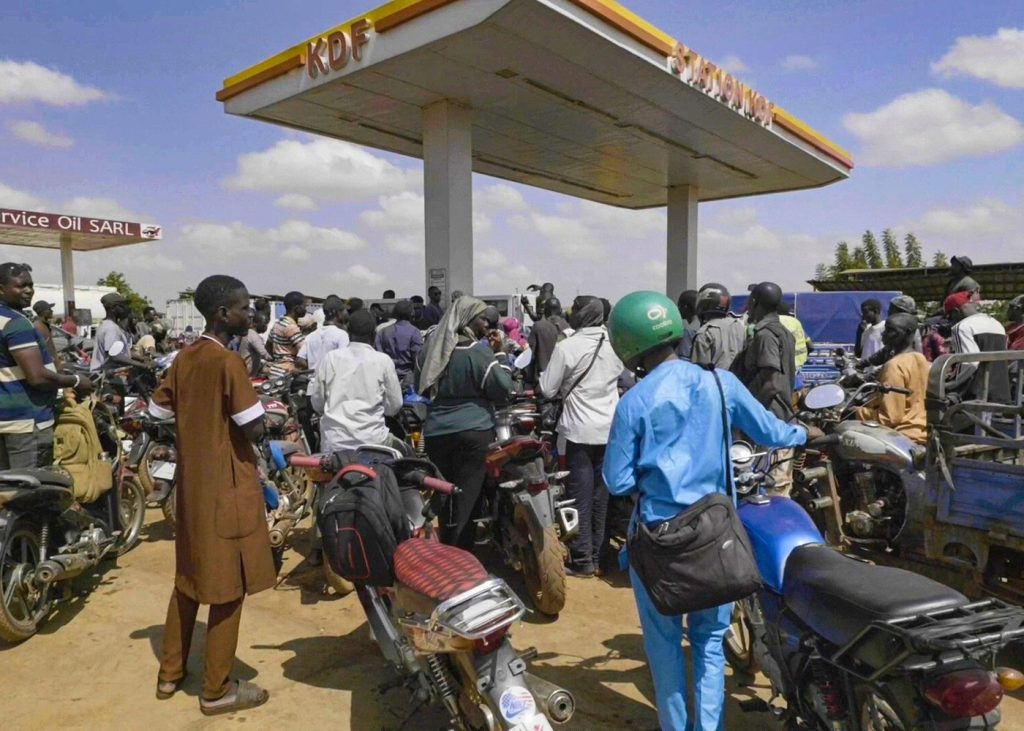
BAMAKO, Mali (AP) – Mali's government has initiated plans to impose fuel rationing in response to severe shortages that have arisen due to the actions of al-Qaida-linked groups in border regions. These groups have obstructed fuel supplies to the landlocked nation in recent months. The rationing announcement was made on Thursday, although officials did not specify a start date for the measure. It aims to alleviate long queues at gas stations, especially with the Muslim holy month of Ramadan approaching.
To reinforce fuel distribution safety, Russian troops from the Africa Corps, Moscow’s state-controlled paramilitary force, have begun escorting tanker convoys delivering gasoline throughout the country. Since seizing power in May 2021, Mali's military government has shifted its alliances from Western partners to Russia, seeking assistance in combating militants aligned with al-Qaida and the Islamic State.
Since September, attacks on fuel trucks by al-Qaida-linked militants and other armed groups have surged, resulting in the destruction of more than a hundred trucks. This violence has significantly disrupted fuel imports and distribution, with the Mali Fuel Importers Union reporting that over 2,000 tanker trucks entered the country in 2023, a drastic decrease from the previous monthly average of nearly 6,000 prior to the escalated attacks.
The newly implemented rationing system is designed to ensure more equitable fuel distribution among consumers. Under these measures, vehicle plates will be registered, and wait times will be established for refueling. Cars will be permitted to refuel every 72 hours, while motorcycles may do so every 48 hours. A Malian fuel importer, who requested anonymity, confirmed that Russian soldiers from the Africa Corps are already securing fuel convoys to protect them from militant attacks.
Moussa Alassane Diallo, Mali's Minister of Trade and Industry, addressed the union of petroleum product importers, stating that the rationing will provide the government with "complete control" over gas stations and enable authorities to monitor fuel quantities sold. Ibrahim Touré, head of the petroleum importers union, expressed optimism about ending the fuel crisis, contingent upon the continued protection of tanker trucks by military escorts.
However, many residents, particularly taxi drivers, voiced their concerns regarding the impact of fuel limits on their livelihoods. Oumar Coulibaly, a taxi driver in Bamako, remarked, "These measures may work for private cars, but for us taxi drivers, it’s going to be difficult because we don’t earn enough money to fill up our taxis every time we go." He emphasized the necessity of fuel for their multiple daily trips.
Experts suggest that the junta's decision is likely influenced by growing public discontent over prolonged fuel shortages. Beverly Ochieng, a senior analyst with Control Risks, stated that the insecurity along supply routes due to ongoing militant activities will continue to pose challenges for fuel transport in the weeks ahead, with the stability of supplies remaining uncertain.








