

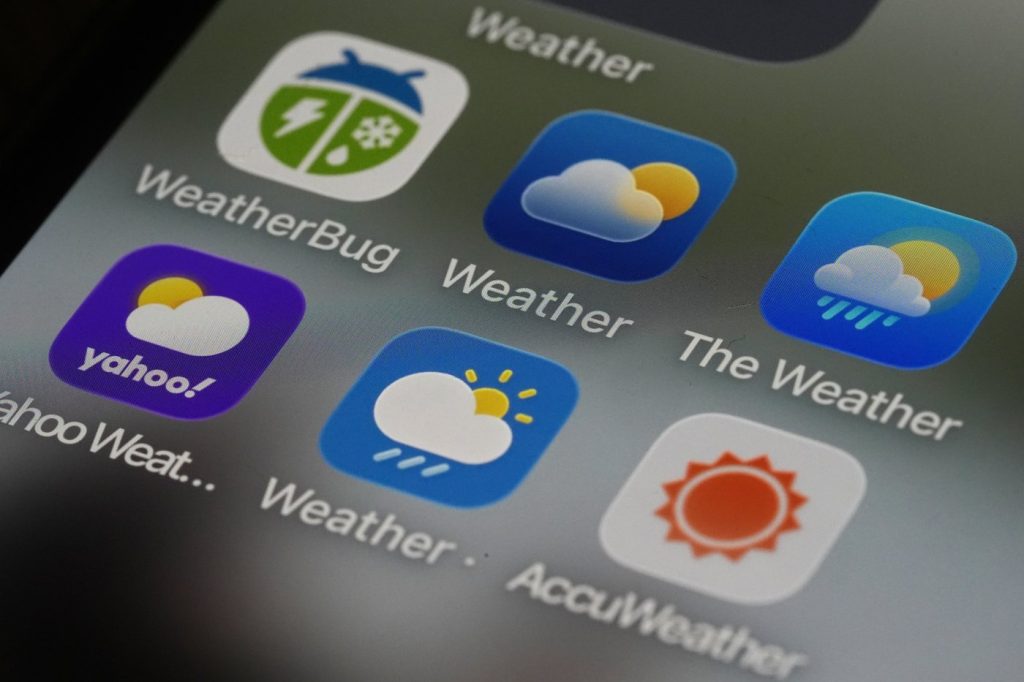
According to meteorologists, while smartphone weather apps often provide eye-catching forecasts, relying on human expertise is crucial during complex and dangerous winter storms. The ongoing multistate storm bringing heavy snow, hazardous ice, and subzero temperatures exemplifies the need for detailed and nuanced weather interpretations, as mere apps can oversimplify the situation.
Marshall Shepherd, a meteorology professor at the University of Georgia and a past president of the American Meteorological Society, pointed out the limitations of weather apps during events with multiple types of precipitation. He emphasized that apps often lack the depth to explain why snow, sleet, or freezing rain occurs, leading to potential misunderstandings.
Jason Furtado, a meteorology professor at the University of Oklahoma, echoed this sentiment by stressing the importance of human forecasters who can analyze and interpret changing data. Many weather apps utilize artificial intelligence to generate forecasts or interpolate data from broader grids, which can introduce significant errors in localized predictions.
However, some apps do manage to present accurate forecasts, particularly those that combine National Weather Service (NWS) data with human expertise. James Belanger, vice president at The Weather Company, which owns the Weather Channel app, noted that the app uses a wide array of models and data sources along with staff input to produce reliable forecasts during extreme weather events.
Weather apps typically gather data from the National Weather Service and may supplement it with proprietary information. They often provide localized forecasts based on specific ZIP codes or geographic locations. Yet, Victor Gensini, a meteorology professor at Northern Illinois University, cautioned that while some applications display NWS warnings accurately, they can oversimplify uncertainty, offering overconfident predictions that might not account for the storm's nuances.
Steven DiMartino, a meteorologist from NY NJ PA Weather, affirmed that while weather apps are effective in forecasting pleasant summer days, they fall short during severe weather episodes. He explained that data alone cannot provide the necessary context; human interpretation is essential to refine forecasts based on real-time conditions.
Cory Mottice, a National Weather Service meteorologist who developed the EverythingWeather app, highlighted that his creation taps into data from numerous professional meteorologists across over 125 NWS offices. By relying on experts for data interpretation, the app aims to avoid the pitfalls of misleading numbers commonly found in apps that depend solely on raw modeling data.
The Weather Channel app distinguishes itself by leveraging a combination of over 100 weather models, including those from the U.S. and Europe, supplemented by feedback from more than 100,000 citizen weather observers. This synthesis, facilitated by artificial intelligence, enhances the accuracy of forecasts, particularly in unpredictable conditions. Nonetheless, Belanger assured that human meteorologists play a pivotal role in the final output, ensuring the forecasts are well-validated.
Meteorologists also warn about the potential dangers of seeking weather updates through social media, which can propagate misinformation and exaggerated claims. Gensini noted that social media tends to reward sensationalism, which can mislead the public during significant weather events. Kim Klockow McClain, an extreme weather social scientist, expressed concern that repeated exposure to exaggerated forecasts could undermine public trust in legitimate weather reporting.
In summary, while weather apps can be a convenient source of information, they often lack the precision and interpretative skills of trained meteorologists, particularly during extreme weather events. As such, experts advocate for a cautious approach that prioritizes human insight alongside technological advancements in weather forecasting tools.








