

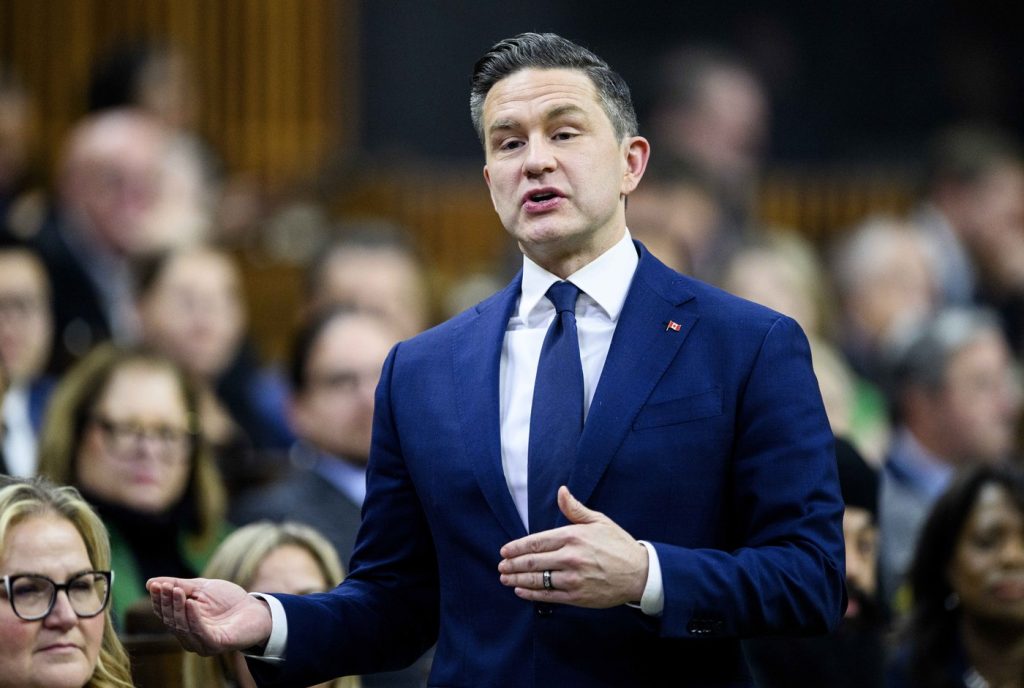
OTTAWA — Conservative Leader Pierre Poilievre has urged Prime Minister Mark Carney to deliver tangible results as Parliament is set to resume next week. In a recent correspondence, Poilievre expressed his readiness to assist in expediting a range of policies aimed at improving Canada's economic and social landscape.
In his letter, Poilievre proposed measures to fast-track trade agreements, make grocery prices more affordable, reform the bail system, and streamline the approval process for major infrastructure projects. These initiatives are part of the Conservative leader's broader strategy to address pressing issues affecting Canadians.
Furthermore, Poilievre extended an invitation for members of his caucus to participate in bipartisan delegations to the United States and other trading partners. This initiative aims to strengthen Canada's international relationships and promote collaborative efforts in addressing challenges related to trade and economic development.
The letter was prefaced with a notable quote from Carney’s recent address at the World Economic Forum in Davos, Switzerland. During his speech, Carney articulated a critical perspective on national self-sufficiency, stating, "a country that can’t feed itself, fuel itself, or defend itself has few options." Poilievre responded to this assertion by underscoring that Canada currently struggles in these essential areas—fuel security, food security, and defense capabilities—contradicting Carney's optimistic rhetoric.
Poilievre's remarks highlight a growing concern about the nation's ability to ensure its own sustenance and sovereignty. By framing these issues within the context of Carney's speech, he emphasized the need for actionable policies that move beyond mere rhetoric. The Conservative leader's call to action reflects a broader desire for accountability and results-driven governance as the government navigates complex economic challenges.
The political discourse surrounding these issues is pivotal, particularly with Parliament reconvening, as it sets the stage for potential collaboration or conflict between political parties. The Conservative Party appears keen to position itself as a proactive force offering solutions to the issues facing Canadians.
Overall, Poilievre’s initiatives underscore a critical examination of Canada's economic policies and the urgency of implementing effective measures. As the parliamentary sessions resume, the discussions initiated by Poilievre could play a significant role in shaping Canada's policy direction and addressing the pressing needs of its citizens.








