

CAIRO (AP) — On Saturday, top U.S. envoys engaged with Israeli Prime Minister Benjamin Netanyahu, advocating for his government to advance to the second phase of the ceasefire in Gaza. This meeting included Steven Witkoff, envoy of President Donald Trump, and Jared Kushner, Trump's son-in-law and Middle East advisor. The prime minister's office did not disclose specific details of their discussions, although a White House official confirmed the meeting took place.
The United States is eager to maintain progress on the Trump-brokered ceasefire agreement. However, Prime Minister Netanyahu faces substantial pressure to postpone the implementation of the second phase until Hamas returns the remains of the last hostage held in Gaza, named Ran Gvili.
A significant indicator of this second phase would be the reopening of the Rafah border crossing, which connects Gaza and Egypt. Ali Shaath, head of a prospective technocratic government poised to administer daily affairs in Gaza, indicated on Thursday that the crossing would open for movement in both directions in the coming week. Yet, there was no corroboration from Israel, which stated it would deliberate on the matter that week. Currently, the Gaza side of the crossing is under Israeli military control.
The family of Ran Gvili, whose remains have not yet been returned, has called for increased pressure on Hamas. They referenced comments made by President Trump in Davos, stating, “Hamas knows exactly where our son is being held.” The family accused Hamas of misleading the international community and failing to return their son, arguing this violates the agreement made.
In response to these claims, Hamas asserted on Wednesday that it has provided “all information” it possesses concerning Gvili’s remains to mediators overseeing the ceasefire. They further accused Israel of obstructing search efforts in areas under its control in Gaza. The ceasefire itself came into effect on October 10.
In a related development, Egypt's top diplomat advocated for the immediate opening of the Rafah crossing. The Egyptian Foreign Ministry released a statement confirming that Foreign Minister Bader Abdelatty discussed the issue with Nickolay Mladenov, a Bulgarian diplomat and high representative for Gaza. They reviewed the second phase of the ceasefire, which includes deploying an international monitoring force, facilitating the opening of the Rafah crossing in both directions, and withdrawing Israeli forces from the region.
Egypt emphasized that implementing this second phase is crucial for initiating the reconstruction of Gaza. However, the timing of when the crossing would reopen for travelers and the medical evacuation of the sick and wounded remains unclear.
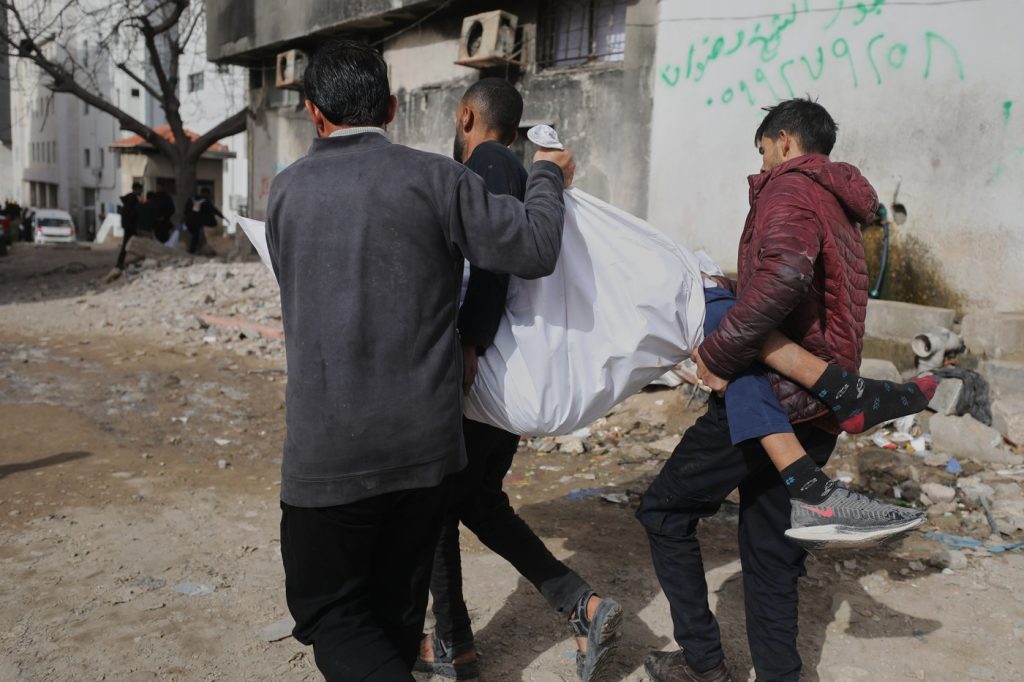
Following this, on the same day, two Palestinian teenagers were killed due to an Israeli strike in Gaza, according to hospital authorities. The boys, aged 13 and 15, were cousins searching for firewood. Health officials from Shifa Hospital in Gaza City received the bodies of the teenagers. Their deaths occurred in what the Israeli military has declared a safe area for Palestinians, approximately 500 meters from the Yellow Line that demarcates Israeli-controlled regions in eastern Gaza from the rest of the territory. A family member, Arafat al-Zawara, insisted they were “targeted directly, not through any fault of their own.”
In defense of the strike, Israel’s military claimed they were targeting militants who crossed the Yellow Line and posed a threat by planting explosives. They refuted the assertion that the deceased were children.
The desperate circumstances in Gaza have led families to seek firewood in perilous areas as they struggle to find fuel for cooking and heating. This search has become increasingly dangerous due to the ongoing lack of electricity since the commencement of the conflict, punctuated by the Hamas-led attack on Israel on October 7, 2023. Currently, hundreds of thousands of people are living in temporary camps and damaged buildings as winter temperatures plunge below 10 degrees Celsius (50 degrees Fahrenheit) at night, leading to at least nine child fatalities attributed to severe cold, as reported by the Gaza Health Ministry.
Since the ceasefire was established, the Gaza Health Ministry has reported that more than 480 Palestinians have been killed from Israeli fire, despite Israel disputing these figures without providing alternative data. The ministry, which operates under the Hamas-led government, is regarded as reliable by both U.N. agencies and independent experts.








