

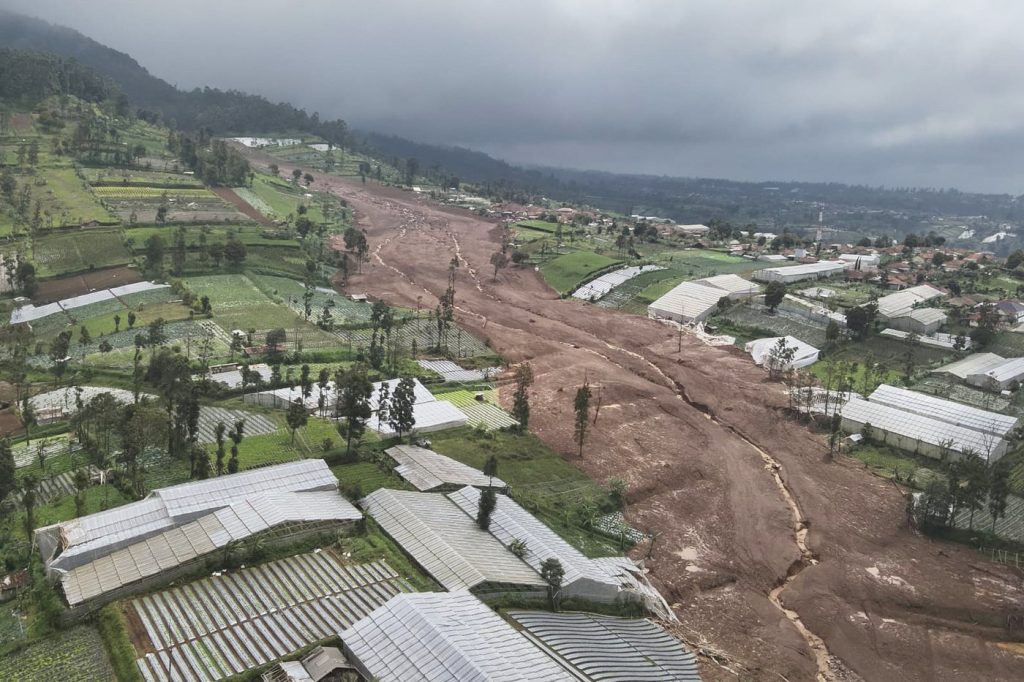
BANDUNG, Indonesia (AP) Indonesian rescuers faced significant challenges on Sunday as they conducted search operations for dozens of individuals still missing following a devastating landslide in West Java province. The landslide, which was triggered by torrential rains in the early hours of Saturday, resulted in the tragic loss of at least 11 lives in Pasir Langu village, a locality situated on the slopes of Mount Burangrang.
The landslide struck swiftly, burying approximately 34 houses under layers of mud, rocks, and uprooted trees. As search efforts continued, it was reported that 79 individuals remained unaccounted for, many of whom are feared to be trapped beneath the debris. The urgency of the operation was palpable, as rescuers worked diligently to locate missing residents.
By Sunday morning, the death toll had risen to 11, with the Indonesian search and rescue office, represented by Ade Dian Permana, confirming the recovery of two additional bodies. Efforts to locate survivors were hampered by the conditions on the ground. Videos released by Basarnas, the Indonesian search and rescue agency, showed teams using farm tools and their hands to extract mud-covered bodies, carefully placing them into orange bags for burial.
The instability of the ground presented a significant obstacle for rescue teams. Heavy machinery and excavators remained largely idle due to the soft and unstable terrain. Ade Dian Permana estimated that the mounds of mud reached heights of up to 5 meters (16 feet), with some homes buried as deep as the roof level. This precarious situation prompted crews to be on alert, prepared to conduct manual searches if the slope did not stabilize.
Upon visiting the affected area, Indonesian Vice President Gibran Rakabuming Raka emphasized the government's commitment to preventing similar disasters in the future. He called on local authorities in West Java and West Bandung to address issues related to land usage in disaster-prone zones and to explore methods for mitigating risks associated with such natural calamities.
Basarnas chief Mohammad Syafii reiterated the complications presented by the terrain and adverse weather conditions, stating, "We are at the mercy of the weather, and the slide is still mud... flowing and unstable." His remarks illustrated the difficulties faced by search teams, who were utilizing all available resources, including drones, K-9 units, and ground crews, while prioritizing the safety of rescuers amidst the ongoing risks.
Indonesia, an archipelago comprising over 17,000 islands, frequently experiences seasonal rains and high tides from October to April, leading to flooding and landslides in mountainous regions and fertile floodplains where millions of residents live. This recurring issue highlights the vulnerability of many communities and the need for effective disaster management strategies.
The response to the landslide in Pasir Langu village is a stark reminder of both the immediate dangers posed by natural disasters and the long-term strategies required to enhance community resilience. The ongoing search efforts serve as a crucial lifeline for families desperately awaiting news of their loved ones amidst the chaos and destruction.








