

BRUSSELS (AP) — Tensions surrounding U.S. President Donald Trump’s plans to take control of Greenland have created a rift in the previously robust partnership between MAGA (Make America Great Again) and Europe's far-right political factions. The divide illustrates that ideological alignment alone may not be sufficient to assuage the concerns among European nationalists regarding Trump's interventionist foreign policies.
Leaders of far-right parties in Germany, Italy, and France have vocally criticized Trump’s intentions regarding Greenland, with even longstanding ally Nigel Farage, head of the Reform UK nationalist party, describing Trump's actions as “a very hostile act.” During a recent European Parliament debate, far-right lawmakers, typically supportive of Trump, expressed their unease, calling his threats “coercion” and a “threat to sovereignty” while advocating for an halt to the EU-U.S. trade pact.
This unexpected divergence in positions came as Europe's far-right parties gained prominence in the 2024 elections, holding 26% of the seats in the European Parliament, according to the German Institute for International and Security Affairs. Less than a year ago, these parties were celebrating Trump’s election in Madrid under the banner “Make Europe Great Again.” Notably, Elon Musk, before falling out of favor with Trump, had supported far-right influencers in Europe.
The implications of Trump’s foreign policies, particularly regarding Greenland, Venezuela, and Iran, have led his European supporters to prioritize their political ideologies over their allegiance to the U.S. president. For instance, France's far-right National Rally, which has previously aligned itself closely with Trump on issues like immigration, has begun distancing itself from his administration. National Rally president Jordan Bardella has criticized U.S. military interventions, specifically calling Trump's plan over Greenland “commercial blackmail” and warning against European reliance on U.S. influence.
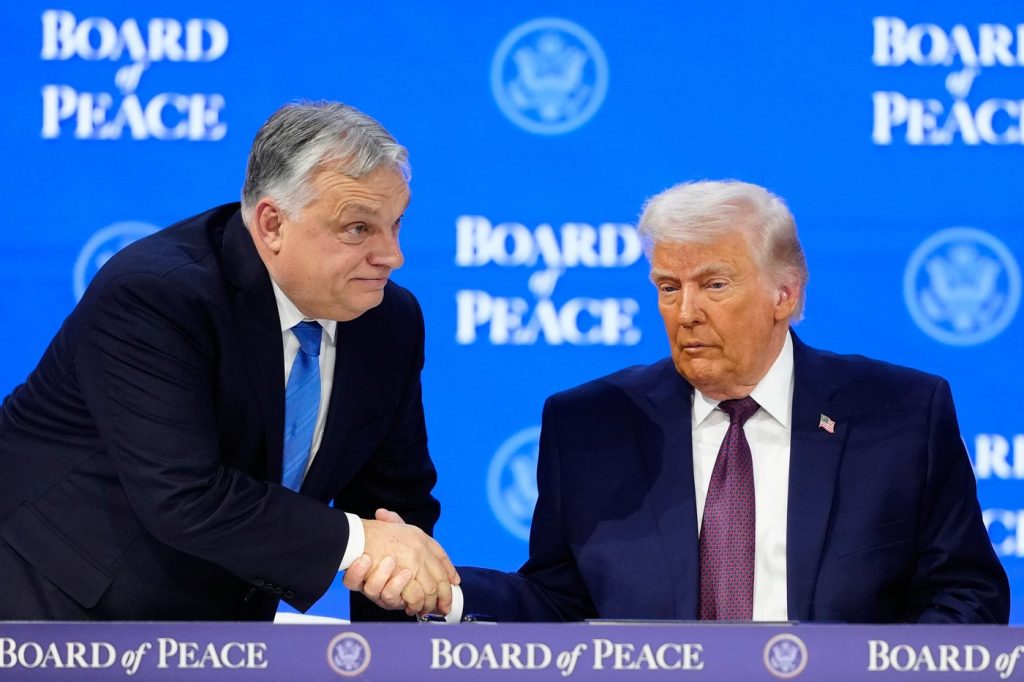
Italian Prime Minister Giorgia Meloni echoed similar sentiments, stating that she had informed Trump during a phone call that his tariffs threat over Greenland was “a mistake.” However, reactions among far-right leaders across Europe have not been uniform. For example, Hungarian Prime Minister Viktor Orbán, a prominent figure in Trump’s brand of illiberal populism, has refrained from criticizing the U.S. president, instead framing Trump's actions as NATO issues that should be discussed within that context.
Orbán has also capitalized on his connection with Trump ahead of Hungary’s upcoming elections, asserting that Trump represents Europe’s only hope for peace amid ongoing conflicts. He described the potential transfer of Greenland’s sovereignty as none of Hungary's concern, highlighting a tendency among some eastern European leaders to avoid confrontation regarding Trump’s actions.
In Poland, President Karol Nawrocki has suggested that tensions over Greenland should be resolved diplomatically, while in the Czech Republic, Prime Minister Andrej Babis has similarly avoided criticism of Trump's stance. However, Fico, Slovakia's Prime Minister and a Trump ally, vehemently condemned U.S. actions in Venezuela, referring to them as a “kidnapping.”
The potential for ideological rifts among MAGA and its European allies may ultimately hinge on shared grievances versus the significance of national sovereignty. Political analysts note that if Trump continues to pose threats to European sovereignty, divisions within the far-right may deepen, creating challenges moving forward. Daniel Hegedüs of the German Marshall Fund articulated that while recent disagreements could cause fragmentation among European radical right factions, there’s uncertainty whether they will be able to regroup around issues of cooperative significance that could pose challenges for the European Union.








