

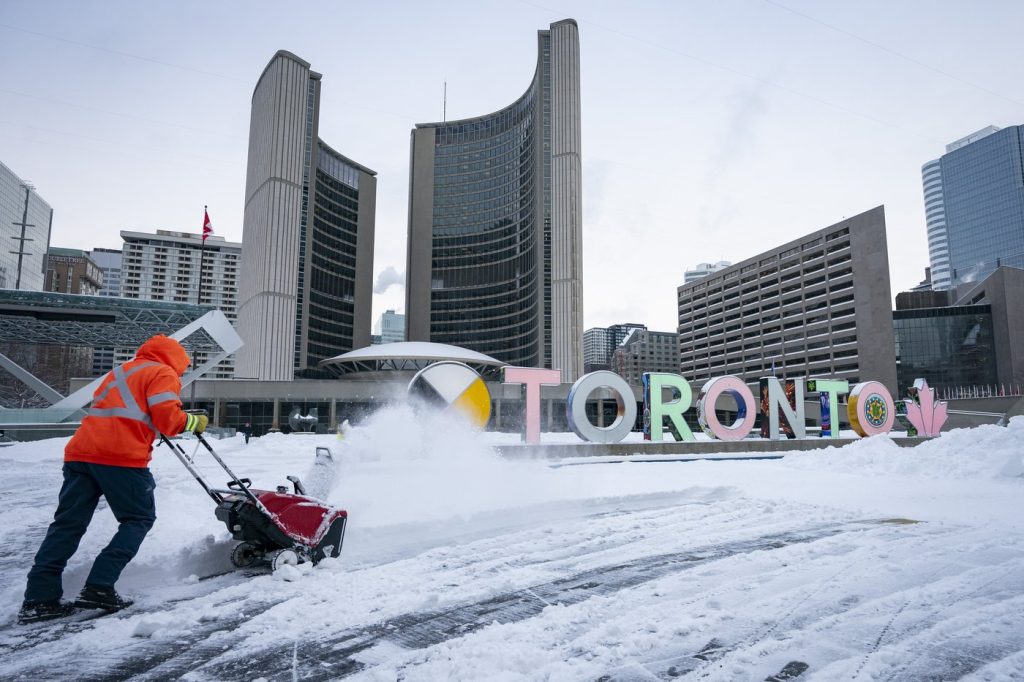
Amidst a widespread cold wave engulfing much of Canada, Toronto and various regions of Eastern Canada are preparing for significant snowfall and severe weather conditions. Environment Canada forecasts that Toronto may receive as much as 40 centimetres of snow on Sunday, as an orange winter storm alert has been issued for the majority of the Greater Toronto Area.
This alert specifically warns residents of drastically reduced visibility due to heavy snowfall, along with strong wind gusts that could reach up to 50 kilometres per hour throughout the day. The agency anticipates that the storm system will begin to move out overnight, but not before causing considerable disruptions.
Environment Canada utilizes an orange alert to indicate when severe weather is expected to bring about significant damage, disruption, or health concerns. This particular event is exacerbated by a polar vortex, which has led to frigid temperatures blanketing much of Canada. In certain regions of the Prairies, wind chill temperatures have plunged into the -40s, prompting the issuance of similar orange alerts across those areas.
Furthermore, the extreme cold weather conditions have begun to impact air travel significantly. Major airports across the nation are experiencing flight delays and cancellations, with over 60 percent of more than 900 flights at Toronto Pearson International Airport being canceled between Saturday and Sunday. Additionally, around 10 percent of flights faced delays due to the severe weather. Passengers are advised by Pearson Airport to verify their flight statuses before traveling to the airport, as the ongoing storm is heavily impacting flight operations.
This winter storm represents the second substantial snowfall for Toronto in a little more than a week, raising concerns for the city’s residents. In light of the hazardous conditions, the City of Toronto has urged residents to remain indoors and refrain from all non-essential travel on Sunday. A social media announcement recommended that individuals stock up on groceries and medications earlier in the day, but only if absolutely necessary.
This ongoing weather situation highlights the challenges posed by extreme winter conditions across various regions in Canada, as preparations and precautions continue to be emphasized by local authorities.








