

A delegation from South Korea is set to travel to Canada in pursuit of a multi-billion-dollar submarine procurement contract from the Canadian federal government. The visit is spearheaded by Kang Hoon-sik, the chief of staff for South Korean President Lee Jae Myung, who emphasized the significance of this meeting through social media.
The South Korean delegation comprises prominent figures including the country's trade minister, the minister of the Defense Acquisition Program Administration, and representatives from Hanwha Ocean, a leading shipbuilding company. Their primary objective in Ottawa is to express South Korea's intent to enhance industrial and security cooperation with Canada, fostering a mutually beneficial relationship between the two nations.
As part of Canada's efforts to modernize its naval capabilities, the government is currently looking to replace its aging fleet of submarines. The bidding process for this lucrative contract has narrowed down to two contenders: Hanwha Ocean and ThyssenKrupp Marine Systems, a German firm. This competitive landscape highlights the urgency for both companies to present compelling proposals to secure the contract.
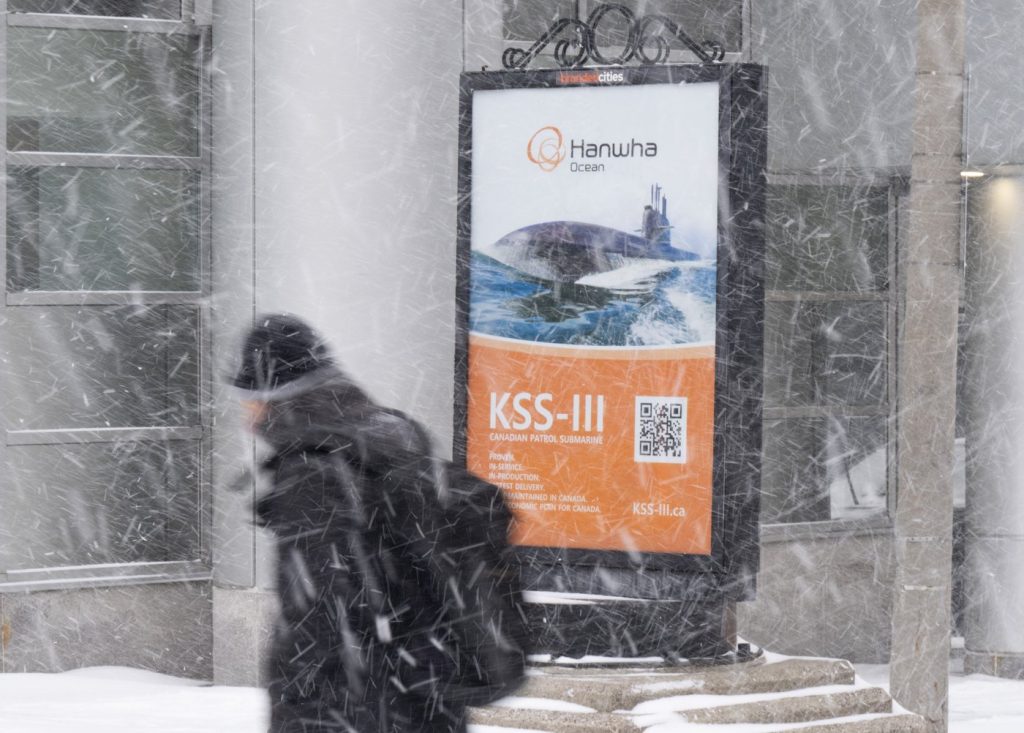
In a strategic move to strengthen its position, Hanwha Ocean has launched an aggressive marketing campaign in Canada, which includes placing billboards in strategic locations across Ottawa. Marketing and defense experts suggest that such initiatives could potentially influence decision-makers and sway the contract in Hanwha's favor. The visual presence of these advertisements is indicative of the high stakes involved in the procurement process.
The Prime Minister's Office has not yet responded to inquiries regarding the ongoing negotiations or the significance of the South Korean delegation's visit. This lack of immediate comment leaves room for speculation about the government's priorities and preferences in the ongoing selection process.
This new development, reported by The Canadian Press, reveals the intricate dynamics at play in international defense procurement. The engagement of South Korea highlights not only the competitive nature of submarine manufacturing but also the broader implications for defense partnerships and security alliances in the region.
As the situation unfolds, the potential impact on Canada's naval capabilities and the future of its defense spending remains a critical topic for discussion among policymakers, industry stakeholders, and the public. The growing interest from South Korea reflects a trend of increasing collaboration in global defense markets, as nations strive to enhance their military capabilities and secure favorable partnerships.
Overall, the forthcoming meetings between South Korean officials and their Canadian counterparts could prove pivotal in determining the future of Canada’s submarine fleet and the strengthening of international defense ties.








