

NORTON, Zimbabwe (AP) — In a recent regional Under-17 girls’ soccer tournament held in Norton, Zimbabwe, Lesotho's Lishoeshoe soccer club faced a daunting challenge against South Africa’s Mamelodi Sundowns, losing the final match 5-0. Despite the scoreline, 16-year-old winger Nteboheleng Leticia Sooane emphasized that the tournament's significance extended beyond mere wins and losses.
Sooane expressed that the primary focus of the tournament was to enhance awareness and confidence among girls regarding the HPV vaccine, crucial in preventing cervical cancer, a disease that claims a woman’s life globally every two minutes. The initiative, organized by the Confederation of African Football (CAF), GAVI, and health ministries from various African nations, aimed to promote cervical cancer vaccination through the platform of sports.
“Participating in the tournament was very good because we had to learn and spread (the message) even though we did not win the finals. So it was a good experience,” Sooane articulated, while waiting for her finalist's medal amidst the rain-soaked atmosphere of the stadium. Approximately 200 girls from six different countries participated in the tournament, which took place in December.
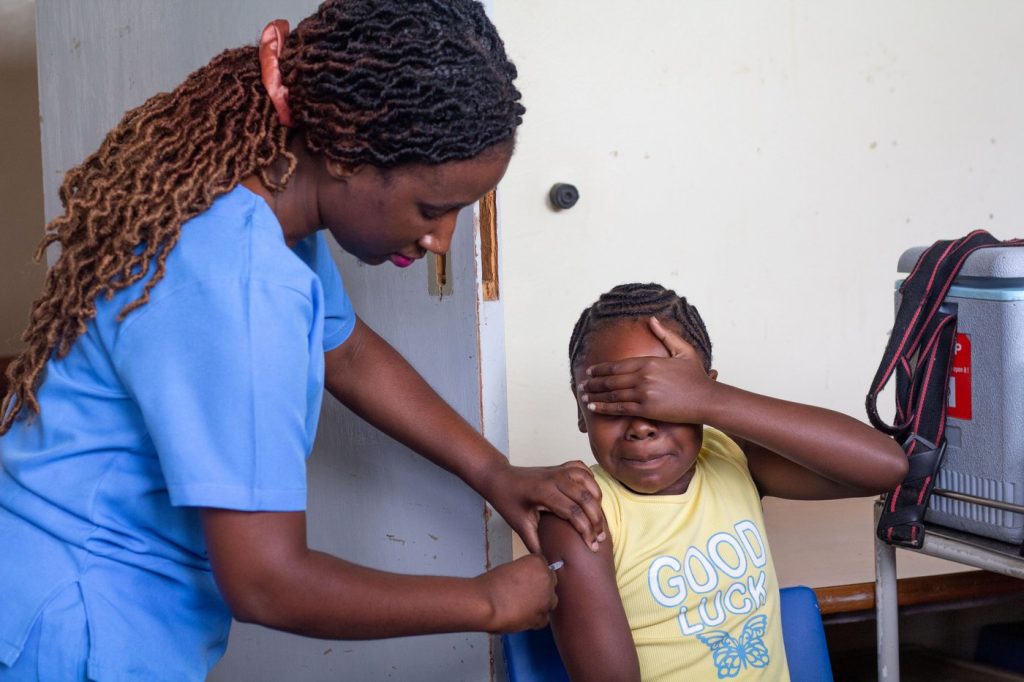
This initiative, dubbed the Goal Getters campaign, first launched in Tanzania and Eswatini and later expanded to Zimbabwe. it aims to build trust and raise awareness about the HPV vaccine, which is offered for free to girls aged 9 to 14 years. According to GAVI, the vaccine can prevent up to 90% of cervical cancer cases, significantly reducing future treatment costs for families.
After facing difficulties due to COVID-19 and inconsistent national immunization programs, Africa has stepped up HPV vaccination efforts. Notably, coverage for at least one HPV vaccine dose climbed to 40% in 2023 from 28% the previous year, with the campaign backed by governments and organizations like GAVI.
GAVI spokesman Olly Cann noted that combining soccer with health initiatives creates a safe space for teenage girls. "It creates a really safe space where the girls can feel trusted, they can feel secure, they also feel empowered,” he stated, emphasizing the dual benefit of sport and health education.
The tournament also featured festive elements such as dance and song, attracting many mothers to nearby clinics, where they could get their children vaccinated against HPV while also interacting with prominent women’s soccer figures. HPV, the main cause of cervical cancer, is a sexually transmitted virus, and while many infections clear up naturally, persistent infections can lead to cancer later in life.
Cervical cancer is a significant health concern globally, ranking as the fourth most common cancer among women, resulting in approximately 350,000 deaths annually. Africa bears a substantial burden, accounting for nearly a quarter of global deaths from this disease, with Zimbabwe being particularly affected. Here, cervical cancer is the most prevalent cancer among women, claiming about 2,000 lives each year.
To improve vaccination uptake, Zimbabwe introduced a single-dose HPV vaccine ahead of the tournament, transitioning from the previously recommended two doses. Health officials are optimistic that this change will lead to increased vaccination rates.
Despite the positive efforts, misinformation and stigma surrounding reproductive health continue to present significant challenges. As observed recently, there has been a stark decline in vaccination attendance at clinics, with many parents reluctant to allow their children to receive the vaccine. Some misunderstand the HPV vaccine as a form of contraception, leading to misconceptions regarding its purpose.
Barbara Mashonga, a community mobilization nurse, pointed out that misinformation is a crucial obstacle. She noted, “Many families are not bringing their children to the clinic to be vaccinated. The biggest challenge is religious beliefs.” Health education initiatives accompanying these vaccination drives play an essential role in combating such myths.
The integration of soccer and health initiatives is viewed as a strategic approach to improve community health. Nqobile Magwizi, president of Zimbabwe's soccer association, expressed the potential of soccer as a tool for positive change, stating, “We are embracing these opportunities so our communities can become better because of soccer.”
For Sooane and her peers, the tournament extended beyond sport. "Cancer is a big disease, so every child should get the vaccine so they can be protected,” she shared, encapsulating the overarching goal of the event—to empower girls with knowledge and health security.








