

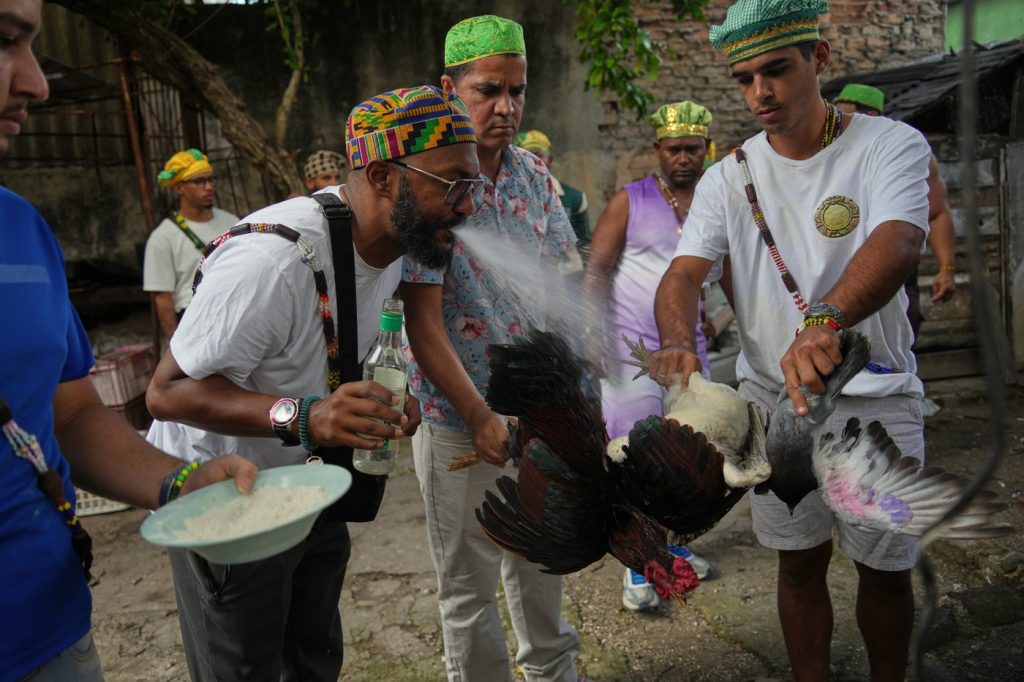
As tensions escalate between the United States and Cuba, the island is preparing for further economic hardships. In response to these turbulent times, priests and priestesses of the Afro-Cuban religion Santería held a series of ceremonial events on Sunday, aimed at offering gifts to deities and invoking peace. The ceremonies took place in Havana, where several prominent figures from the Santería community gathered to pray for the "spiritual healing" of the Cuban people and to request an end to violence and conflicts predicted for the year ahead.
The ceremonies included chanting in ancient Yoruba, a language brought to Cuba by enslaved Africans, reflecting the syncretism of African and Spanish traditions that characterize Cuba's rich Afro-Cuban identity. Lázaro Cuesta, a renowned priest who organized the ceremony in an old house courtyard, emphasized their belief in the power of sacrifices and prayers to mitigate the detrimental effects of the ongoing issues facing the country.
On January 2, a group of Santería priests known as babalawos had predicted a potential for war and violence that could affect both Cuba and the wider world, using traditional divination methods. This ominous forecast was closely followed by a significant event when, on January 3, the United States launched an operation in Caracas, Venezuela, resulting in the arrest of then-President Nicolás Maduro and the death of 32 Cuban soldiers who were part of Maduro's personal security detail. This attack on one of Cuba's primary political and ideological allies sent shockwaves through the Cuban populace.
Amidst a tightening of U.S. sanctions that are strangling Cuba’s economy and direct threats from then-President Donald Trump, the ceremonies conducted by Santería practitioners aimed to create a spiritual buffer against negativity. Participant Yusmina Hernández, a 49-year-old homemaker, articulated the hope that their religious practices would help to steer clear of the negative issues plaguing their lives.
During the ceremony at the foot of a mango tree, participants offered sacrifices, including a hen, a rooster, and a dove. Numerous babalawos raised their voices in prayer, seeking permission from Eggun, the deity of ancestors, to invoke his power and presence. The event then moved indoors, where participants dressed in white with necklaces and headdresses offered food items including beans, corn, and eggs to Azowano, a form of Saint Lazarus revered in their faith. The offerings symbolize both gratitude and a plea for protection and peace.
Following these offerings, a substantial crowd of several hundred attendees formed a line around a basket used for the offerings. Participants were "cleansed" by being swept with two live chickens while chanting in Yoruba, a ritual intended to wash away negativity and promote harmony. Eraimy León, a 43-year-old babalawo, remarked that such rituals were conducted for the good of society to ensure the absence of conflict and violence, calling for harmony and health within the community.
These ceremonies serve not only as a spiritual outlet for the practitioners but also as a reflection of the collective anxiety experienced by the Cuban people during a tumultuous period marked by political instability and economic constraint. The Santería community continues to play a significant role in providing solace and fostering a sense of unity among those who seek a reprieve from the harsh realities inflicted by external pressures.








